People · architect, honorary consul
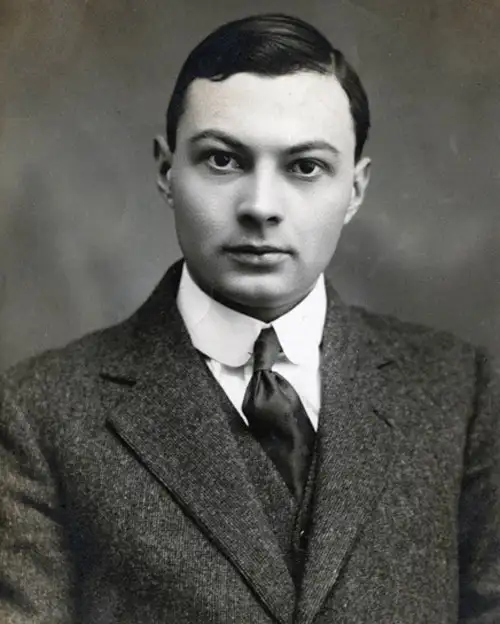
László Hudec
邬达克Wūdákè · 1893–1958
Hungarian architect (1893–1958) who reached Shanghai in 1918 as an escaped prisoner of war and designed the Park Hotel, Grand Theatre and Wukang Mansion.
- Born
- 1893
- Died
- 1958
- Known as
- architect, honorary consul
- Also written
- Ladislav Hudec · Laszlo Hudec · L. E. Hudec · László Ede Hugyecz
Loading map…
Why Shanghai knows the name
László Hudec (邬达克, Wūdákè) is the architect behind more of Shanghai’s best-known buildings than anyone else of his generation: the Park Hotel, the Grand Theatre and Moore Memorial Church, and, if you accept the usual attribution, Wukang Mansion. He was a Hungarian prisoner of war who reached the city in 1918 with a forged identity and no money, and he was working for himself by 1925. The city’s Chinese bankers and businessmen made him their architect of choice. By the early 1930s he had put up the tallest building in the Far East for them.
Where did he come from, and how did he get to Shanghai?
He was born László Ede Hugyecz in Banská Bystrica (Besztercebánya in Hungarian) on 8 January 1893. Lukovich calls him the eldest of six children. His father György, a self-made master builder, put the boy on building sites in the school holidays. By the time Hudec entered the Royal Hungarian Joseph University of Technology in Budapest in 1910, the Hudec Project says, he had passed trade exams as a stonemason and a carpenter. He graduated in 1914 and started work in the office of Ervin Ybl. English Wikipedia gives 1911 for the start of his studies; the other two give 1910.
The war ended that career before it began. He was called up, and in June 1916, wounded, he was taken prisoner and sent to Siberia. Lukovich puts him in a camp at Khabarovsk, and says his languages and his trade got him design work and a place on building sites; in 1917 he had typhoid and broke a leg that left him with a limp. In the spring of 1918 he got out.
How he got out depends on who tells it, and the accounts do not fit together. The Hudec Project, and Pigniczky in the Hungarian Review, say that he used his Russian and a false passport and walked south-east for the Chinese border; Pigniczky has him in Harbin by early October. Lukovich says he was on a Red Cross train of disabled prisoners that was stuck for weeks near the border, and that he and a few comrades took a rail trolley. The thesis by Lenore Hietkamp, written from the Hudec archive and from interviews with his widow, says that he escaped from a transport train and worked his way down the line then being built from Harbin. English Wikipedia says he jumped from a train. Heathcote in Apollo says the train stopped near Lake Baikal. The legend of the leap from the train fits some of this, but not the trolley or the long walk. What all of them share is the date, 1918, and the result.
He reached Shanghai in early November 1918. The Hudec Project says the Russian consulate wrote his name out from Cyrillic, which is how Hugyecz became Hudec. Hietkamp adds a detail from her interview with Gisella Hudec: on the road and in Shanghai he told foreigners he was from Latvia, to explain his accent without admitting to coming from a defeated country. He took a job as a draughtsman for the American architect R. A. Curry, who built houses, offices and schools in an American manner.
What did he learn working for Curry?
Hietkamp estimates that he spent his first five or six years with Curry and did most of the drawings. Her list of known commissions has Hudec and Curry together on an International Savings Society building in 1919, the Chinese American Bank of Commerce in 1920, the McTyiere School in 1922 and the American Club in 1923. Heathcote adds the Normandie Apartments of 1924, and the Sixth Tone article on that building says Hudec drew the plans as Curry’s employee.
In between there was a trip home. Pigniczky says that he went back to Europe in 1920, around the time his father died, and returned in 1921 to run Curry’s office; Lukovich says the Treaty of Trianon had put Banská Bystrica in the new Czechoslovakia, the family firm failed, and the family moved to Budapest. He never got his career back there. In 1922 he married Gisella Meyer, who was born in Shanghai to a German merchant from Bremen and a British mother. Hietkamp says 1921; the other accounts say 1922. They had three children, Theodore in 1923, Martin in 1925 and Alessa in 1928.
Why did Chinese clients choose a Hungarian?
In 1925 Hudec opened his own office, L. E. Hudec Architecture. His new clients came from the Chinese banks and companies that were getting rich in the 1920s, and the Hudec Project and Hietkamp both stress something about his position. Hungary had not signed a treaty with China after the break-up of the Austro-Hungarian Empire, and so a Hungarian was not covered by the extraterritorial rights that British, French and American residents had. The Hudec Project says that his Chinese clients knew he was subject to Chinese law. Hietkamp says that he was careful about it in private: he forbade his wife to drive, for fear of an accident that would leave her in a Chinese court with no consul to help.
The clients Hietkamp lists are the Methodist congregation of Moore Memorial Church, a funeral society, the Chinese municipality of Greater Shanghai, a theatre company and the four banks behind the Joint Savings Society. She stops short of explaining how the relationship started. She notes that Curry had drawn up a proposal for the Shanghai Bankers’ Association, and that is as close as she gets.
The key client was the Joint Savings Society (四行储蓄会, Sìháng Chǔxùhuì). It was founded in 1923 by four banks, Yien-yieh, Kincheng, China and South Sea, and Continental. Hudec built its headquarters at Szechuan Road and Hankow Road in 1928, and, Hietkamp says, the Society recommended him on the strength of it as “eminently satisfactory”. That commission led to the largest one.
How did the Park Hotel get built?
The Society wanted a landmark to mark its tenth anniversary in 1933. The Hudec Project says Hudec won the tender in 1931, and the Park Hotel (国际饭店, Guójì Fàndiàn) opened on 1 December 1934. It was a bank and a hotel in one building. Hietkamp says the Society kept the basement vaults and much of the ground floor, and the hotel was run by a management company whose directors overlapped with the Society’s board. It has 22 storeys above ground and two below.
Nothing like it had been tried in the city. The nearest in height, the Cathay Hotel, had 17 storeys. Hudec had travelled to the United States, and Pigniczky says he went to the US and Germany in the late 1920s to study steel construction. Lukovich notes a resemblance to the Radiator Building in New York. The soft Shanghai soil was the problem. Hietkamp describes 400 Oregon-pine piles under a concrete raft, but adds that other accounts give different dimensions; Lukovich gives 33 m wooden piles imported from Canada. The two disagree, and the thesis acknowledges that its own sources do too. What is safe to say is that the foundation was long timber piles under a raft, with a deep basement to offset the tower’s weight.
The height is also recorded in two ways. English Wikipedia and Lukovich give 83.8 m. Hietkamp, citing the contractors’ own journal, gives 284 feet (about 87 m) from street level to the flag platform and 300 feet with the spire. The two are probably measured to different points, but none of the sources says so.
What do the sources disagree on?
How tall, for how long. When the project was announced in 1931 the China Press headline called it the tallest skyscraper on four continents. By 1933 a trade review was calling it the tallest building between London and Tokyo. Those are claims made at the time. Later writers pin an end date on the record, and no two agree. The Hudec Project says it was the tallest in Asia until 1982. English Wikipedia says Asia until 1963, China until 1966 and Shanghai until 1983. Heathcote also says 1963. Lukovich says 1934 to 1963 in his introduction and 1952 in the body of the same paper, and Shanghai until 1984. Take the dates as the claims of writers, not as a record.
How many buildings. The Hudec Project says more than a hundred. Yicai, reporting the closure of the Hudec Memorial Hall in 2024, says over a hundred in Shanghai, 35 of them listed as outstanding modern buildings. Jiemian News says over a hundred with 25 listed. Lukovich says about 44 still stand, all listed. Pigniczky writes of over 70 buildings. The popular line that Hudec designed a fixed fraction of the city’s heritage buildings does not appear in any of these. The lists are counted differently, with different rules for demolished buildings, for projects with Curry, and for what counts as one building.
When was Wukang Mansion built? The Hudec Project, Heathcote, Sixth Tone and the Shanghai gazetteer say 1924. English Wikipedia’s list of works gives 1926. The earlier date fits the fact that he drew the plans while still employed by Curry.
When did he become consul? See below.
Which other buildings define his career?
Wukang Mansion (武康大楼, Wǔkāng Dàlóu) was the Normandie Apartments, built in 1924 by the International Savings Society’s property company on a triangular plot at the junction of Huaihai Road and Wukang Road. The French firm Remond & Collet built it. Seen from the west it resembles the prow of a large ship, which is the basis of the claim that the building is named for one; nothing the sources say supports that. They record the name Normandie from the start and say nothing of its origin.
Moore Memorial Church (沐恩堂, Mù’ēn Táng) is a Methodist church on Xizang Middle Road that opened in 1931. The congregation was Chinese. Hietkamp’s list shows the commission dating from 1926, with the building following in the early 1930s. Lukovich adds that Hudec designed churches free of charge, without giving a source.
The Grand Theatre (大光明电影院, Dàguāngmíng Diànyǐngyuàn), beside the Park Hotel on the old Bubbling Well Road, took shape in 1931–1933. The Hudec Project gives it 2,500 seats and calls it the largest theatre in Shanghai.
The Country Hospital on Great Western Road (now Yan’an West Road) is a 1926 commission in Hietkamp’s list; today it is the Huadong Hospital. Lukovich says Hudec got two of his younger sisters jobs as nurses there.
The Union Brewery at 130 Yichang Road sits beside Suzhou Creek. The company had been reorganised in 1931 with new investors, among them E. D. Sassoon & Co., and Hudec was hired to design a new factory. Touch Shanghai, the city information office’s site, says it was completed in 1934 and began production in 1936. Historic Shanghai says it opened in 1936 and Hietkamp lists 1932–33. Parts survive, including the bottling hall, brew house and offices, and Touch Shanghai says the buildings were listed in 1999 and nearly pulled down in 2002.
The Green House (绿房子, Lǜ Fángzi) at 333 Tongren Road was built for Wu Tongwen (吴同文, Wú Tóngwén), a paint merchant who, the Paper says, made his fortune from military-green paint. It is a four-storey house of more than 1,700 square metres covered in green glazed tiles. Heathcote dates it 1938, Hietkamp lists a house of 1938 for D. V. Wood (or Woo), and English Wikipedia’s list of works says 1937. The Shanghai government’s archive page describes it as one of the last big works he did in the city.
Where did he live?
He built his own house on Columbia Road, now 129 Panyu Road. The Hudec Project says it was finished by 1931 and has a half-timbered facade; the University of Victoria holds the heating and plumbing drawings, dated 1930. The family lived in it for about seven years before letting it and moving into Hubertus Court, a ten-storey apartment block that, the Hudec Project says, Hudec had designed himself. Hietkamp dates Hubertus Court to 1936. In 2013 the entrepreneur Liu Suhua (刘素华) restored the house and opened the Hudec Memorial Hall there. Yicai reports that it closed after 4 February 2024, having had over a million visitors, with a single-day record above 10,000.
What happened in the war years?
The building boom ended. Lukovich says commissions dried up by 1935, and that after the Japanese attack of 1937 the office shrank to four employees. Pigniczky says he turned to leading the Central European community. His sons were sent to a cadet school in Victoria, Canada, in 1937.
In the war he took on a diplomatic role, and the sources disagree about when. Hietkamp, who cites an unpublished biography, says the late 1930s. English Wikipedia says 1941, after he obtained a Hungarian passport. The Hudec Project, Pigniczky and Heathcote say 1942, and Lukovich 1943. A Hungarian honorary consul general, Paul Komor, held office in Shanghai from 1938 to 1941, so the roles may not have overlapped. Hietkamp says his Hungarian status kept the family out of Japanese internment.
Did Hudec help Jewish refugees? Pigniczky says that as consul he issued passports to people from the successor states of Austria-Hungary, which allowed them to leave the Hongkou designated area, and that when the Arrow Cross took power in Hungary in October 1944 he declared that the consulate no longer pledged allegiance to the government, a move that nearly got him arrested. Lukovich says he helped many Jewish people to leave for Australia and the US. No source read here names a person he helped, counts them, or cites a consular record. The documented passport scheme was Komor’s: his International Committee, set up in 1938 with Victor Sassoon’s money, issued passports to Jewish refugees whose German passports had been withdrawn. The claim about Hudec may be true, but on this evidence it is a tradition, not a record.
What happened after 1947?
The family left in 1947 in secret, and the Hudec Project says Hudec, his wife and daughter never returned. English Wikipedia says they went to Switzerland and Rome before settling in Berkeley in 1950, and Lukovich puts Lugano in 1948. He did not practise as an architect again. He became interested in archaeology, visited the closed Vatican excavations under St Peter’s in 1947 and 1953, lectured on them in 1949 and published on the subject in 1950 and 1952. He died on 26 October 1958; English Wikipedia says in Berkeley, of a heart attack. Gisella lived until 2001 and gave his papers to the University of Victoria, whose Hudec Collection Hietkamp used for her thesis.
The recovery of his reputation in China began in the 2000s. Pigniczky lists a Hungarian “Year of Hudec” in Shanghai in 2008, an exhibition in 2009 and an Expo conference in 2010.
What to look for
Start at People’s Square. The Park Hotel stands on Nanjing West Road facing the park, and the Grand Theatre is next door. Moore Memorial Church is a few minutes’ walk along Xizang Middle Road. The Joint Savings Society’s old headquarters is east of the square near Sichuan Road, and nothing in the sources used here confirms what stands there now.
West of the centre, Wukang Mansion is where Huaihai Road meets Wukang Road; stand west of it on Huaihai Road and look east to see the wedge. The Green House is on Tongren Road at Beijing West Road, and Hudec’s own house is at 129 Panyu Road. The memorial hall there closed in February 2024, so ask before travelling whether the house is open at all. The Union Brewery buildings lie along Suzhou Creek at 130 Yichang Road. Whether each of these is open to visitors was not checked for this profile.
What Shanghai says, and what the record shows
Popular stories, told in our words, checked against the sources listed below.
- Sources disagree
The story: Hudec designed a quarter (or a third, or half) of Shanghai's protected historic buildings.
The record: The counts in print do not agree. Sources give 'over 100' Hudec buildings, of which 25 are listed as outstanding historic buildings (Jiemian), 35 (Yicai) or about 44 (Lukovich); another paper says over 70 buildings. None of them states a share of the city's list.1
- Sources disagree
The story: The Park Hotel was the tallest building in Asia until the 1950s, or the 1960s, or the 1980s.
The record: At opening in 1934 the Park Hotel was widely billed as the tallest building in the Far East. How long it held a title depends on the claim: published end dates for 'Asia' are 1952, 1963 or 1982, for China 1966 and for Shanghai 1983 or 1984.1,4,6
- Sources disagree
The story: Hudec escaped from his prisoner-of-war train by jumping off it near the Chinese border.
The record: All accounts agree he escaped in 1918 from a train or camp in Siberia and reached China. They differ on how: jumping from a train, stealing a rail trolley from a stranded hospital train, or walking off with a forged passport. The detail rests on family interviews and an unpublished biography.1
- Unproven
The story: As Hungarian consul Hudec saved Jewish refugees in Shanghai during the Second World War.
The record: Two secondary accounts say he helped Jews, one adds that he issued passports and that in October 1944 he declared the consulate no longer loyal to Hungary's Arrow Cross government. None cites a document, a number, or a named person he helped. A different Hungarian honorary consul general, Paul Komor, is documented issuing passports to Jewish refugees in 1938 onward.1,4
- Unproven
The story: The Normandie Apartments, now Wukang Mansion, were shaped and named like a ship.
The record: The ship comparison is documented as a description of the wedge-shaped building seen from the west. The name Normandie is recorded for the apartments from the start, but none of the sources used here says the name came from a ship.1
Timeline
- 1893Born in Banská Bystrica (Besztercebánya), Upper Hungary1
- 1916Wounded and taken prisoner on the Russian front; held in a camp in Siberia1
- 1918Escapes and reaches Shanghai in early November; draughtsman for R. A. Curry1
- 1922Marries Gisella Meyer (one source says 1921)1
- 1925Opens his own practice, L. E. Hudec Architecture4
- 1928Completes the Joint Savings Society headquarters on Sichuan Road6
- 1931Moore Memorial Church opens; Hudec wins the commission for the Park Hotel1,4
- 1934Park Hotel opens on 1 December; Union Brewery completed (opened 1936)1,6
- 1938Green House for the paint merchant Wu Tongwen (some lists give 1937)2
- 1942Becomes honorary consul of Hungary in Shanghai (sources give 1941 to 1943)1
- 1947Leaves Shanghai with his wife and daughter; never returns1
- 1958Dies in Berkeley, California, on 26 October1
- 2013Hudec Memorial Hall opens in his former house; it closes after 4 February 20241
Their Shanghai on the map
Tap a name in the text, or “map” in this list, to see where it is; names with their own page link to it.
- 01Park Hotel (Joint Savings Society building)国际饭店designedmapThe 22-storey hotel and bank tower on Nanjing West Road, opened 1 December 1934; still a hotel.
- 02Normandie Apartments (Wukang Mansion)诺曼底公寓(武康大楼)designedmapThe wedge-shaped apartment block of 1924 where Huaihai Middle Road meets Wukang Road; still apartments.
- 03Moore Memorial Church沐恩堂(慕尔堂)designedmapThe Methodist church on Xizang Middle Road, opened 1931; still a place of worship.
- 04Grand Theatre (Grand Cinema)大光明电影院designedThe 2,500-seat cinema beside the Park Hotel, 1933; Wikidata gives its inception as 1933. Still a cinema.
- 05Joint Savings Society headquarters, Sichuan Road at Hankou Road四行储蓄会大楼(四川路汉口路)designedHudec's 1928 headquarters for the Joint Savings Society at Szechuan Road and Hankow Road; position estimated from the two street names, present use not checked.approximate position
- 06Country Hospital (now Huadong Hospital)宏恩医院(今华东医院)designedHudec's hospital of 1925–26 on Great Western Road (now Yan'an West Road), now the Huadong Hospital; position estimated.approximate position
- 07Union Brewery, 130 Yichang Road联合啤酒厂旧址(宜昌路130号)designedBrewery on Suzhou Creek, completed 1934 and opened 1936 by most accounts; the bottling hall, brew house and offices survive; position estimated from the street address.approximate position
- 08Green House (Wu Tongwen House), 333 Tongren Road绿房子(吴同文住宅,铜仁路333号)designedFour-storey house at the corner of Tongren Road and Beijing West Road, clad in green tiles; position estimated from the street junction.approximate position
- 09Hudec's own house, 129 Panyu Road (Hudec Memorial Hall)邬达克旧居(番禺路129号,邬达克纪念馆)lived hereThe half-timbered house of about 1930–31 where the family lived until 1937; memorial hall 2013 to February 2024; current use not checked.approximate position
Connections
- E. D. Sassoon & Co.新沙逊洋行E. D. Sassoon & Co. was a major investor when the Union Brewery, which Hudec designed, was reorganised in 1931
Places


Church· 1929–1931
Moore Memorial Church
沐恩堂Mù'ēn Táng
A Neo-Gothic Methodist church designed by László Hudec and opened in 1931, beside People's Square, with Sunday services.


Building· 1931–1934
Park Hotel
国际饭店Guójì Fàndiàn
An 83.8 m, 24-floor hotel tower of 1934 by László Hudec, with a survey 'origin' marker for Shanghai's coordinate system in its lobby.


Building· c. 1924
Wukang Mansion
武康大楼Wǔkāng Dàlóu
László Hudec's 1924 Normandie Apartments: an eight-storey wedge with a ground-floor arcade where Huaihai Middle Road meets Wukang Road.
Stories
Sources
- 1.Life of László (biography of László Hudec) (Life of László (biography of László Hudec)), The Hudec Project (hudecproject.com) — opening paragraphs; paragraphs on 1916–1918; section on major works; closing paragraphs; sections on family and studies; section on the First World War; section on the escape; section on arrival in Shanghai; section on family; paragraph on clients and extraterritoriality; section on the Park Hotel; section on the Grand Theatre; section on family and works; section on the Columbia Road house; section on the consul role; section on 1947 and after; closing section on his wife and the archivewebsite
- 2.Wikidata (coordinates, identifiers, heritage claims) (Wikidata), Wikimedia Foundation — https://www.wikidata.org/wiki/Q770930 (P569); https://www.wikidata.org/wiki/Q11124219 (P84); https://www.wikidata.org/wiki/Q770930 (P570); https://www.wikidata.org/wiki/Q10933595 (P571, P625); https://www.wikidata.org/wiki/Q21017031 (P1435); https://www.wikidata.org/wiki/Q770930 (P27)wikidata
- 3.Thirteen renovated historic buildings from Shanghai's first heritage conservation and reuse demonstration projects (上海首批建筑遗产保护利用示范项目:13处修缮后的历史建筑), 上海老底子(转自看懂上海), 澎湃号·湃客, 2020 — entry 1 武康大楼article
- 4.Skyscrapers II: The Hungarian connection(s) (Skyscrapers II: The Hungarian connection(s)), Tamás Lukovich, Ybl Journal of Built Environment, vol. 8 no. 1 (Óbuda University), 2023 — sect. 2.1, p. 2; sect. 2.1, p. 3; sect. 2.1, pp. 3–4; sect. 2.1, p. 4; sect. 2.2, p. 6; sect. 2.2, pp. 5–7; introduction p. 2; sect. 2.2, p. 6; sect. 2.2, p. 7; sect. 2.1, p. 6; sect. 2.1, pp. 4–5; sect. 2.1, p. 5article
- 5.László Hudec (László Hudec), Wikipedia — infobox and early-life section; early-life section; list of works (Normandie Apartments); list of works; section on 1938–1941; later-life section; infoboxwikipedia
- 6.The Park Hotel, Shanghai (1931-1934) and its architect, Laszlo Hudec (1893-1958): "Tallest Building in the Far East" as metaphor for pre-communist Shanghai (The Park Hotel, Shanghai (1931-1934) and its architect, Laszlo Hudec (1893-1958): "Tallest Building in the Far East" as metaphor for pre-communist Shanghai), Lenore Hietkamp, University of Victoria (MA thesis, Department of History in Art), 1998 — p. 23 (text and fn. 72); p. 23, fn. 72; p. 24, fn. 73; p. 53 fn. 7 (Curry affiliation); Appendix 1, 'Known commissions', p. 109; p. 24; p. 27; pp. 22–24 and fn. 71; pp. 11–12 and fn. 9; p. 22 and fn. 66; Appendix 1, p. 110; p. 81 (opening); p. 81 (ownership and lease); p. 44 fn. 53 (height); p. 42 (Cathay Hotel); p. 44 and fn. 54 (foundation); p. 12 fn. 9; p. 20 fn. 53; title; Appendix 1, p. 111; p. 22 (clients); Appendix 1, p. 110; Appendix 1, p. 110; Appendix 1, p. 109 and fn. 9; pp. 24–25, fn. 78; abstractbook
- 7.Made in Shanghai (Hungarian Review, vol. III no. 4) (Made in Sanghai [sic]), Réka Pigniczky, Hungarian Review, 2012 — section on the escape; paragraph on arrival; section on early career; paragraph on marriage; paragraph on 1925; paragraph on late 1920s travel; paragraph on buildings; paragraph on 1937; paragraph on 1942; paragraphs on 1942 and October 1944; paragraph on departure; paragraph on legacyarticle
- 8.The man who made modern Shanghai (The man who made modern Shanghai), Edwin Heathcote, Apollo magazine, 2026 — paragraph on 1918; paragraph on Curry and 1925; paragraph on the Park Hotel; paragraph on Curry and the American Club; paragraph on works and dates; paragraph on 1942article
- 9.English Wikipedia (article given in each fact's locator) (English Wikipedia), Wikimedia Foundation — https://en.wikipedia.org/wiki/Park_Hotel_Shanghaiwikipedia
- 10.Park Hotel, under Jinjiang International Group, carries on its history (锦江国际集团旗下国际饭店传承历史底蕴), 上海市国有资产监督管理委员会, 2023 — https://www.gzw.sh.gov.cn/shgzw_zxzx_gqdt/20231208/b8e95f2a8268440ea78cb67b0f8fd668.htmlwebsite
- 11.Wukang Mansion: Shanghai's 'Pearl' Before Its Online Fame (Wukang Mansion: Shanghai's 'Pearl' Before Its Online Fame), Ye Kefei (The Paper); translated by David Ball, Sixth Tone, 2023 — paragraphs on construction and shapearticle
- 12.Shanghai Moore Memorial Church (上海沐恩堂), 中国基督教网 (China Christian Council and Three-Self Patriotic Movement of the Protestant Churches in China, church listing), 2017 — https://www.ccctspm.org/churchinfo/205website
- 13.Union Brewery (Touch Shanghai feature) (Union Brewery (Touch Shanghai feature)), Information Office of Shanghai Municipality (Touch Shanghai), 2014 — article textwebsite
- 14.Old Shanghai Beers (Old Shanghai Beers), The Little Museum of Foreign Brand Advertising in the R.O.C (MOFBA), Historic Shanghai — section on Union Brewerywebsite
- 15.Would Shanghai be the Shanghai of today without his dream park? (Hudec's dream park in Shanghai) (没有他的梦乐园,上海还是如今的上海吗(邬达克在上海的梦乐园)), More城读 (text and editing Ann Lin), 澎湃号·湃客 (The Paper), 2020 — paragraphs on the housearticle
- 16.Shanghai Fabu / Archives and History article on Hudec's buildings (上海发布 / 档案春秋 article on Hudec's buildings (铜仁路333号 entry)), 谈会明 (compiled by Shanghai Municipal Archives), 上海市人民政府办公厅 (via Sina), 2017 — entry for 铜仁路333号article
- 17.Shanghai's Hudec Memorial Hall closes; he designed the Park Hotel and Wukang Mansion (上海邬达克纪念馆关闭,他设计了国际饭店和武康大楼), 佟鑫, 第一财经 (Yicai), 2024 — article textarticle
- 18.Heating and plumbing for Mr. L. E. Hudec residence, house on Columbia Road (Hudec Collection, University of Victoria) (Heating and plumbing for Mr. L. E. Hudec residence, house on Columbia Road (László Hudec Collection, University of Victoria Special Collections, catalogue entry)), László Hudec (office of), University of Victoria Libraries, Special Collections, 1930 — catalogue entry, 1930 drawingsarchive
- 19.Jiemian News article on Hudec's Shanghai buildings (界面新闻 article on Hudec's Shanghai buildings (sentence on 100+ buildings, 25 listed)), 甘霖, 范剑磊, 荣梦岩, 界面新闻 (Jiemian) — sentence on 百余幢 and 25 listed; sentence on 百余幢article
- 20.Paul Komor (Paul Komor), Wikipedia — opening paragraphs; paragraph on the International Committeewikipedia