Church
Fu Jia Rose Catholic Church
傅家玫瑰圣母堂fù jiā méi guī shèng mǔ táng
A Gothic church of the Fu family village on Pudong Avenue, a Marian pilgrimage site since 1928, with a bell tower rebuilt in 1984.
Directory and photographs supplied by 中二halo君. Photographs used with permission. · Xiaohongshu · Bilibili
- Built
- c. 1920
- Architect
- Not recorded
- Style
- gothic-revival
- Heritage listing
- Pudong New Area Cultural Relic Preservation Site (浦东新区文物保护点) · district · 2017
- Status
- Visitor access not yet confirmed
- Then in
- Chinese territory throughout; outside the foreign settlements
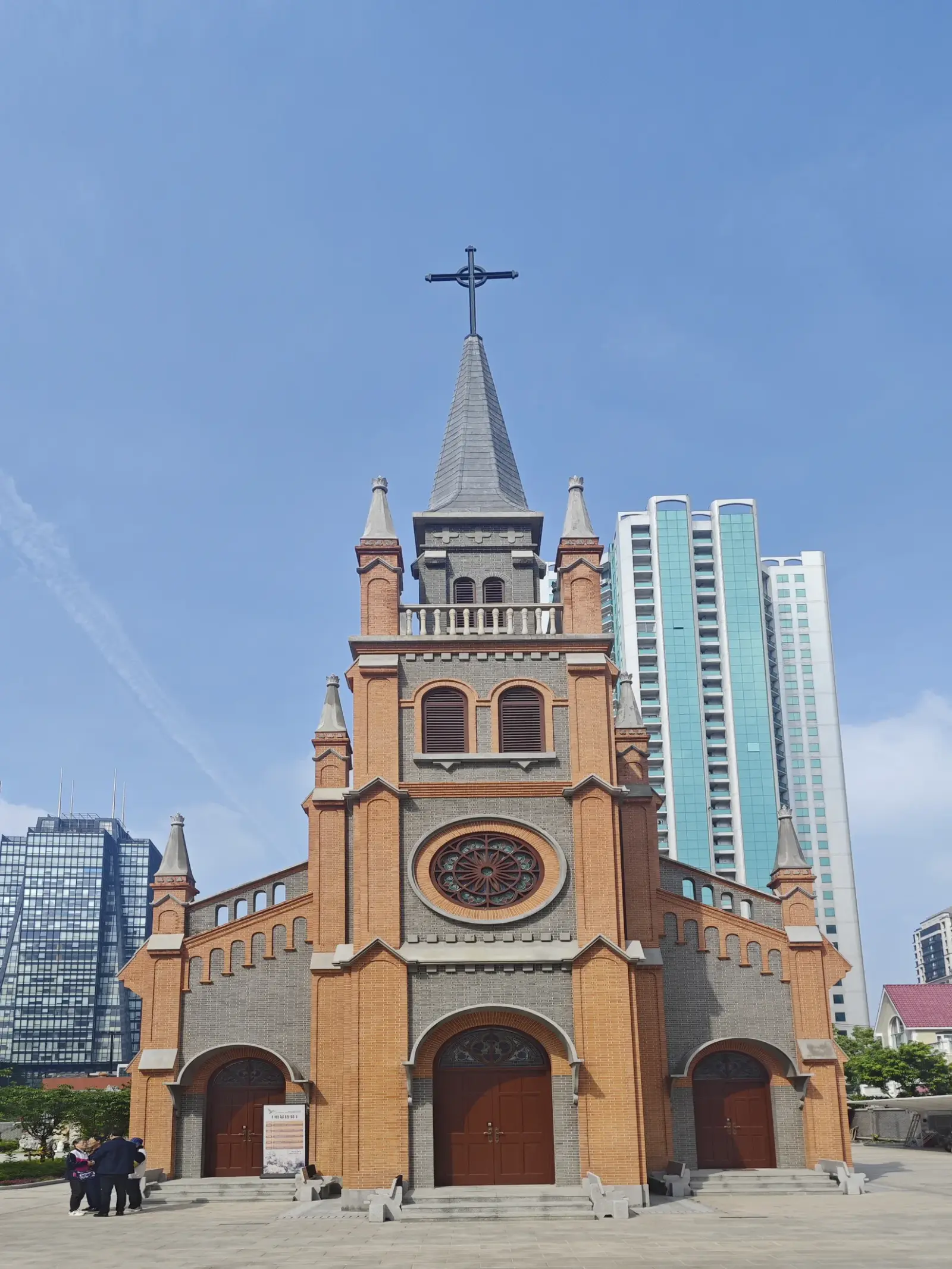
The orange-brick west front with its central spire, round window and two arched doors, against a blue sky.
Photo: 中二halo君 · used with permission · Xiaohongshu · BilibiliWhat you're looking at
- The slim bell tower, a rebuild from 1984 after the earlier one was destroyed
- The Pudong New Area preservation plaque at the gate, in Chinese and English
- The garden layout: rockery and flower beds were added in front of the church in the 1930s
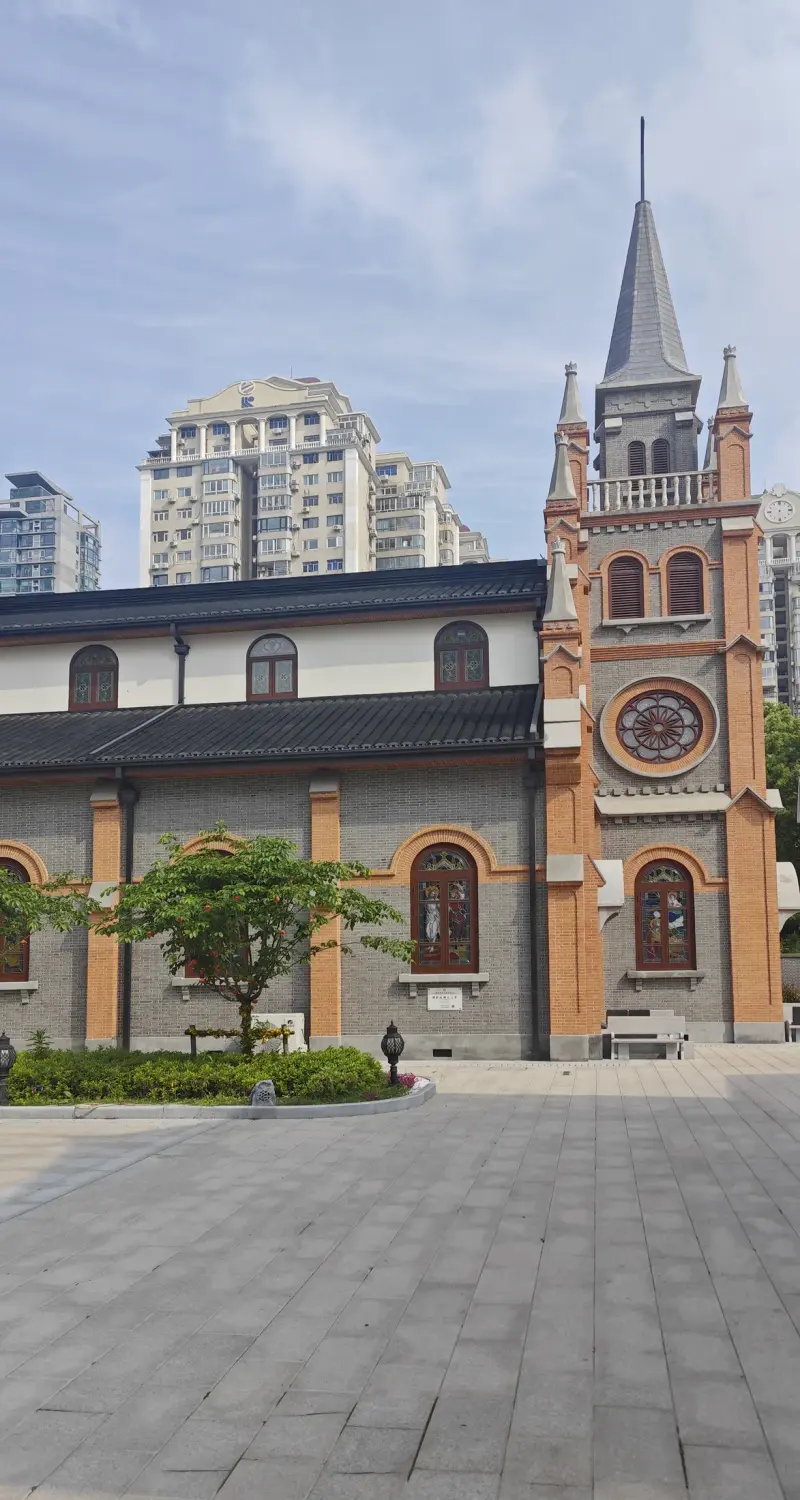
The clock tower and the arched windows of the nave, seen across the paved forecourt.
Photo: 中二halo君 · used with permission · Xiaohongshu · Bilibili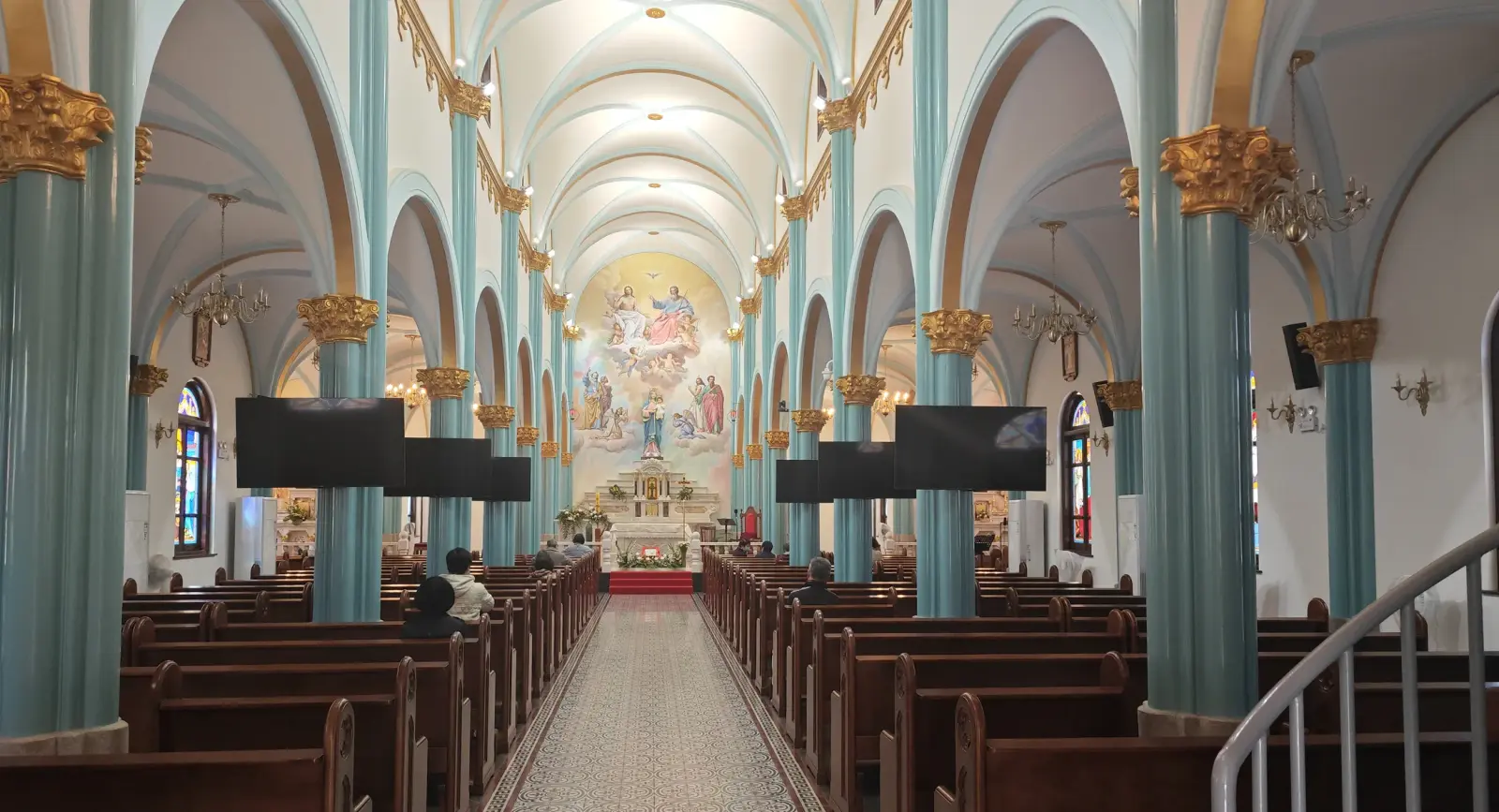
The nave, with turquoise columns, gilded capitals, vaulted ceiling and a painted apse.
Photo: 中二halo君 · used with permission · Xiaohongshu · Bilibili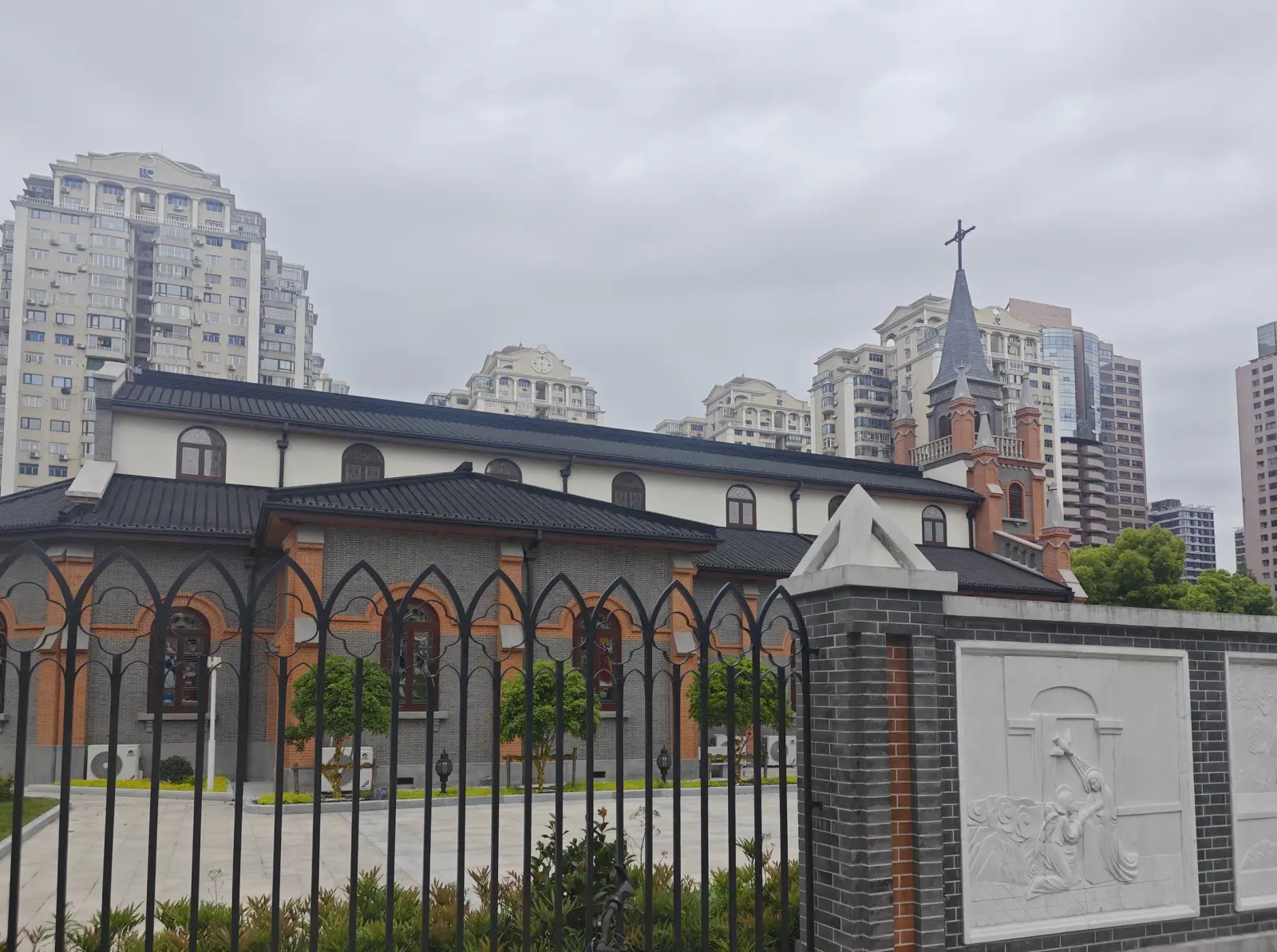
The church seen through the black boundary railing, with carved white relief panels set into the brick wall.
Photo: 中二halo君 · used with permission · Xiaohongshu · Bilibili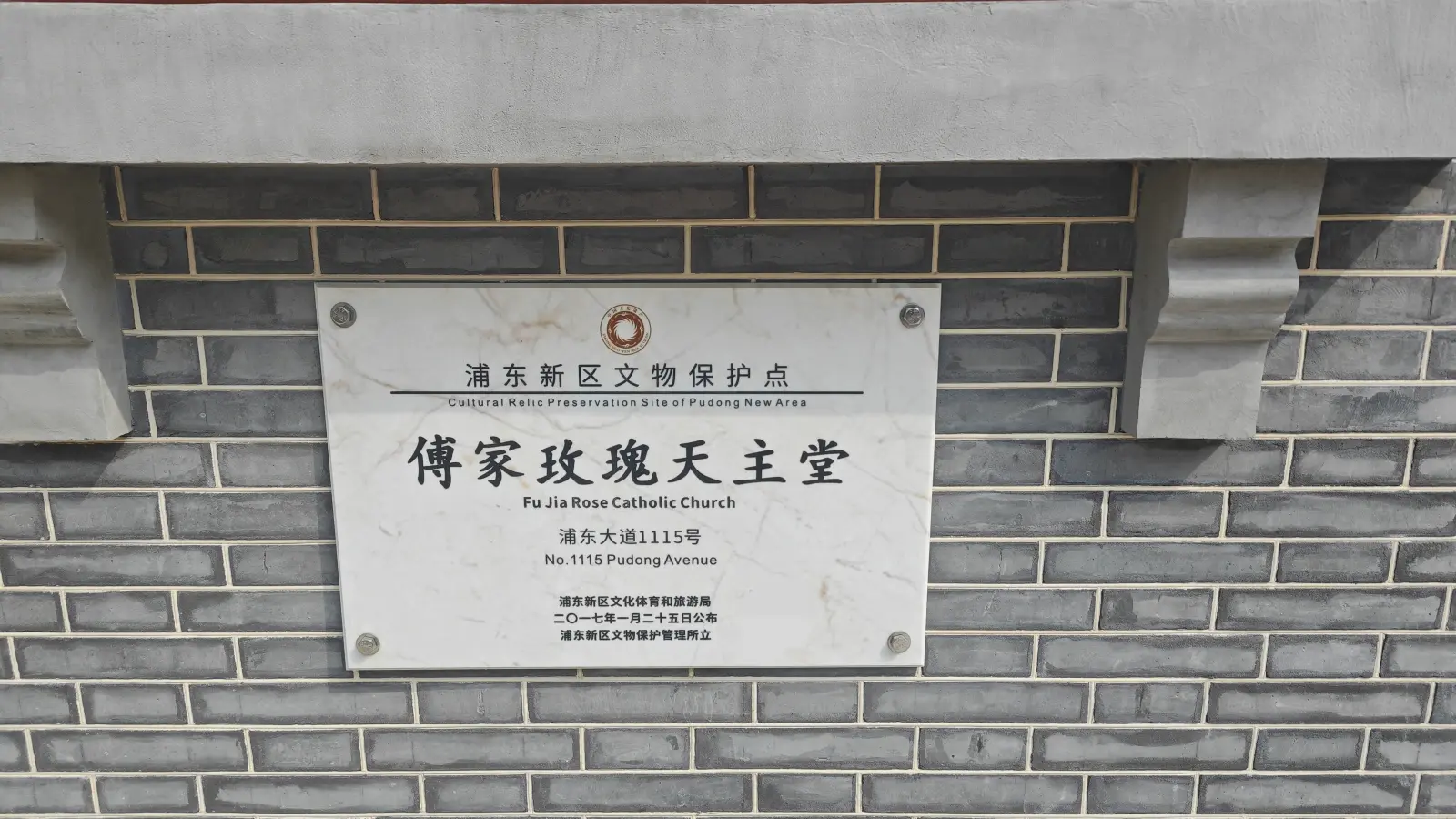
The Pudong cultural relic plaque naming Fu Jia Rose Catholic Church, No. 1115 Pudong Avenue.
Photo: 中二halo君 · used with permission · Xiaohongshu · Bilibili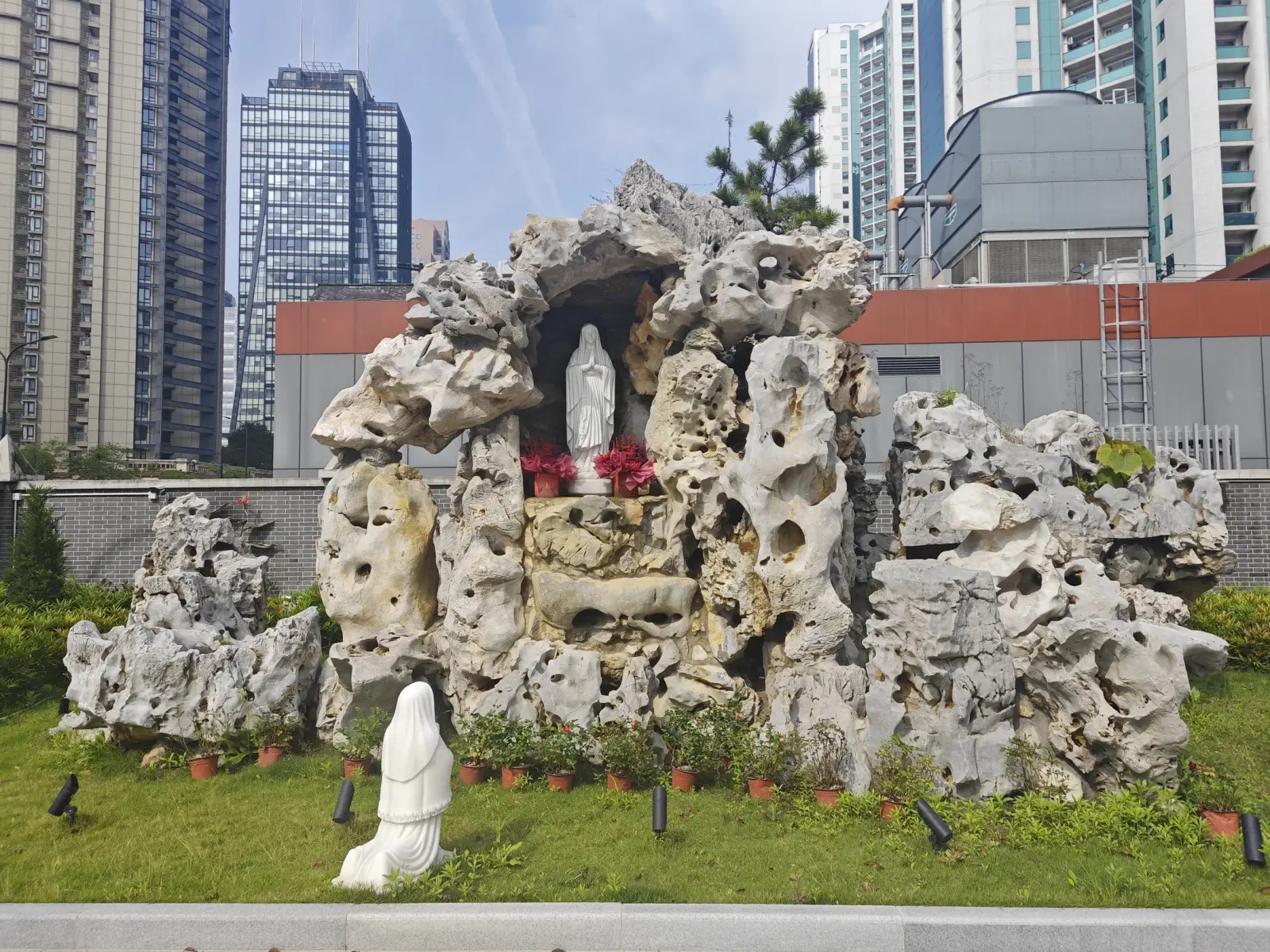
A grotto of weathered limestone rocks with a statue of the Virgin in a niche and a kneeling figure in front.
Photo: 中二halo君 · used with permission · Xiaohongshu · BilibiliThe story
Fujia (傅家, Fùjiā) church is a Gothic building on Pudong Avenue that has been a pilgrimage site for the Virgin Mary for almost a century. It is named after the Fu family village that once surrounded it.
Why is it called Fujia?
The church stood in a village whose families mostly bore the name Fu, so people called it Fujia Catholic Church. The first church was built in the Xianfeng years (1851-1861); the Pudong gazetteer credits the Italian bishop Rizzolati (罗伯济). In 1920 a French priest, Hui Jiliang (惠济良), added a Gothic hall dedicated to Our Lady of the Rosary, large enough for more than 700 people.
What made it a pilgrimage site?
In 1928 the Master General of the Dominican Order approved the church as a Marian pilgrimage place. The Catholic calendar sets October aside as the month of the Rosary, and pilgrims came each year at that time. In 1934 Fr Zhu Xuefan (朱雪帆) laid out a rockery and flower beds in front of the church.
What did the war and the 1960s do to it?
On 13 August 1937, when fighting broke out in Shanghai, a Japanese shell destroyed the bell tower. After the war the congregation raised money and repaired it. During the Cultural Revolution the church was put to other uses and the tower was demolished again. The church reopened in 1983; the tower was rebuilt in 1984. On 7 October 1985, the Rosary feast, Bishop Zhang Jiashu celebrated Mass here.
Why is the congregation smaller now?
In 1993 the Fu family village was cleared when Pudong’s land leasing began. Most families moved away, and the number of regular worshippers fell. The site is still 3,049 square metres with 1,178 square metres of buildings. In January 2017 Pudong New Area listed it as a cultural relic preservation site.
What to look for
The tower is the church’s best-known feature: slim and tall, it was rebuilt in 1984 and is the main way to spot the building from a distance. At the gate, find the preservation plaque dated 25 January 2017, in Chinese and English. Look at the grounds as well; the rockery and flower beds were added in the 1930s.
Signs at the church, in full (1)
The wording of plaques and notices as photographed. Timetables and rules may have changed since.
Fujia Catholic Church of the Rosary: Heritage Plaque
傅家玫瑰天主堂:保护点标牌 · see the photo
English printed on the sign
Cultural Relic Preservation Site of Pudong New Area
Fu Jia Rose Catholic Church
No.1115 Pudong Avenue
Our translation of the Chinese
Pudong New Area Heritage Protection Site
Fujia Catholic Church of the Rosary
1115 Pudong Avenue
Pudong New Area Culture, Sports and Tourism Bureau
Designation announced on 25 January 2017
Plaque erected by the Pudong New Area Cultural Heritage Protection and Management Office
Chinese text
浦东新区文物保护点
傅家玫瑰天主堂
浦东大道1115号
浦东新区文化体育和旅游局
二〇一七年一月二十五日公布
浦东新区文物保护管理所立
How to visit
- Status
- Visitor access not yet confirmed
- Opening times and prices not yet confirmed; check before you go.
- Nearest metro
- Metro directions will be added after a site visit.Plan a metro journey here →
Chinese address — show this to a taxi driver
浦东大道1115号
1115 Pudong Avenue, Pudong, Shanghai
Amap (高德地图) works best in mainland China; Apple Maps on iPhone. Both open in the app when it is installed.
The map position is approximate; the entrance has not been checked.
Nearby
Loading map…
Within a 20-minute walk
- St Joseph's Church, Qichangzhan其昌栈圣若瑟堂15 min walk
Sources
- 1.Shanghai Religion Gazetteer, Catholicism, Open Churches (with table of other open churches) (上海宗教志 · 第四编天主教 · 第一节 开放教堂(附:其他开放教堂一览表)), Shanghai Local Chronicles Office — §四 傅家玫瑰圣母堂; §四gazetteer
- 2.Pudong New Area Gazetteer 1993-2009, main religious venues, Catholic churches (浦东新区志(1993-2009) · 第三章 主要宗教活动场所及其活动 · 第三节 天主教堂), Shanghai Local Chronicles Office — 第三节 傅家天主堂gazetteer
- 3.Photographs of Shanghai churches and their signs, by 中二halo君 (上海教堂实拍照片(中二halo君)), 中二halo君, 中二halo君, 2026 — sign photographed at the churchfieldwork