Church
Hengmian Gu's Catholic Church
顾家楼圣母圣心堂gù jiā lóu shèng mǔ shèng xīn táng
Built in 1838 by four women, this basilica-plan church is the oldest surviving Catholic church building recorded in the former Nanhui area.
Directory and photographs supplied by 中二halo君. Photographs used with permission. · Xiaohongshu · Bilibili
- Built
- 1838
- Architect
- Not recorded
- Style
- chinese-western
- Heritage listing
- Pudong New Area Cultural Relic Protection Unit (浦东新区文物保护单位) · district · 2010
- Status
- Visitor access not yet confirmed
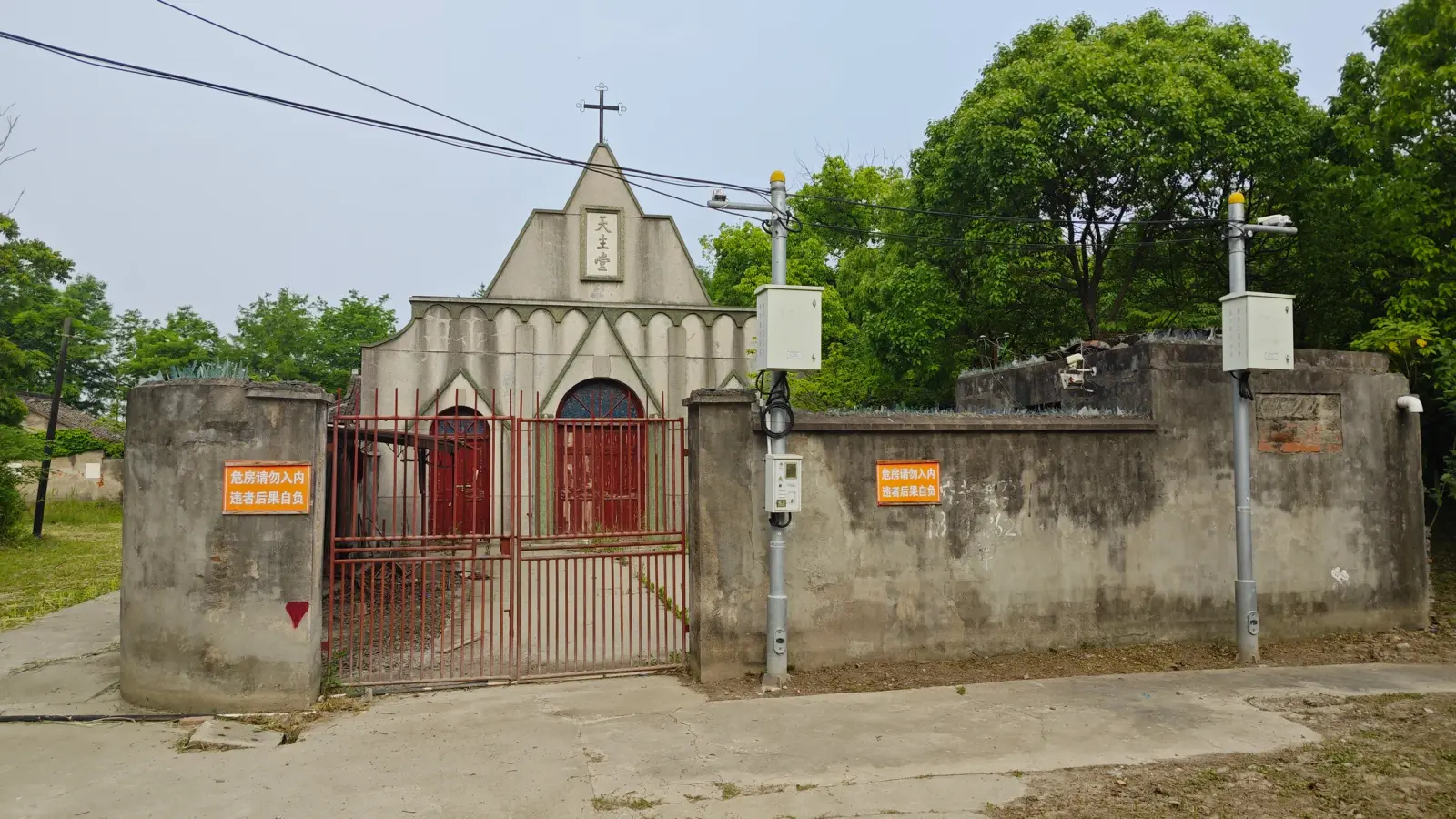
The church gabled front and cross behind a red iron gate and weathered boundary wall.
Photo: 中二halo君 · used with permission · Xiaohongshu · BilibiliWhat you're looking at
- The basilica plan: a long hall with a vestry at one end, facing west
- A hall of only about 127 square metres: small by comparison with the big nineteenth-century country churches
- The protection plaque, which gives the name 'Hengmian Gu's Catholic Church'
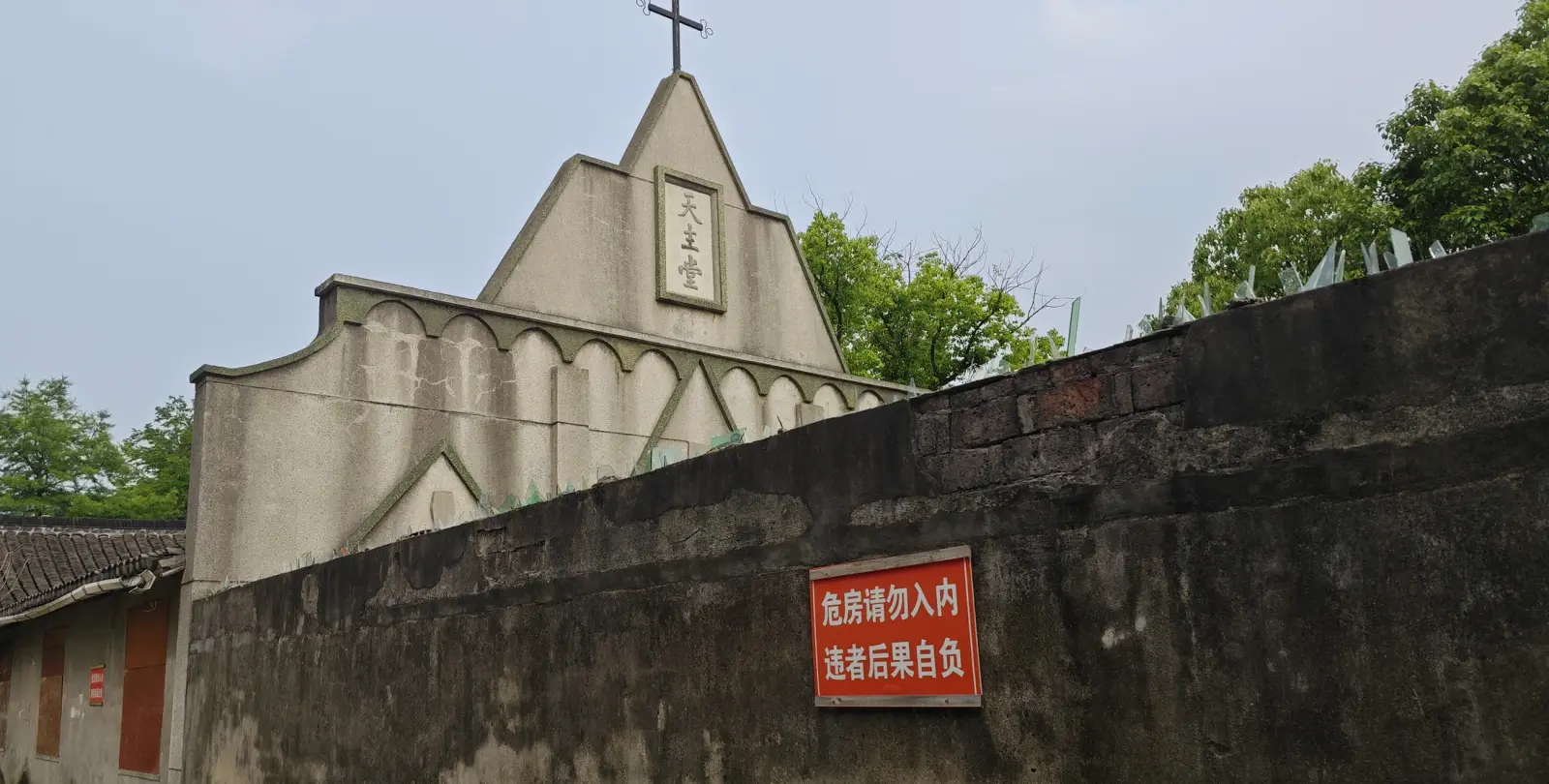
The gable with its cross and name board, seen over the boundary wall that carries a red warning notice.
Photo: 中二halo君 · used with permission · Xiaohongshu · Bilibili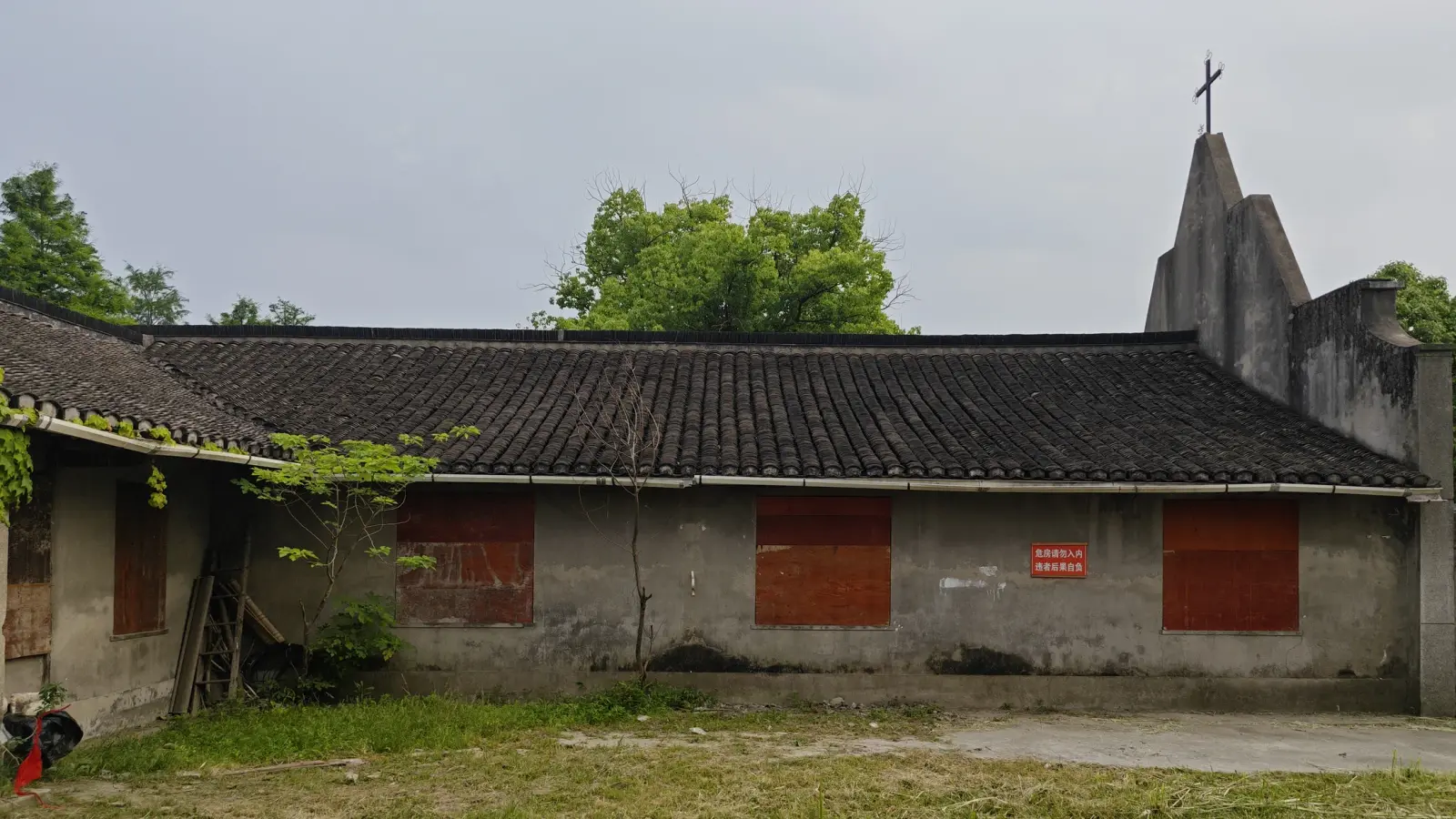
The long tiled side of the church with boarded-up windows and a tall gable cross at the end.
Photo: 中二halo君 · used with permission · Xiaohongshu · Bilibili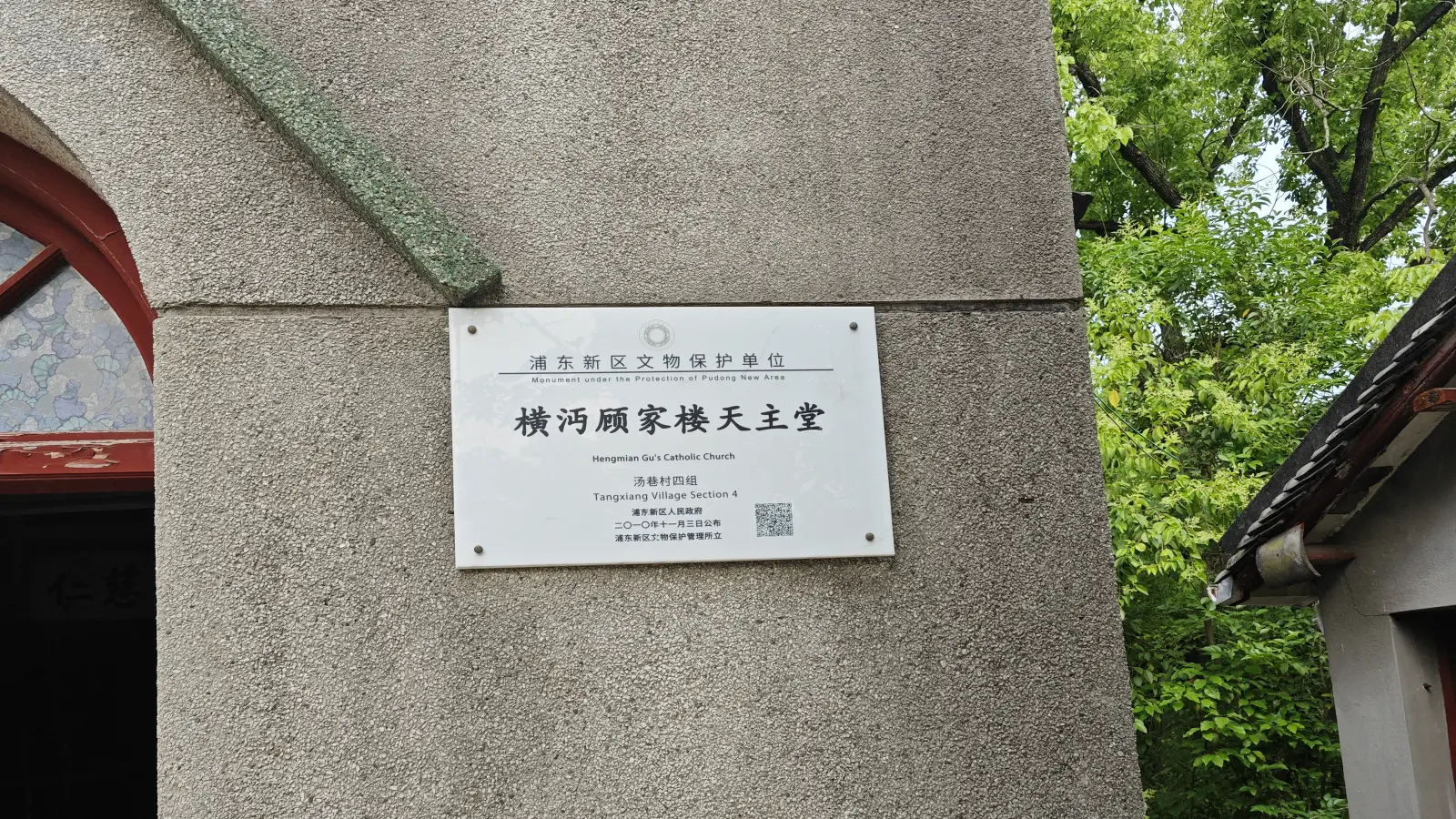
The Pudong heritage plaque beside the door, naming the church in Chinese and as Hengmian Gu's Catholic Church.
Photo: 中二halo君 · used with permission · Xiaohongshu · Bilibili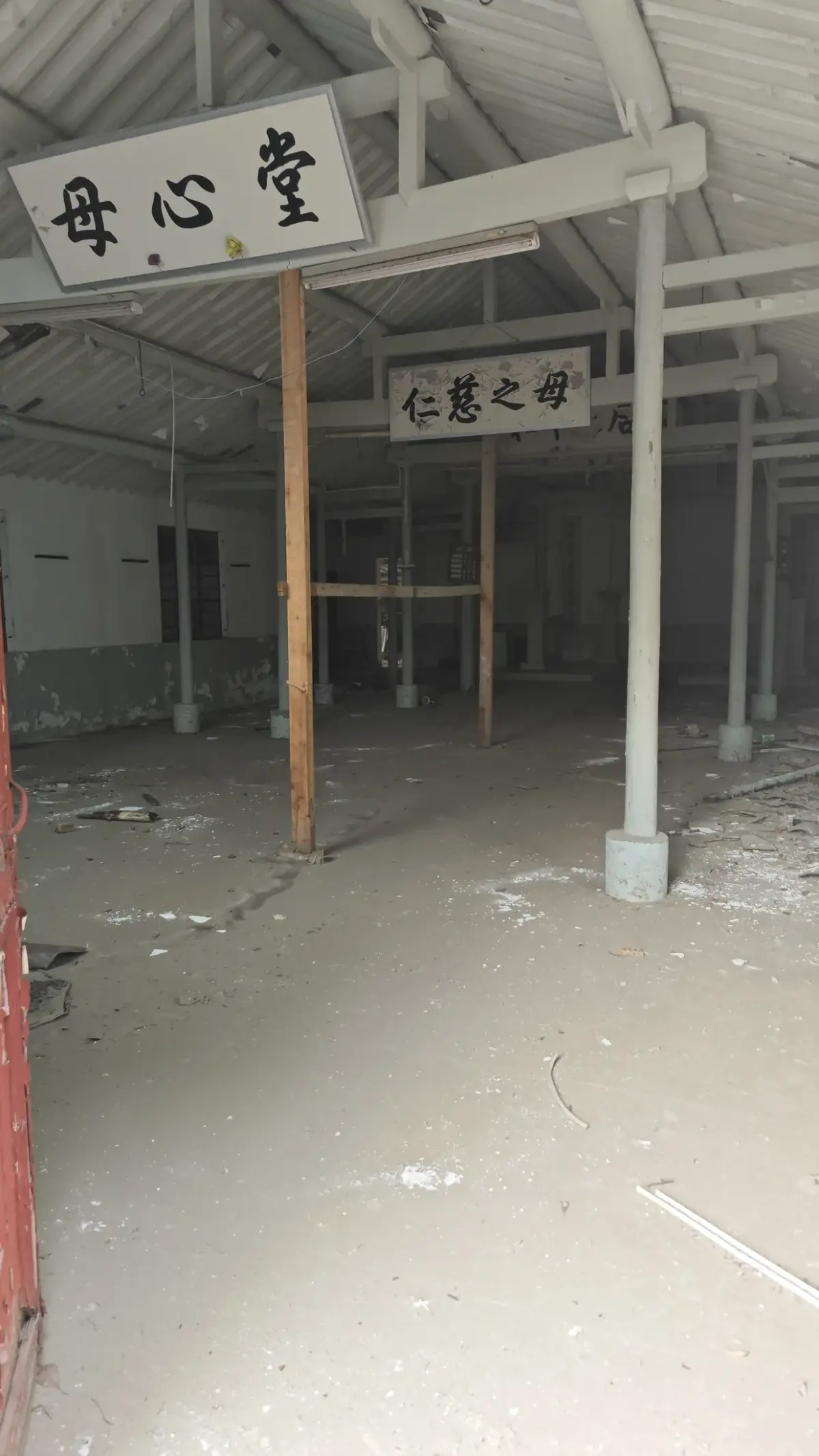
The empty interior, with painted board signs hung from the timber frame.
Photo: 中二halo君 · used with permission · Xiaohongshu · BilibiliThe story
Gujialou (顾家楼, Gùjiālóu) church is the oldest surviving Catholic church building recorded in the former Nanhui district, and one of the oldest in the Shanghai area. It is a small hall in a farming village in Kangqiao, and it was built in 1838 by four women.
Who built it?
The church was built in 1838, the 18th year of Daoguang, at a place called Tangjiaxiang in Hengmian township, and it was first named Tangjiaxiang Church. Four consecrated women built the hall, and a board named it the Church of the Four Virgins (四贞堂); the board was destroyed in the Cultural Revolution. The complex was a hall with a vestry, living rooms on four sides, a west wing and a bell tower.
What made the church important?
After 1949 it was one of the three main parishes in Nanhui county. In the 1960s county officials ranked it a class-two church, one of only two in the county. It was therefore a regional centre, even though its hall measures only about 127 square metres.
What happened between 1958 and 1992?
In 1958 the building became a production brigade office and the nave a sewing factory. During the Cultural Revolution the bell tower was demolished and the rest was used as a warehouse by a small factory. A major repair in 1989 was followed by the resumption of religious life in 1992.
Why do experts value the building?
In October 2001 experts judged it the oldest and best-preserved Catholic church surviving in the Nanhui area. They described its basilica plan as an early blend of religious architecture with local village building traditions. On 3 November 2010 Pudong New Area listed it as a cultural relic protection unit. The 2001 count recorded a hall of 127.2 square metres with a vestry, living rooms of 116.2 and a west wing of 28, together 271.4 square metres on a site of 913.
What to look for
Find the protection plaque by the gate, which uses the English name “Hengmian Gu’s Catholic Church”. Look at the hall’s basilica plan, which the experts singled out. The bell tower is missing: it was demolished in the Cultural Revolution.
Signs at the church, in full (1)
The wording of plaques and notices as photographed. Timetables and rules may have changed since.
Hengmian Gujialou Catholic Church: Heritage Plaque
横沔顾家楼天主堂文物保护单位铭牌 · see the photo
English printed on the sign
Monument under the Protection of Pudong New Area
Hengmian Gu's Catholic Church
Tangxiang Village Section 4
Our translation of the Chinese
Pudong New Area Protected Cultural Relic Site
Hengmian Gujialou Catholic Church
Section 4, Tangxiang Village
Pudong New Area People's Government
Designation announced on 3 November 2010
Marker erected by the Pudong New Area Cultural Relics Preservation Administration
Chinese text
浦东新区文物保护单位
横沔顾家楼天主堂
汤巷村四组
浦东新区人民政府
二〇一〇年十一月三日公布
浦东新区文物保护管理所立
How to visit
- Status
- Visitor access not yet confirmed
- Opening times and prices not yet confirmed; check before you go.
- Nearest metro
- Metro directions will be added after a site visit.Plan a metro journey here →
Chinese address — show this to a taxi driver
康桥镇汤巷村156号
156 Tangxiang Village, Kangqiao Town, Pudong, Shanghai
Amap (高德地图) works best in mainland China; Apple Maps on iPhone. Both open in the app when it is installed.
The map position is approximate; the entrance has not been checked.
Nearby
Loading map…
No other places on the site are within a 20-minute walk yet.
Sources
- 1.Nanhui County Gazetteer, continuation, selected religious venues (南汇县续志 · 宗教场所选介), Shanghai Local Chronicles Office — 横沔顾家楼天主堂gazetteer
- 2.浦东顾家楼天主堂 (GCatholic church record), GCatholic.org — church record, date 1838website
- 3.Nanhui County Gazetteer, churches (南汇县志 · 教堂), Shanghai Local Chronicles Office — 教堂 (1951 and 1960s lists)gazetteer
- 4.Photographs of Shanghai churches and their signs, by 中二halo君 (上海教堂实拍照片(中二halo君)), 中二halo君, 中二halo君, 2026 — sign photographed at the churchfieldwork