People · property developer, merchant, philanthropist
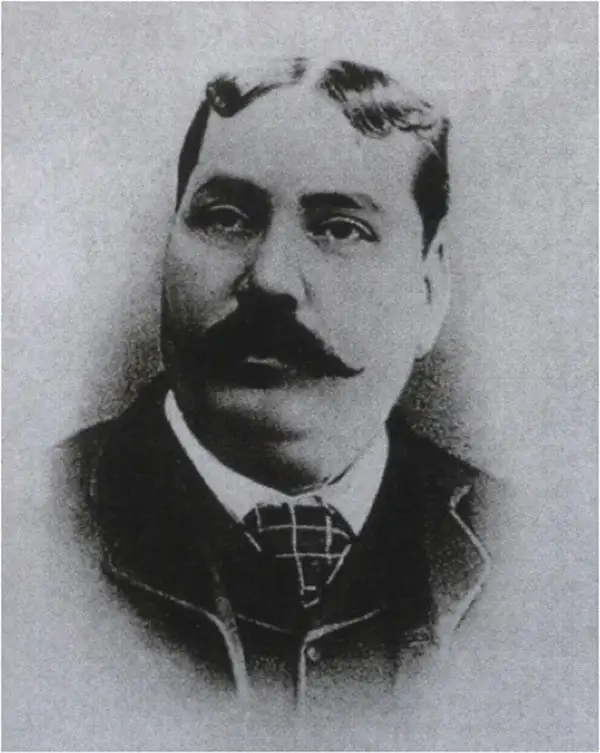
Silas Aaron Hardoon
哈同Hātóng · 1851–1931
Baghdad-born Jewish merchant, Nanjing Road landlord and owner of Aili Garden; his estate was disputed for sixteen years after his death in 1931.
- Born
- 1851
- Died
- 1931
- Known as
- property developer, merchant, philanthropist
- Also written
- Silas Hardoon · S. A. Hardoon · Saleh Hardoon · Sileh Hardoon · 雪拉斯·阿隆·哈同
Loading map…
Why Shanghai knows the name
Silas Aaron Hardoon (哈同, Hātóng) was a Jewish merchant from Baghdad who bought up frontage on East Nanjing Road and built Aili Garden (爱俪园), a walled private estate on the old Bubbling Well Road. The Shanghai Concessions Gazetteer calls him the richest foreigner in Shanghai. After he died in 1931 his estate was contested for sixteen years. His name now survives mostly through the exhibition hall that stands where his garden was, and through a shelf of stories about him that are harder to check than they look.
Where did he come from, and when did he arrive?
The sources do not agree on his birth year. The Shanghai Concessions Gazetteer gives 1846. English and Chinese Wikipedia give 1851, and Chiara Betta, who wrote on him in her doctoral work, prints “1851?” in her 2003 article. All agree on Baghdad, a poor Jewish family, and a move to Bombay in his childhood; the gazetteer puts the move at age five, Chinese Wikipedia at 1856. In Bombay he went to a charity school paid for by David Sassoon, the Baghdadi merchant whose firm was then building a trading empire across India and China.
The arrival date is just as loose. English Wikipedia and a genealogy blog say 1868. The gazetteer and Chinese Wikipedia say 1873. Historic Shanghai says 1874, and the University of Zurich’s China-West database, drawing on the Oxford Dictionary of National Biography and Jonathan Goldstein’s The Jews of China, puts him in Hong Kong for the Sassoons from 1868 to 1873 and in Shanghai from 1874. The safe statement is that he came out in his late teens or early twenties, in the employ of the Sassoon house, sometime between 1868 and 1874.
Was he really a rent collector and night watchman?
Probably he started low in the firm, but the colourful detail is thin. English Wikipedia says he began as a rent collector and watchman for David Sassoon & Co.; Historic Shanghai says godown watchman on twelve shillings a week. Neither points to a payroll or letter. The gazetteer, the most official source here, says only that the Sassoon firm sent him to Shanghai. The Sassoon firms did employ many poor Baghdadi Jews, and Betta notes that David Sassoon paid for their children’s schooling, so a modest start is plausible. It is not documented.
How did he move from salaried clerk to property owner?
The gazetteer’s version is short. In 1886 he left the original Sassoon house for the “New Sassoon” firm, E. D. Sassoon & Co., as manager of its property department, and traded opium for himself on the side. Other accounts reshuffle the order. English Wikipedia has him leave David Sassoon & Co. in 1882, try cotton trading for about three years, then manage the E. D. Sassoon branch; the Zurich database has cotton brokerage in 1882–1886 and E. D. Sassoon as manager and then partner in 1887–1901. Everyone has the same middle: a stretch inside the Sassoon world, handling property and opium.
Opium was legal then, and the sources are open about it. The gazetteer says that in the late nineteenth century he and the Sassoon firm jointly ran a foreign-opium exchange (洋药公所) that dominated the Shanghai trade. James Carter, writing for The China Project, says part of the fortune came from opium.
In 1901 he opened his own firm, Hardoon & Co. (哈同洋行), for property. English Wikipedia says instead that he left E. D. Sassoon in 1920, during a land boom; the gazetteer and the Zurich database both support 1901 as the break, so the 1920 date looks wrong, but I have not found a primary record that settles it.
How much of Nanjing Road did he own?
The gazetteer says he bought a great deal of land on and near Nanjing Road and built many houses to rent out. That much is firm. The Shanghai municipal information office still describes the lane houses of Cichang Lane and Ci’an Lane on East Nanjing Road as his development. How much of the street was his is not firm. Chinese Wikipedia and a 2014 news feature say 44 per cent, with no source. A count of his holdings against the street’s total would settle it, and I have not found one published.
The gazetteer adds a second claim: he paid 600,000 taels to pave one section of Nanjing Road with ironwood blocks (铁黎木), which raised his public profile and the value of his frontage. That is a single line in the gazetteer, repeated in Chinese Wikipedia. It is the best-attested part of the paving story, and it is much more modest than the version in which Hardoon built the road. Nanjing Road began in 1845 as a path called Park Lane and was named Nanking Road by the Municipal Council in 1862, according to English Wikipedia; a city government page says it was renamed around 1865. Hardoon cannot have built a road that was already there when he arrived.
What did he do in the two municipal councils?
He sat on both. The Shanghai Concessions Gazetteer says he was a director of the French Concession’s municipal council from 1892 to 1901 and of the Shanghai Municipal Council (the International Settlement’s governing body) from 1900 to 1903. The Zurich database calls both roles advisory and gives 1892–1903 and 1900–1904. Chinese Wikipedia gives 1887 and 1898, and Carter says he was elected to the Settlement council in 1900.
Betta adds a piece of context: Baghdadi councillors who were Sassoon partners gave the Sassoons a direct voice in the International Settlement until 1904. Her paragraph does not name Hardoon, but its footnote points to her work on him. The pattern of a Sassoon man on the council in these years fits the dates the gazetteer gives. I have not seen the council minutes, so the exact years remain unresolved.
Was he a Qing loyalist or a friend of revolutionaries?
Both, according to the gazetteer: late in the Qing period he sheltered anti-Qing revolutionaries and also kept good terms with the Qing government. The source gives no names and no dates. The record here is a single sentence, so I leave it there.
Who was Luo Jialing, and how did the household work?
His wife was Luo Jialing (罗迦陵), known in English as Liza Hardoon; the gazetteer writes her name 罗嘉陵. Chinese Wikipedia says she was born in Shanghai on 28 March 1864 to a French sailor who left soon after and a mother from Fuzhou who died when she was a child. Carter names the father as Isaac Roos. Some Chinese accounts say she was a sailors’ companion in Hongkou; the Chinese Wikipedia article states there is no substantive evidence for that. On the marriage, Chinese Wikipedia gives 24 September 1886 and Carter says 1886, in both Jewish and Chinese ceremonies; Historic Shanghai says 1895. According to the Chinese Wikipedia article on the estate case, the ceremony had no legal registration and they registered at the British consulate in 1928.
She was a devout Buddhist; he did not convert. Betta pictures a man who was, by her reading, the least Anglicised of the Baghdadi elite: his English carried a thick Arabic accent, he still jotted notes in Judaeo-Arabic in the late 1920s, and he was the only Baghdadi who regularly received visitors in Chinese dress. She argues that in Chinese scholarly publications he sponsored, he had himself shown in a scholar’s gown, as a Chinese merchant-philanthropist, not an English gentleman.
The couple had no children of their own. Hardoon adopted foreign children who took his surname, and Luo adopted Chinese children who took hers. Counts vary: Chinese Wikipedia says 11 foreign and 9 Chinese (though its own list has 11), Historic Shanghai says 11 and 11, and a genealogy blog says about ten or eleven in all. The Hardoon household also relied on Ji Juemi (姬觉弥), who grew up in the garden and later served as manager and as an executor.
What was Aili Garden?
In 1901 Hardoon bought land beyond the settlement boundary on the Jing’an Temple road, now West Nanjing Road. Luo hired the monk Huang Zongyang (黄宗仰) as designer; Chinese Wikipedia says 1902 and Historic Shanghai says 1905. The garden was finished in 1909 (Historic Shanghai, Shanghailander) or 1910 (Chinese Wikipedia). Sizes quoted include 113,000 square metres, 26 acres and 30 acres. Its name, Aili, is generally read as combining the character for love with the first character of Liza’s given name.
The garden doubled as a Buddhist centre. Luo funded a lead-type edition of the Buddhist canon from 1909. In 1913–14 the Huayan University for monks was founded in the grounds and left within months. Hardoon and Ji Juemi then set up Cangsheng Mingzhi University (仓圣明智大学) with attached schools.
Aili Garden was also a household of dozens: family, monks, nuns, tutors and staff. Hugues Martin writes that, before Historic Shanghai published family pictures in 2020, no pictures of the garden were known.
What happened to the garden?
After the Pacific War began in December 1941 the Japanese army used the garden as a base. A fire in 1943 destroyed most of it (Shanghailander and Carter); Historic Shanghai says a fire in the winter of 1941. The graves in the grounds were later moved. After 1949 the city took over the land and put the Sino-Soviet Friendship Building there, dated 1954 or 1955 by different pages. It is now the Shanghai Exhibition Centre.
How did he die, and why did his estate go to court?
Hardoon died at Aili Garden on 19 June 1931. The funeral caused a rift: Luo’s Buddhist customs clashed with the Jewish burial society, and its president resigned, according to Mishpacha. Hardoon was buried in a marble mausoleum in the garden.
His estate was reported at £4 million by the British consul, 172 million yuan or US$150 million in one Chinese account, and US$650 million in an unsourced English Wikipedia line. Chinese Wikipedia’s article on the estate case describes a will dated 10 February 1931 that left everything to Luo if she outlived him, and a British consular court certified it.
The claims came quickly. Ezra Abdullah Hardoon, said to be a cousin, sued in the British court in Shanghai in September 1931; another claimed cousin followed in 1932; both claims were dismissed. A Baghdad court on 2 May 1932 named twelve cousins as heirs. In February 1937 the British court in Shanghai set that judgment aside and upheld Luo’s right. The Iraqi government also said he had died an Iraqi national, a claim complicated by the fact that Hardoon had sought British and French consular protection that conferred no citizenship.
Luo died on 3 October 1941, and the contest passed to the adopted children over a second will dated 30 September 1937. A Shanghai court closed the family case in 1947, sixteen years after his death. An Iraqi claimant, Ezra Salch Hardoon, kept filing until a Shanghai court ended the matter in June 1957.
What the sources disagree on
- Birth: 1846 (gazetteer), 1851 (most others).
- Arrival: 1868, 1873 or 1874.
- Leaving the Sassoon firm: 1882, 1886, or never, until 1901 or 1920.
- Council years: three different sets, and one version calls the roles advisory.
- Marriage: 1886 or 1895; registered 1928 or civil at an earlier date.
- Adopted children: ten, eleven or twenty-odd, depending on the page.
- Fortune: from £4 million to US$650 million.
- Garden: finished 1909 or 1910; destroyed in 1941 or 1943.
Where Betta’s work is the source, it is the stronger one: her archive notes cite the surviving Hardoon Company papers in the Shanghai house property administration archives. I could not read her thesis or her Scribe article, so some of her conclusions reach this page only through secondary summaries.
What to look for
The garden is gone. Its site is the Shanghai Exhibition Centre on West Nanjing Road, and that building is the place to stand if you want to picture the estate that once filled the plot. For Hardoon’s property work, walk East Nanjing Road and look for the lane entrances at Cichang Lane and Ci’an Lane, which a city government page credits to him. The ironwood paving is gone, and the pedestrian street surface is modern. The Beth Aharon synagogue he paid for stood on Museum Road; I did not find a source saying whether the building survives, so check before making a trip.
What Shanghai says, and what the record shows
Popular stories, told in our words, checked against the sources listed below.
- Unproven
The story: He arrived with nothing and started as a rent collector or night watchman for the Sassoons, then rose to run their property.
The record: Several modern summaries use the words rent collector and watchman, and one gives a wage of 12 shillings a week, but none cites a payroll or contemporary account. The Shanghai gazetteer says only that the Sassoon firm sent him to Shanghai in 1873 and that by 1886 he managed a property department.1,2
- Supported
The story: He paid for part of Nanjing Road to be paved with ironwood blocks (铁黎木), which raised his fame and the value of his own shops.
The record: The Shanghai Concessions Gazetteer records a payment of 600,000 taels for ironwood paving of one section of Nanjing Road and ties it to rising values for his property there. A Chinese encyclopaedia repeats it. I found no municipal council record, so this rests on the gazetteer's single line.1
- Not what the record shows
The story: Hardoon built Nanjing Road itself.
The record: The street existed decades before any proposed arrival date: it began as a path in the 1840s and was named Nanking Road by the Municipal Council in 1862 (or around 1865, per a city government page). What the sources credit him with is owning much of the frontage and paying for paving on one stretch.1,10
- Unproven
The story: He owned 44 per cent of the property on Nanjing Road.
The record: The figure appears in a Chinese news feature and in Chinese Wikipedia with no source, and the gazetteer says only that he bought a great deal of land on and near the road. Nobody I found has published the land-deed count that would test it.1,3
- Unproven
The story: Hardoon and the Sassoon family were bitter rivals.
The record: No source I found documents a quarrel. The gazetteer shows the opposite in the 1890s: a joint opium exchange with the Sassoon firm. Chiara Betta shows him as an outsider among Baghdadi Jews in style and habit, which is not the same as a feud.1,4
Timeline
- 1846Birth year given by the Shanghai Concessions Gazetteer (other sources say 1851)1
- 1873Posted to Shanghai by the Sassoon firm (other sources: 1868 or 1874)1
- 1886Marries Luo Jialing; joins E. D. Sassoon & Co. as property manager (gazetteer)1,5
- 1892Begins service on the French Concession's municipal council (gazetteer: to 1901)1
- 1900Joins the Shanghai Municipal Council (gazetteer: to 1903; other sources give other dates)1
- 1901Founds Hardoon & Co. (哈同洋行) and buys the land for Aili Garden1
- 1909Aili Garden completed (one source says 1910)1
- 1927Beth Aharon synagogue dedicated; completed 19284
- 1931Dies at Aili Garden on 19 June5
- 1937British court in Shanghai rejects the Baghdad cousins' claim7
- 1941Luo Jialing dies on 3 October; the estate dispute passes to the adopted children12
- 1947A Shanghai court closes the family inheritance case12
Their Shanghai on the map
Tap a name in the text, or “map” in this list, to see where it is; names with their own page link to it.
- 01Aili Garden (Hardoon Garden), site of爱俪园旧址lived hereHardoon's walled garden estate on the old Bubbling Well Road, built 1901–1909/10. The site is now the Shanghai Exhibition Centre.approximate position
- 02East Nanjing Road南京东路ownedmapThe shopping street where Hardoon owned frontage and, by one account, paid for ironwood paving.
Connections
 David Sassoon & Co.老沙逊洋行Sent to Shanghai by David Sassoon & Co. in the early 1870s (dates differ)
- E. D. Sassoon & Co.新沙逊洋行Property manager, then partner, of E. D. Sassoon & Co. until 1901 (sources differ)
- Henry Lester雷士德Named beside Silas Hardoon in the Concessions Gazetteer's account of foreign property firms and lane builders
- Luo Jialing (Liza Hardoon)罗迦陵Husband of Luo Jialing (Liza), who inherited his estate
 The Sassoon family沙逊家族Silas Hardoon worked for the Sassoon firms in Shanghai before running his own business
Places


Shopping street· c. 1851–1854
East Nanjing Road Pedestrian Street
南京东路步行街Nánjīng Dōnglù Bùxíngjiē
Shanghai's best-known shopping street, pedestrianised in the late 1990s and extended east to the Bund in September 2020.
Stories
- TopicMerchants of Shanghai: the hongs, the Baghdadi families and the men who built on the Bund
- TopicShanghai Modern: the dance halls, records, films and neon of the 1920s–40s
- The four companies: Nanjing Road's department stores, roof gardens and neon, 1917–1956
- The hongs: how Shanghai's foreign trading houses rose, changed and left, 1843–1958
Sources
- 1.Shanghai Concessions Gazetteer, part 6 People, ch. 1 Biographies: Silas Aaron Hardoon (1846–1931) (上海租界志·第六篇 人物·第一章 人物传略·哈同(Silas Aaron Hardon 1846~1931年)), 上海市档案馆(编), 上海社会科学院出版社;上海市地方志办公室数字方志(在线), 2001 — heading line and first sentence; first paragraph; '1873年被英商沙逊洋行派到上海任职'; '1901年开设哈同洋行'; '1892~1901年、1900~1903年间'; '出资60万两用铁黎木铺设南京路之一段'; '罗嘉陵'; '在静安寺越界筑路一带修建豪华私家花园——爱俪园'gazetteer
- 2.Silas Aaron Hardoon (Silas Aaron Hardoon), Wikipedia contributors, Wikipedia — infobox and Early life; Early life; Career, 1868; Career; Career, 1920; Aili Park; Wealthwikipedia
- 3.Silas Hardoon (Chinese Wikipedia) (哈同), Wikipedia contributors, Chinese Wikipedia — timeline, first entry; timeline, 1856; timeline, 1901; timeline 1887 and 1898; popular stories, Nanjing Road; Nanjing Road; timeline, 1931; timeline, 1954wikipedia
- 4.From Orientals to Imagined Britons: Baghdadi Jews in Shanghai (From Orientals to Imagined Britons: Baghdadi Jews in Shanghai), Chiara Betta, Modern Asian Studies 37(4), Cambridge University Press (text mirrored by jewsofchina.org), 2003 — section on Silas Aaron Hardoon, '1851?-1931'; section on Sassoon employment; footnote 17; first mention of Hardoon, with footnote 8; passages citing footnotes 32, 33, 40, 45; footnote 8 text; passages citing footnotes 32–33; footnotes 8, 45, 57article
- 5.Inside Hardoon's Garden (Inside Hardoon's Garden), Historic Shanghai, historic-shanghai.com — first paragraph under Silas Aaron Hardoon; first paragraph; The Garden; Adopted Children; Residents and Staff; Later historywebsite
- 6.Hardoon, Silas Aaron (entity 1345), China-West database, University of Zurich (chronology cites Goldstein, The Jews of China, and the Oxford DNB) (Hardoon, Silas Aaron (entity 1345), China und der Westen database), Ostasiatisches Institut, Universitaet Zuerich, e-aoi.uzh.ch — chronology 1868–1873 and 1874–1882; chronology 1882–1886 and 1887–1901; chronology 1901; chronology 1892–1903 and 1900–1904website
- 7.Silas Hardoon, richest man in Asia (genealogy blog, no citations) (Silas Hardoon, richest man in Asia), Bill Gladstone, billgladstone.ca, 2023 — Arrived in Shanghai at about 17; section on marriage; will and litigation; adopted childrenwebsite
- 8.Luo Jialing, a.k.a. Liza Hardoon, and the height of global Shanghai (Luo Jialing, a.k.a. Liza Hardoon, and the height of global Shanghai), James Carter, The China Project, column This Week in China's History, 2021 — section on wealth; section on philanthropy; meeting and marriage; The Hardoon Gardens; later life and funeralarticle
- 9.China News Service feature on Hardoon, 6 Jan 2014 (cites only unnamed insiders) (Chinese news feature on the Hardoon family (2014-01-06; headline garbled in retrieval)), China News Service (chinanews.com), 2014 — body text; datesarticle
- 10.Nanjing Road (Nanjing Road), Wikipedia contributors, Wikipedia — Historywikipedia
- 11.The history of East Nanjing Road (Shanghai Municipal Government Information Office, 23 Oct 2020) (南京东路的历史变迁 | 感知上海 P1), Shanghai Municipal Government Information Office (shio.gov.cn), 2020 — Nanjing Road origins; paragraph on Cichang Lane and Ci'an Lanewebsite
- 12.Luo Jialing (Chinese Wikipedia; cites Tang Peiji et al., Shanghai Jews, 1992) (罗迦陵), Wikipedia contributors, Chinese Wikipedia — marriage section; title; Buddhism; will and estate; death and burial; adopted childrenwikipedia
- 13.The Hardoon estate case (Chinese Wikipedia) (哈同遗产案), Wikipedia contributors, Chinese Wikipedia — background, 1886 and 1928; death and early disputes; first will; 1931–1937; second will; 1947; post-1949wikipedia
- 14.Aili Garden (Chinese Wikipedia; cites Huang Guoxin, Hardoon Garden Traces, 2009) (爱俪园), Wikipedia contributors, Chinese Wikipedia — construction and design; 1914 entry; 1955wikipedia
- 15.Silas Hardoon's garden (Silas Hardoon's garden), Hugues Martin, Shanghailander.net, 2020 — 1909; 1941–1956 entrieswebsite
- 16.A Lost Legacy (A Lost Legacy), Dovi Safier and Yehuda Geberer, Mishpacha, issue 857 (21 April 2021), 2021 — section on the synagogue; section on his funeralarticle