Street · in Outer Shanghai
Xinchang Ancient Town
新场古镇Xīnchǎng Gǔzhèn
Salt-field market town in Pudong with canals, stone bridges and Qing houses; Southern Song origins, national historic town, reached from Metro Line 16.
- Heritage listing
- National historic and cultural town (中国历史文化名镇) · national · fourth · 2008
- Status
- Open to visitors
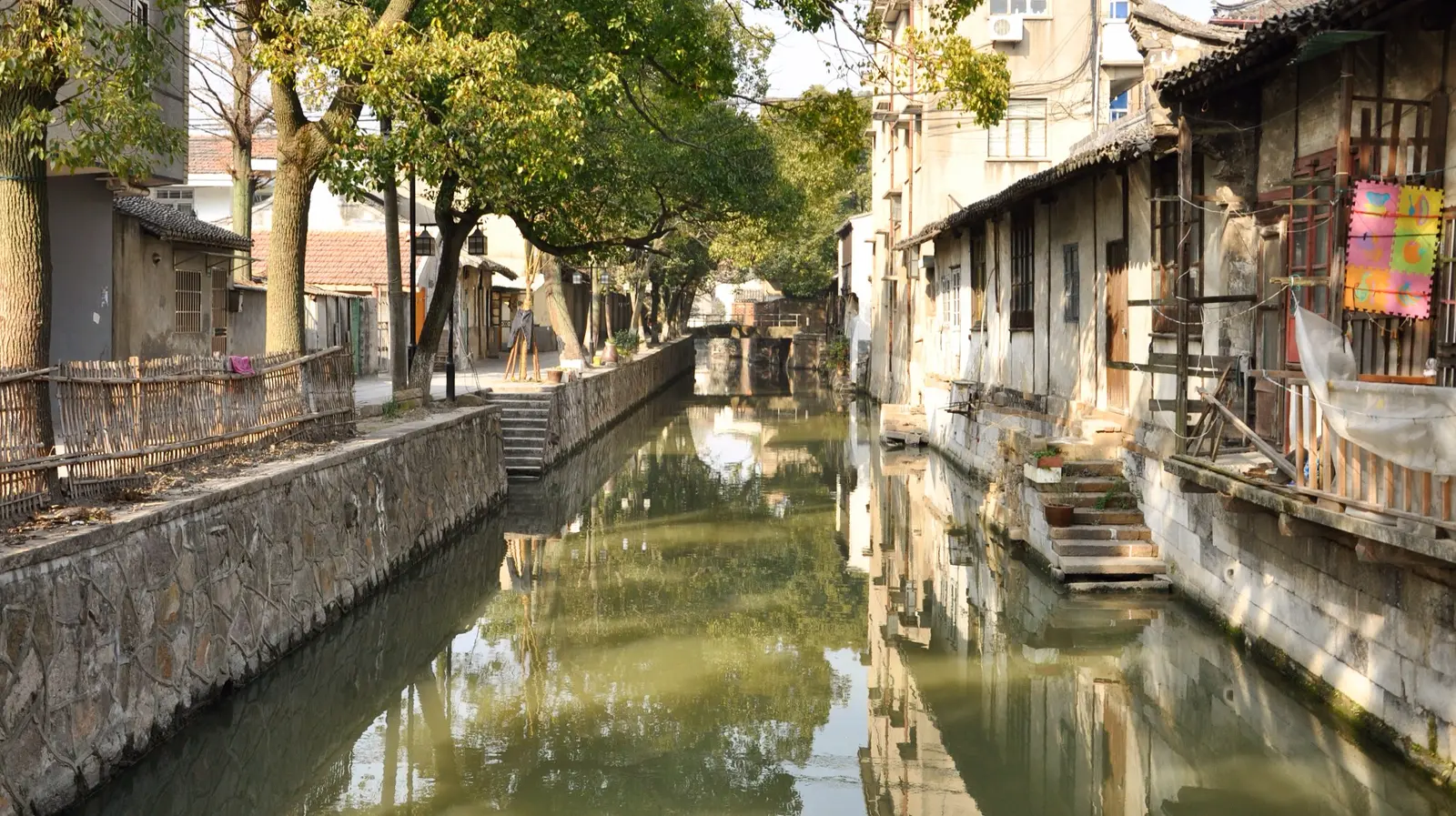
Stone embankments and water steps along the Houshi River.
Photo: Fayhoo · CC BY-SA 3.0
What you're looking at
- The canal embankments and saddle-shaped water landings along the Houshi River.
- Qianqiu Bridge, the old stone arch.
- The Zhang hall and other courtyard houses off Xinchang Street.
- The first teahouse at the foot of Hong Bridge.
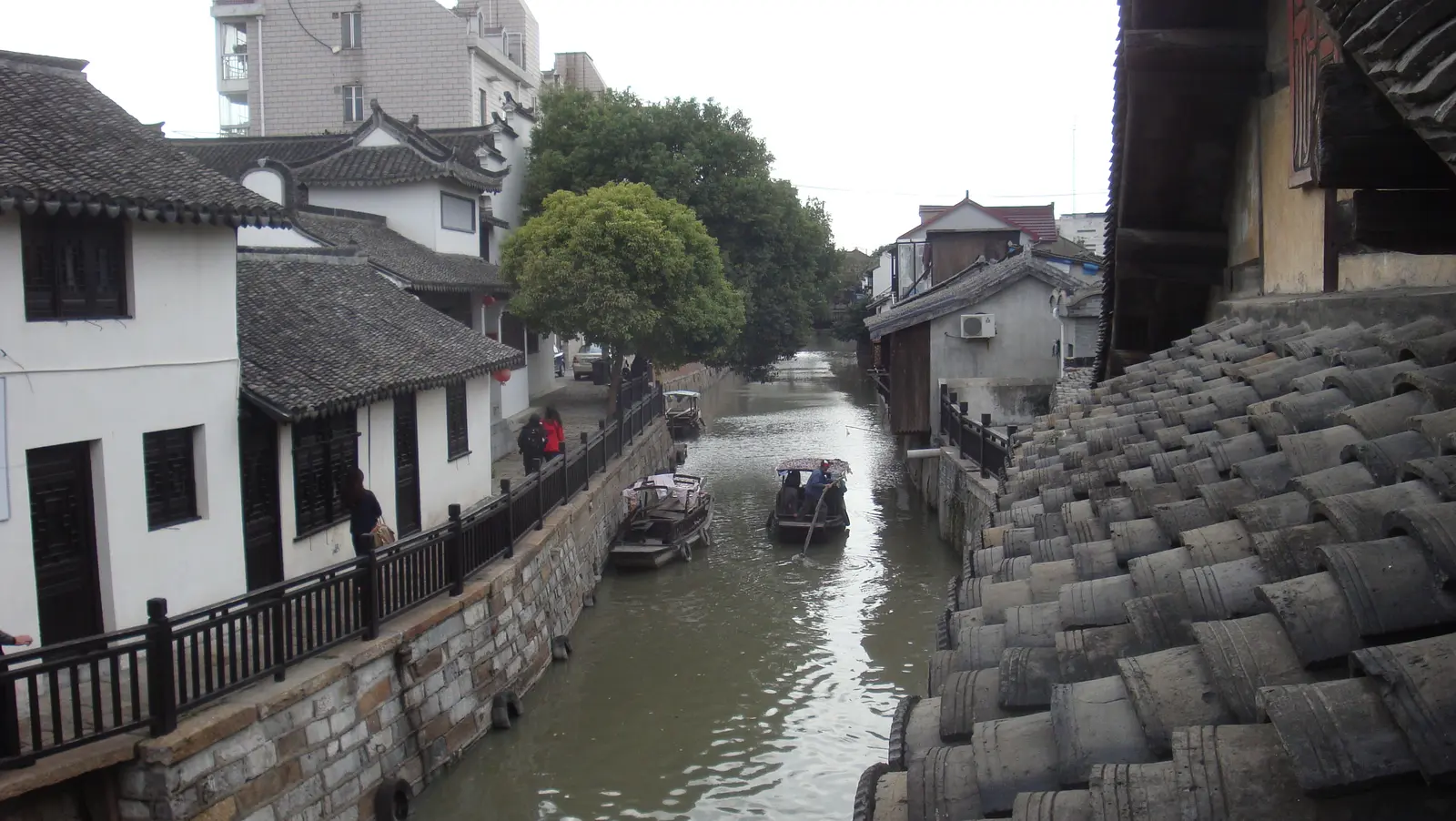
Whitewashed houses and boats on a canal in the old town, 2011.
Photo: thedakotakid · CC BY-SA 2.0
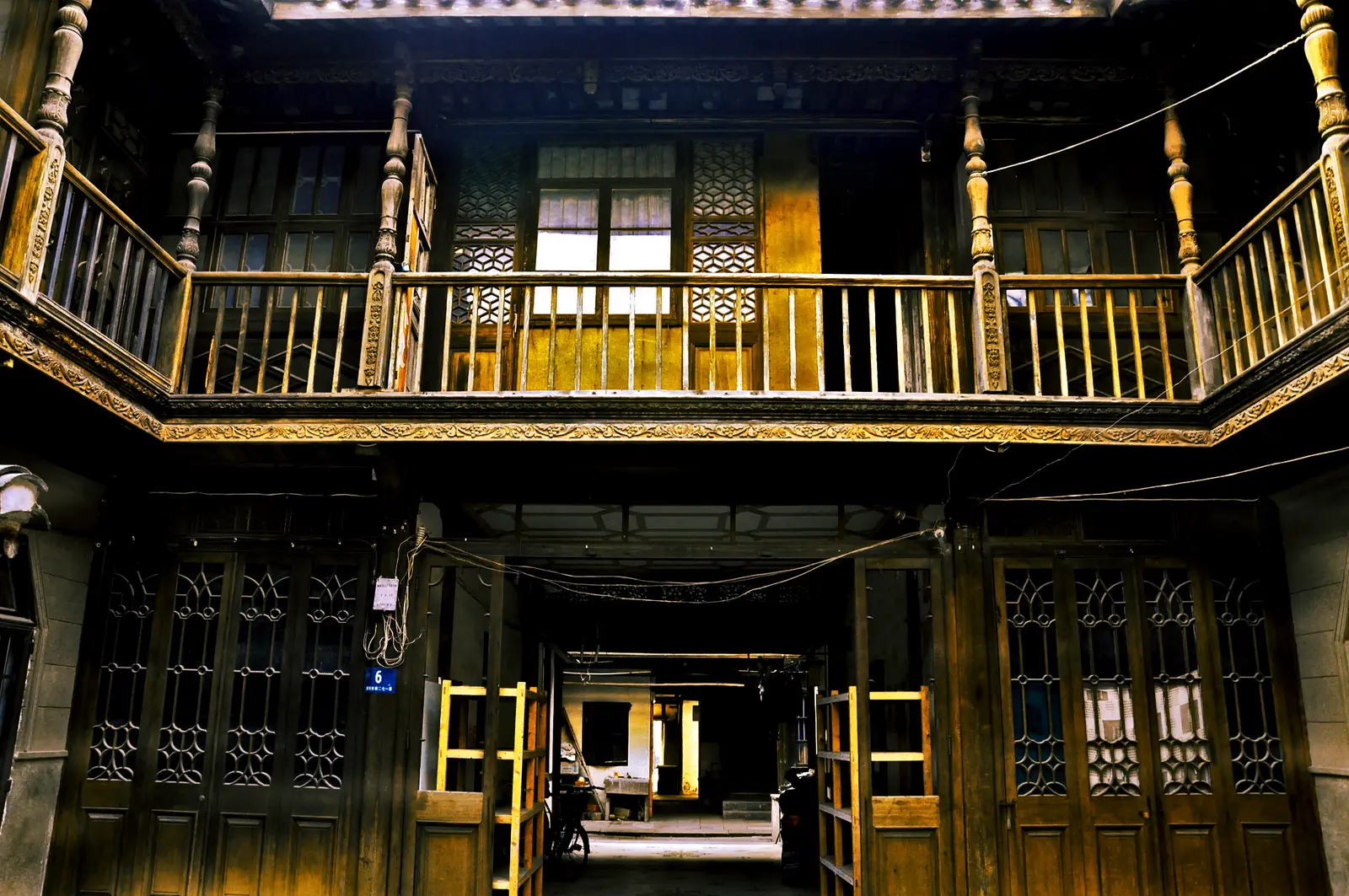
The Zhang house at No. 271 Xinchang Street, with carved timber galleries around its courtyard.
Photo: Fayhoo · CC BY-SA 3.0
The story
Xinchang Ancient Town (新场古镇, Xīnchǎng Gǔzhèn) is a canal town in Pudong, a long way south of the Bund, with Qing-dynasty courtyard houses, stone bridges and a layout shaped by salt. It is quieter than the better-known water towns, and works well as a half-day trip from the Line 16 metro.
From salt field to market town
The name means “new salt field”. The salt field at Xiasha was moved here in the early Yuan, leaving the old site known as the old field. The settlement itself goes back to the Southern Song, around 1128.
Xinchang is on China’s national list of historic and cultural towns, added in 2008. Salt merchants settled here, and shops, restaurants and theatres followed. By the Ming dynasty a saying ranked Xinchang first among the eighteen towns of Pudong. The Ming and Qing were its best years, with more than 300 shops, and salt production faded afterwards.
What you see
Streets cross at the centre (Xinchang Street, Hongdong Street and Hongxi Street), and four canals divide the old town into a grid. Along the canals, brick and stone embankments from the Yuan to the Republican period run for some 1,500 metres, with more than 70 water landings, 15 of them saddle-shaped.
Qianqiu Bridge, a stone arch from the Qianlong reign, is the best-preserved of its kind in the former Nanhui district. Hongfu Bridge was rebuilt in stone in 2006. Among the larger houses are the Zhang hall, a four-courtyard house from the Xuantong reign mixing Chinese and Western touches, the Ye and Xi houses, and Chongxiu Hall (1907). A dozen or so temples survive, among them Beishan, Nanshan and Qinglong.
The first teahouse stands at the foot of Hong Bridge. It is a Qing building renovated in the 1920s and still serves tea. It has been used as a film location, most famously in Lust, Caution; the town also turns up in See You Tomorrow and Ip Man. Local storytelling and music, including Shanghai gong-drum storytelling and Pudong pipa, are part of the town’s intangible heritage.
Getting there
Take Metro Line 16 to Xinchang station. The old town is a few kilometres away, so plan on a local bus or taxi for the last stretch. Show the driver the Chinese name 新场古镇. Shops and the tea house keep their own hours, and individual sites may charge their own entry; check at the gate.
How to visit
- Status
- Open to visitors
- Opening times and prices not yet confirmed; check before you go.
- Nearest metro
- Xinchang新场Line 16Plan a metro journey here →
Chinese address — show this to a taxi driver
上海市浦东新区新场镇
Xinchang Town, Pudong New Area
How to search this address in AmapAmap (高德地图) works best in mainland China; Apple Maps on iPhone. Both open in the app when it is installed.
Nearby
Loading map…
Within a 10-minute walk
- Xinchang Church新场耶稣堂7 min walk
Sources
- 1.Wikidata (coordinates, identifiers, heritage claims) (Wikidata), Wikimedia Foundation — https://www.wikidata.org/wiki/Q6792415; https://www.wikidata.org/wiki/Q11081866wikidata
- 2.Xinchang Ancient Town (China Daily regional site) (Xinchang Ancient Town), China Daily, 2018 — https://regional.chinadaily.com.cn/shftz/2018-09/01/c_262640.htmwebsite
- 3.Travel guide: an autumn water-culture trip to the ancient towns (出游指南 | 金秋时节可以体验一场古镇水文化之旅), 搜狐, 2020 — https://m.sohu.com/a/424207066_736467/website
- 4.Chinese Wikipedia (article given in each fact's locator) (中文维基百科), Wikimedia Foundation — https://zh.wikipedia.org/wiki/新场镇_(上海市)wikipedia
- 5.Xinchang Historical and Cultural Block (Shanghai Municipal Government English site) (Xinchang Historical and Cultural Block), Shanghai Municipal People's Government, 2025 — https://english.shanghai.gov.cn/en-HeritageZones/20240812/8e65eed17078431fa8d91eba1db707d0.htmlwebsite
- 6.Shanghai memories: Xinchang historic area, Pudong's first town (申城记忆 | 浦东第一镇:新场历史文化风貌区), 澎湃新闻 — https://m.thepaper.cn/newsDetail_forward_15387697website
- 7.Wen Wei Po feature naming Xinchang as a fourth-batch (2008) national historic and cultural town (文汇报:新场古镇作为2008年第四批进入中国历史文化名镇名单的江南水乡古镇), 文汇报, 2015 — https://www.whb.cn/zhuzhan/kandian/20150627/32776.htmlwebsite