Building · in Jing'an
Former Mixed Court of the International Settlement
公共租界会审公廨旧址Gōnggòng Zūjiè Huìshěn Gōngxiè Jiùzhǐ
The 1909 trial hall and the 1929–1931 court building of the Mixed Court site on Zhejiang Road North, empty and weathered, seen from the street.
- Built
- 1909–1931
- Style
- neoclassical, eclectic
- Heritage listing
- Shanghai Outstanding Historical Building (上海市优秀历史建筑) · municipal · 4th batch · 2005Shanghai municipal protected cultural site (上海市文物保护单位) · municipal · 2014
- Status
- Exterior only
- Then in
- International Settlement1899–1943Northern District from 1899Close to a boundary drawn along today's streets; it may have fallen on either side.
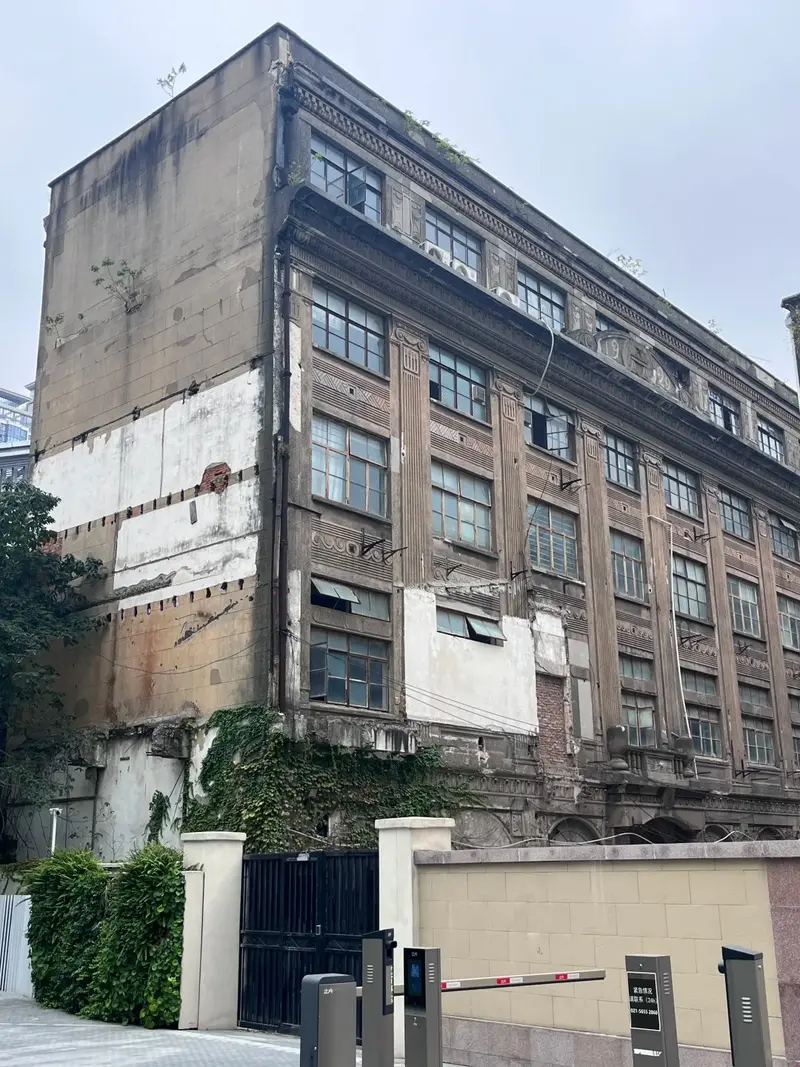
The North Building of the former Mixed Court site, built in 1929–1931 for the courts that replaced it, with weathered walls and ivy at the base.
Photo: 如鹿切慕溪水 · used with permission · XiaohongshuWhat you're looking at
- The North Building's five storeys of steel-framed windows between tall fluted pilasters, with carved bands of ornament under the windows.
- The heavy cornice and the bands of patterned relief along the top floor and above the ground floor.
- The bare, patched end wall facing the road, with ivy growing over the base.
- Behind it, out of sight from most of the street, the two-storey Middle Red Building of 1909, whose upstairs hall was the courtroom.
The story
This gated compound on Zhejiang Road North is what is left of the Mixed Court (会审公廨, Huìshěn Gōngxiè), the court where a Chinese magistrate and foreign assessors tried the Chinese residents of the International Settlement. Two buildings survive: a 1909 courthouse and a five-storey court building of 1929–1931. Both stand empty and weathered, a short walk north of Suzhou Creek.
The New Yamen
The court moved here in 1899, to a larger site at the corner of Zhejiang Road North and Qipu Road. Shanghai people called the new courthouse the New Yamen (新衙门, Xīn Yámen), a yamen being the office and court of a Chinese official. The Mixed Court story explains how the court worked and why control of it was fought over.
The compound once held four buildings: East, Middle and West Red Buildings in front and a larger North Building behind. The East and West Red Buildings were pulled down in 1986 and 1998.
The Middle Red Building, of brick and timber, went up in 1909. It has two storeys with a partial third under the roof. Its upstairs north hall was the trial hall, so this is the building where the magistrate and the assessor sat together in the court’s last years.
Courts after the Mixed Court
On 1 January 1927 the court returned to Chinese administration, and the Shanghai Provisional Court took over the premises. The North Building belongs to that new era. Its west block was finished in 1929 for the Shanghai district court, to designs by Hall & Hall; the east block followed in 1931, designed by the Chinese architect Yang Ximiao (杨锡缪).
The site stayed a courthouse until 1958. It served the special district court and a branch of the Jiangsu High Court before the war, the Shanghai district and high courts after it, and the city’s people’s courts after 1949.
A medical-equipment factory, the Shanghai No. 9 Medical Equipment Factory, later moved in. The factory has since left, and the buildings have stood empty for years.
What you see from the street
From Zhejiang Road North the North Building fills the view. Tall pilasters with Ionic capitals run up through the middle floors, framing columns of steel windows. Bands of carved ornament sit under the windows and along the top. A heavy cornice caps the front. The end wall facing the road is plain and patched, and ivy covers the base.
The site is a Shanghai Outstanding Historical Building (2005) and a municipal protected cultural site (2014). In 2020 and 2024 the Middle Red Building’s foundations and structure were reinforced, partly because of building work next door. Plans call for cultural and administrative use, but no repair or opening date has been announced.
How to see it
The compound is fenced and closed to visitors. Look at it from the pavement on Zhejiang Road North and Qipu Road; the vehicle entrance is private. It sits a few minutes’ walk from Sihang Warehouse and the Suhewan stretch of Suzhou Creek, so it fits easily into a creekside walk.
The police station whose burning followed the court’s 1905 crisis is covered on the Louza Police Station page, and Ward Road Gaol tells where the court’s prisoners served their sentences.
How to visit
- Status
- Exterior only
- Opening times and prices not yet confirmed; check before you go.
- Nearest metro
- Qufu Road曲阜路Line 8Line 12· 9 min walkPlan a metro journey here →
Chinese address — show this to a taxi driver
上海市静安区浙江北路191号
191 Zhejiang Road North, Jing'an District
How to search this address in AmapAmap (高德地图) works best in mainland China; Apple Maps on iPhone. Both open in the app when it is installed.
Nearby
Loading map…
Within a 10-minute walk
- Xizang Road Bridge西藏路桥10 min walk
Within a 20-minute walk
- Suhewan Commercial District苏河湾商圈11 min walk
- Sihang Warehouse四行仓库11 min walk
- Embankment Building河滨大楼13 min walk
- General Post Office Building上海邮政总局15 min walk
- Louza (Laozha) Police Station, former site老闸捕房旧址17 min walk
People
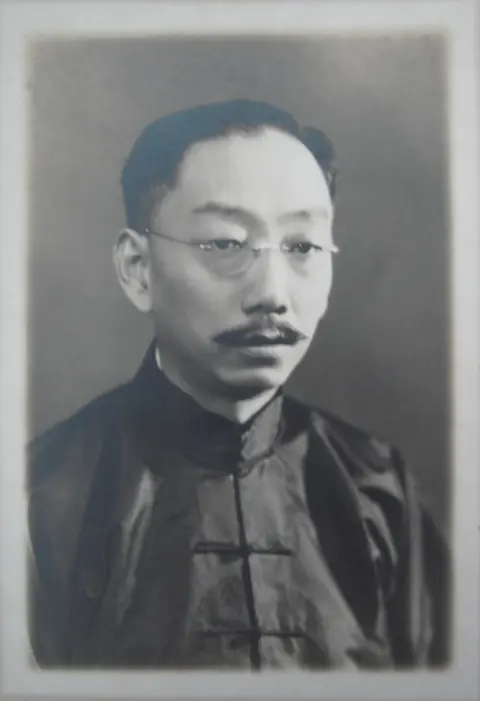 Ding Wenjiang丁文江geologist, head of the Songhu Commercial Port Office, negotiator for the Mixed Court(site)
Stories
Sources
- 1.Landmarks: the Zhejiang Road Bridge and the 'New Yamen' (Jiefang Daily / Shanghai Observer) (【地标】浙江路桥与“新衙门”), 王唯铭, 上观新闻(解放日报), 2015 — paragraphs on the 1899 move; paragraphs on the surviving building; paragraph on the present addressarticle
- 2.Jing'an District Culture and Tourism Bureau: reply to CPPCC proposal no. 142 (former Mixed Court site) (静安区文化和旅游局对区政协二届一次会议第142号提案的答复), 静安区文化和旅游局, 上海市静安区人民政府网站, 2022 — reply, history section; reply, building description; reply, protection status; reply, recent works and planswebsite
- 3.Jing'an District: reply to People's Congress deputy's suggestion no. 66 (former Mixed Court site) (对区二届人大六次会议第66号代表建议的答复), 静安区文化和旅游局, 上海市静安区人民政府网站, 2025 — reply, history section; reply, repair and reusewebsite
- 4.Shanghai Municipal Council annual report for 1925 (Shanghai Municipal Council: Report for the Year 1925 and Budget for the Year 1926), Shanghai Municipal Council, Shanghai Municipal Council (digitised copy on the Internet Archive), 1926 — pp. 67–68archive
- 5.Shanghai Concessions Gazetteer (Shanghai zujie zhi): General survey (上海租界志·总述), 上海市档案馆(编), 上海社会科学院出版社;上海市地方志办公室数字方志(在线), 2001 — (六)gazetteer