Building · in Former French Concession
Pathé Little Red Building
百代公司旧址(小红楼)Bǎidài Gōngsī Jiùzhǐ (Xiǎo Hónglóu)
A red-brick house of about 1921 on Hengshan Road, once Pathé's Shanghai record office, where 'March of the Volunteers' was recorded in 1935.
- Built
- c. 1921
- Heritage listing
- Shanghai Outstanding Historical Building (上海市优秀历史建筑), fourth batch, no. 4D031 · municipal · 4th batch
- Status
- Open to visitors
- Then in
- French Concession1914–1943
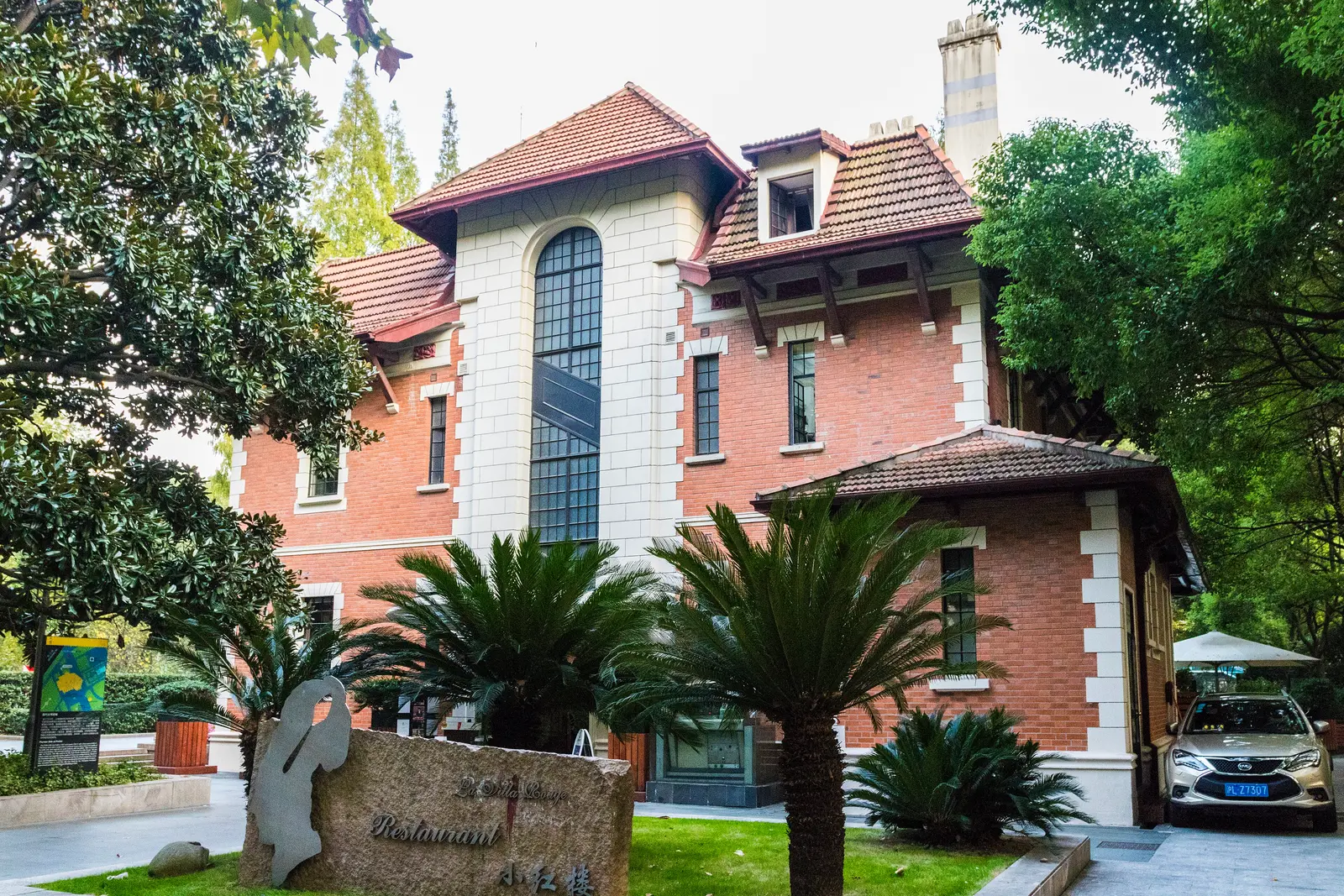
The Little Red Building, 2017.
Photo: ScareCriterion12, CC BY-SA 4.0, via Wikimedia Commons (resized) · CC BY-SA 4.0
What you're looking at
- The red-brick walls and red-tiled sloping roof with dormer windows.
- A veranda with paired columns on the front.
- The park setting, inside Xujiahui Park beside Hengshan Road.
- Any plaque or signboard naming the house as a heritage building or as the recording site.
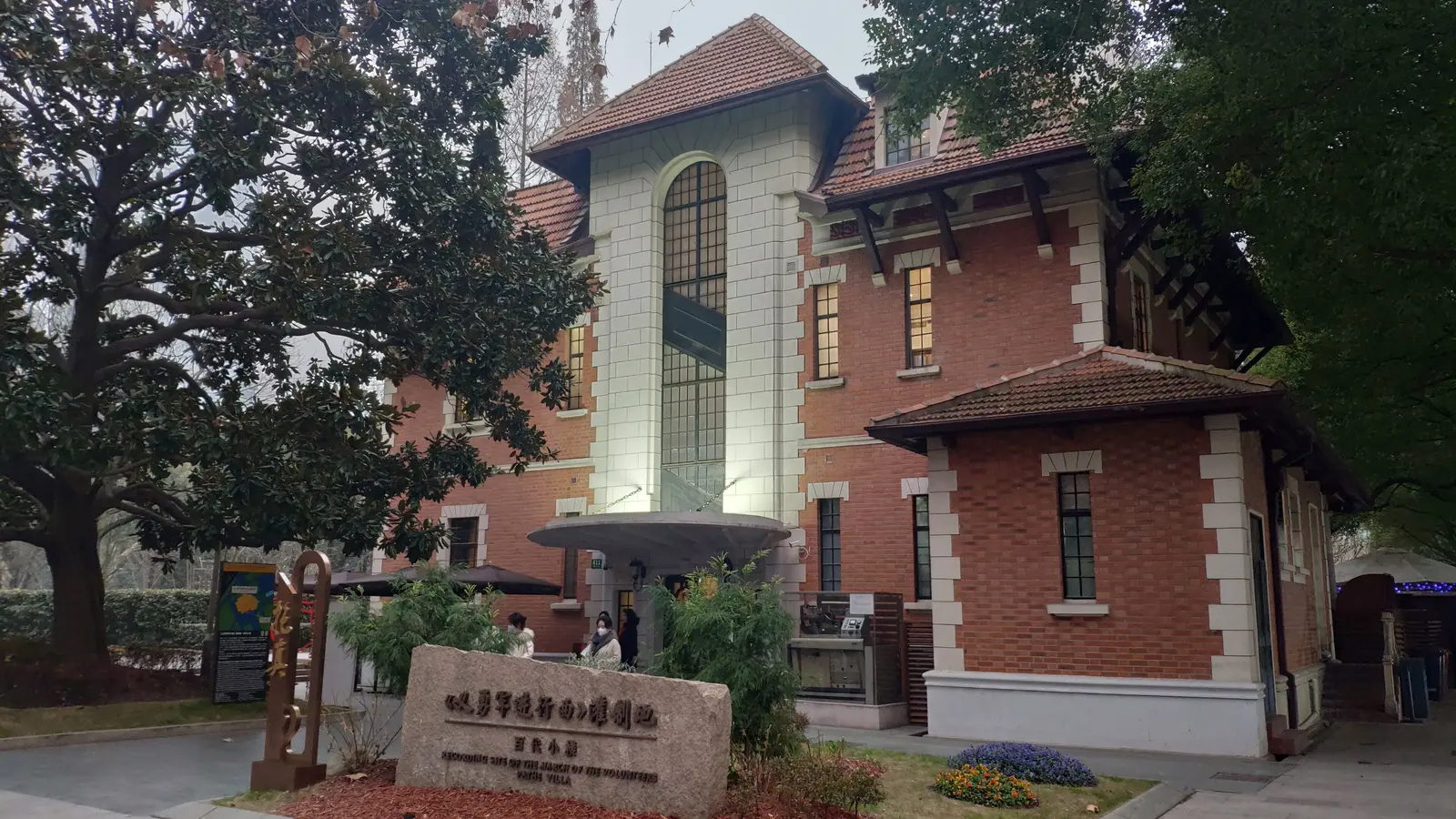
The building from Hengshan Road, 2023.
Photo: ShanghaiDream · CC0
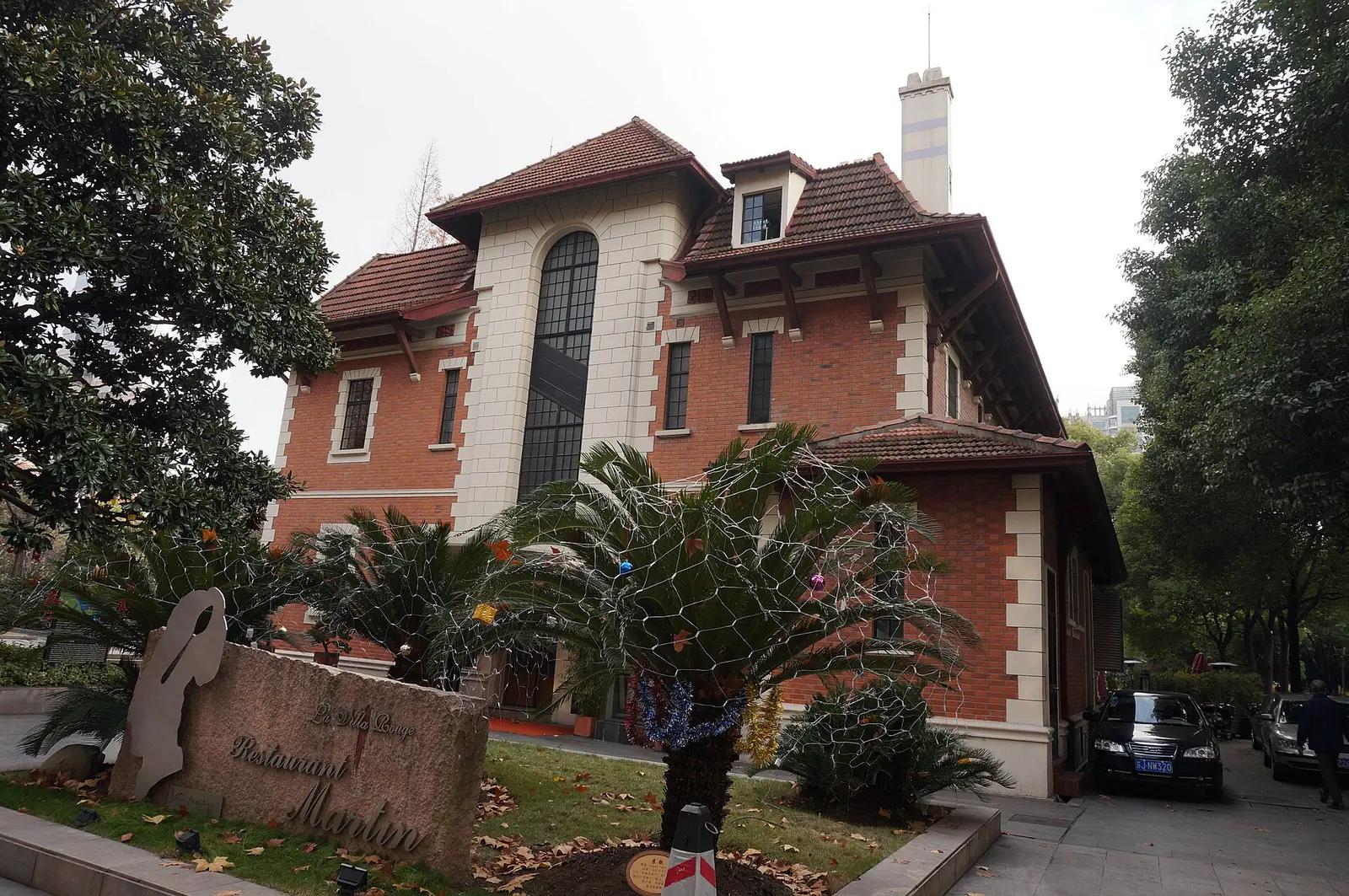
The Pathé 'Little Red Building' at 811 Hengshan Road in 2013, when part of it was a restaurant.
Photo: Livelikerw · CC BY-SA 3.0

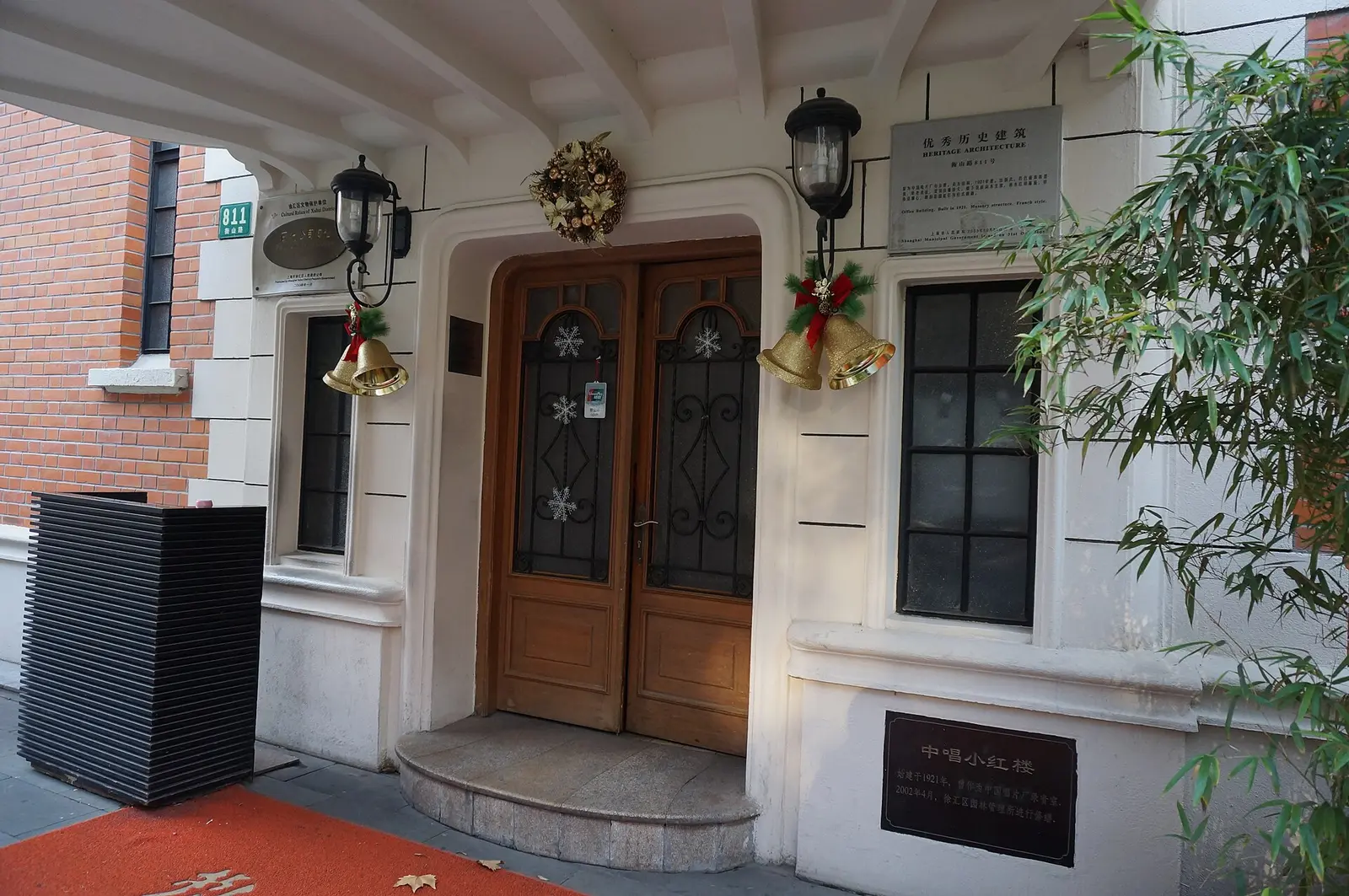

The story
The Pathé Little Red Building (百代公司旧址, Bǎidài Gōngsī Jiùzhǐ) at 811 Hengshan Road is a red-brick house that once belonged to one of the biggest record companies in Shanghai. Today it is a memorial to a single recording: the 1935 “March of the Volunteers” (义勇军进行曲), the song that later became the national anthem of the People’s Republic of China.
The red house in the park
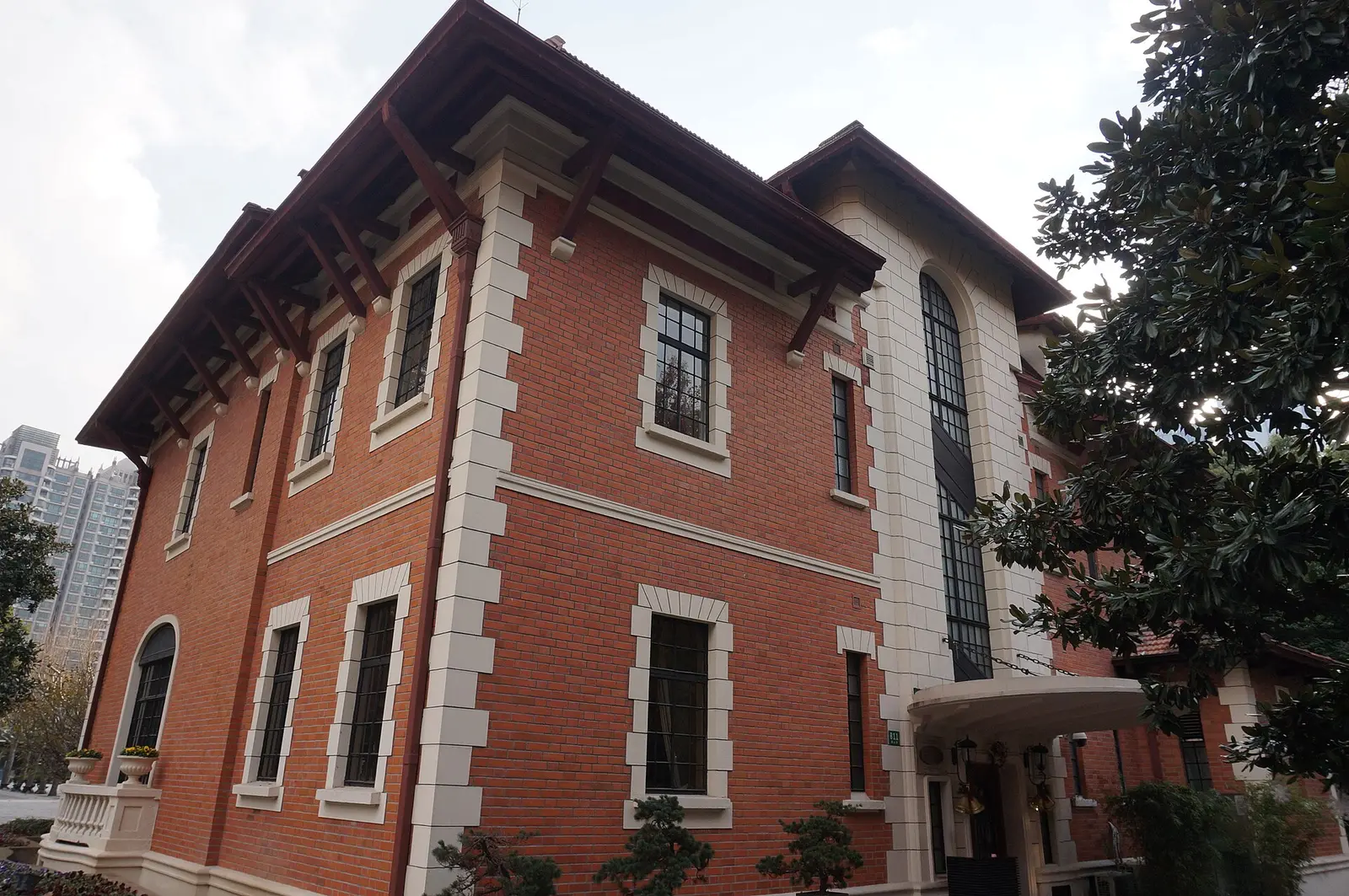
The house is a brick-and-timber building with a red sloping roof, dormer windows and a veranda with paired Ionic columns. A Xuhui government account calls it a French-style garden residence and dates it to 1921. It now stands in Xujiahui Park, which connects with Hengshan Road.
Pathé’s Shanghai recording business
The company began in Shanghai as Pathé Phono Cinema Chine in 1908. It became Pathé Orient in 1921 with a new studio. In 1930 the British Columbia company took it over, and on 25 June 1934 it was registered as Electric & Musical Industries (China). Customers went on calling it Pathé (百代, Bǎidài).
The house dates from 1921, although accounts differ on when the company acquired the land.
Recording “March of the Volunteers”
In 1932 Pathé created the post of musical director, and Ren Guang (任光, Rèn Guāng), who had studied in France, took it. In 1935, around the release of the film Children of Troubled Times (风云儿女), Ren Guang’s department pushed the recording of its song “March of the Volunteers”, Xinhua reports. The exact month, performers and record catalogue number differ among accounts.
After 1949 the house was used by the China Record Factory, then in the early 1980s by the Shanghai branch of China Record Corporation. In the 1990s a restaurant occupied the ground floor. The house is included in Shanghai’s fourth batch of Outstanding Historical Buildings.
How to visit
The building is described as a memorial hall, but current opening days, hours and booking arrangements have not been confirmed. Check before making a visit. The house is inside Xujiahui Park, which connects with Hengshan Road. Show the Chinese address card below to a taxi driver.
How to visit
- Status
- Open to visitors
- Opening times and prices not yet confirmed; check before you go.
- Nearest metro
- Xujiahui徐家汇Line 1Line 9Line 11· 14 min walkPlan a metro journey here →
Chinese address — show this to a taxi driver
上海市徐汇区衡山路811号
811 Hengshan Road, Xuhui District
How to search this address in AmapAmap (高德地图) works best in mainland China; Apple Maps on iPhone. Both open in the app when it is installed.
Nearby
Loading map…
Within a 10-minute walk
- Hengshan Picardie Hotel衡山宾馆6 min walk
- Blackstone Apartments黑石公寓9 min walk
- Xujiahui Shopping District徐家汇商圈9 min walk
Within a 20-minute walk
- Soong Ching-ling's Former Residence上海宋庆龄故居12 min walk
- Wukang Mansion武康大楼14 min walk
- Wukang Road武康路15 min walk
Stories
Sources
- 1.Xinhua: Ren Guang and the Pathé recording of 'March of the Volunteers' (10 August 2025) (铭记历史 缅怀先烈丨任光:硝烟中屹立的'民族号手'), 新华社, 新华网, 2025 — paras. 1-3article
- 2.Xuhui government account on The Paper: the Little Red Building on Hengshan Road, where the anthem was recorded (15 August 2020) (衡山路上小红楼,嘹亮国歌从这里诞生(澎湃号·政务「上海徐汇」,原文来自「魅力衡复」)), 魅力衡复, 澎湃新闻(澎湃号·政务 上海徐汇), 2020 — sections on history and ownership; description section; section on the 1935 recording; ownership and preservation section; ownership historyarticle
- 3.Chinese Wikipedia: Former Site of Pathé (lead only; it cites Xujiahui scenic-area pages and press) (百代公司旧址), Wikipedia — history section; description section; heritage section; occupants sectionwikipedia
- 4.Sohu repost from Documentary Channel: how precious is the Pathé Little Red Building in Xujiahui Source (14 October 2019) (徐家汇源“百代小红楼”到底有多珍贵?(纪实频道,搜狐号转载,2019-10-14)), 搜狐号, 2019 — opening paragraphs; later historyarticle
- 5.Szu-Wei Chen, PhD thesis, University of Stirling (The Music Industry and Popular Song in 1930s and 1940s Shanghai: A Historical and Stylistic Analysis), Szu-Wei Chen, University of Stirling, 2007 — ch. 4, pp. 10-11; ch. 4, pp. 13-14book
- 6.Shanghai Housing Administration: fourth batch of listed heritage architecture, Xuhui (第四批优秀历史建筑(徐汇区)), 上海市房屋管理局, 上海市房屋管理局 — 徐汇区 4D031official-list