Site · in The Bund
Shanghai Monument to the People's Heroes
上海市人民英雄纪念塔Shànghǎi Shì Rénmín Yīngxióng Jìniàntǎ
Three granite towers and a sunken memorial plaza at the Suzhou Creek mouth, completed in 1994 within the older Huangpu Park.
- Built
- 1991–1994
- Status
- Exterior only
- Then in
- Chinese territory throughout; outside the foreign settlements
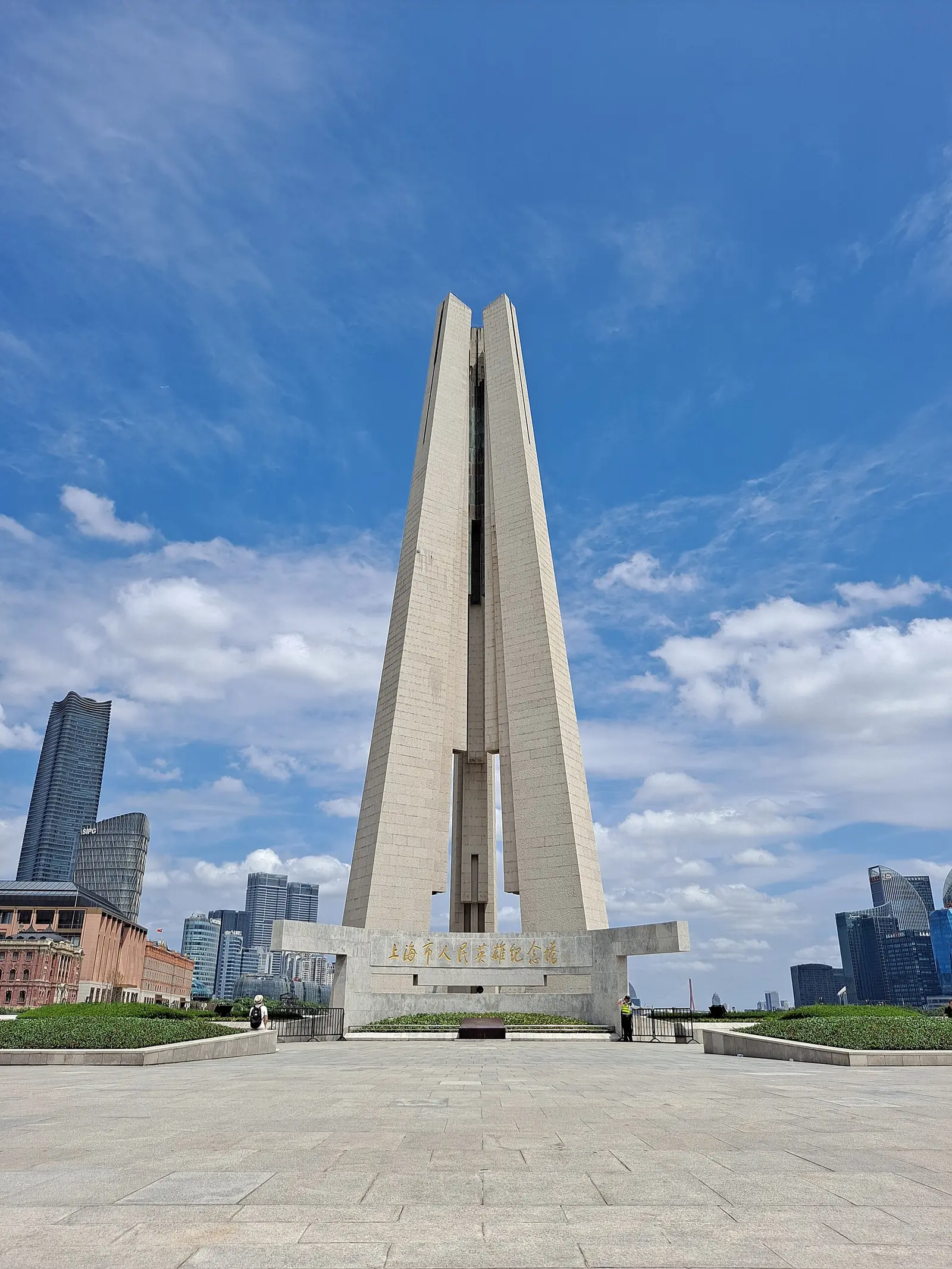
The monument from the Bund promenade, 2022.
Photo: 钉钉, CC BY-SA 4.0, via Wikimedia Commons (resized) · CC BY-SA 4.0
What you're looking at
- The three tall granite forms rising together above the river corner.
- The sunken plaza and its sequence of historical reliefs.
- The inscription stone naming 上海市人民英雄纪念塔.
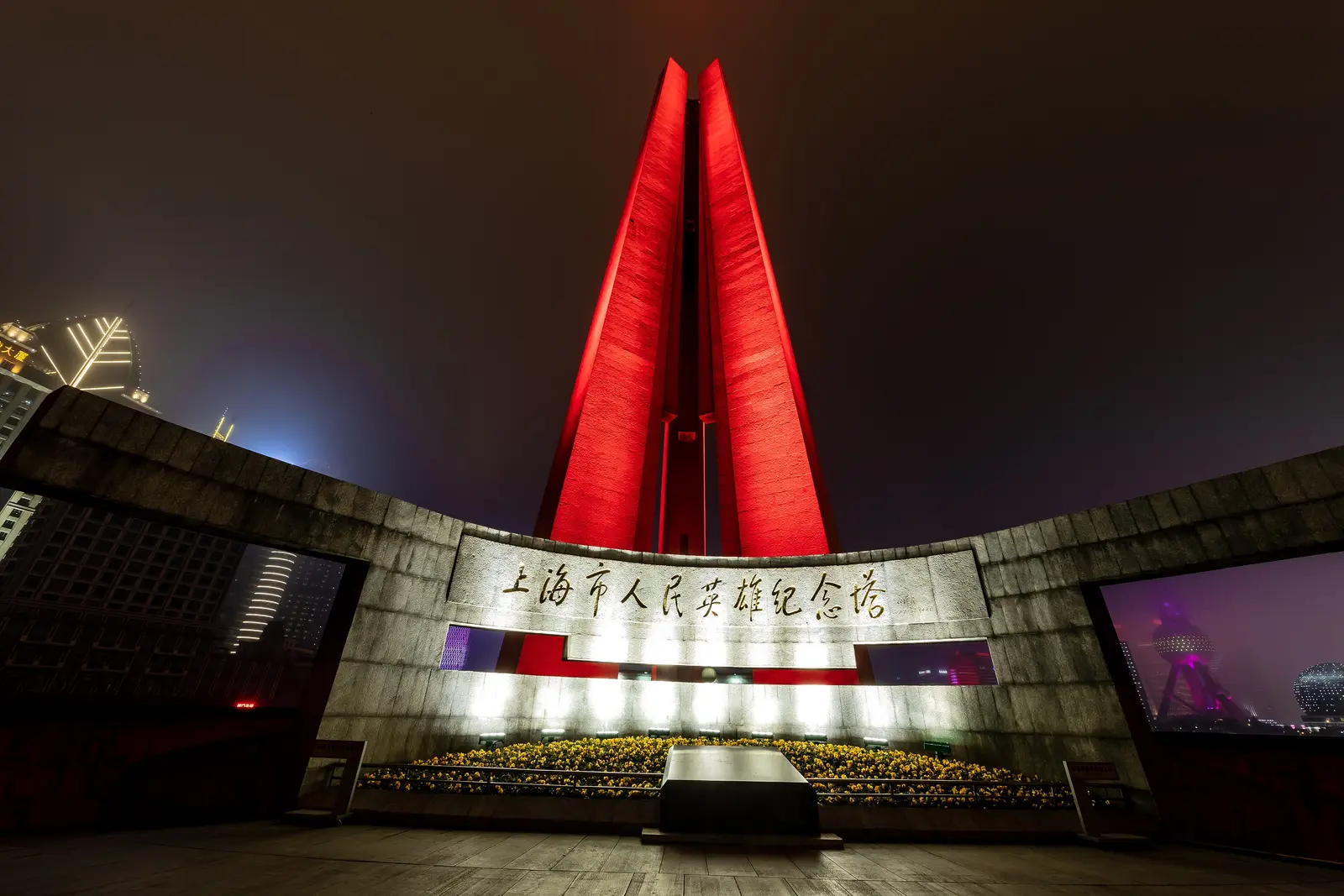
The monument lit at night, 2019.
Photo: Chatterjee.kaushik, CC BY-SA 4.0, via Wikimedia Commons (resized) · CC BY-SA 4.0
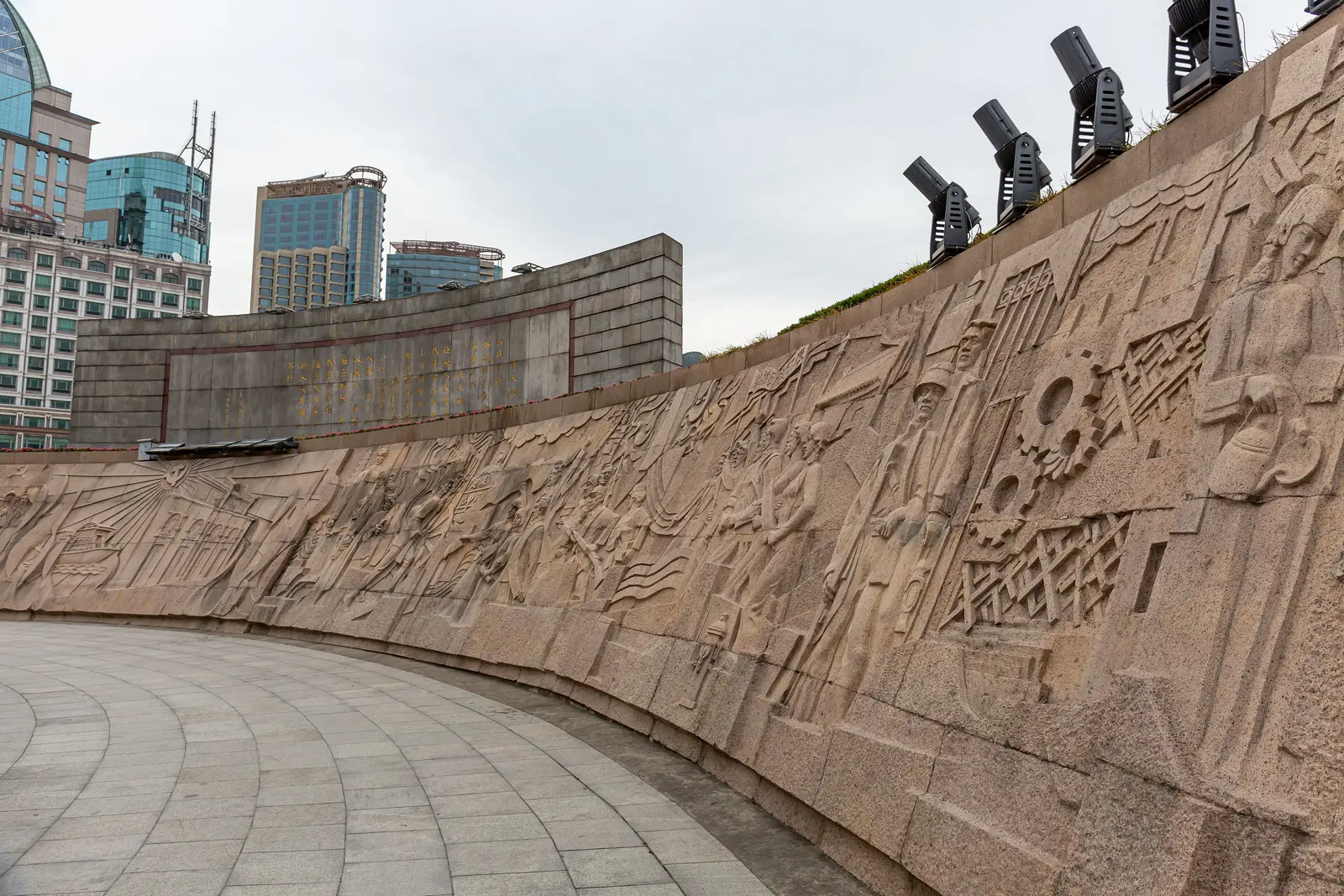
The relief wall around the monument, 2019.
Photo: Balon Greyjoy · CC0
The story
Three granite towers rise from the river corner of Huangpu Park, where Suzhou Creek meets the Huangpu. This is the Shanghai Monument to the People’s Heroes (上海市人民英雄纪念塔, Shànghǎi Shì Rénmín Yīngxióng Jìniàntǎ), completed in 1994. The park is much older; the tower and its memorial plaza belong to a modern rebuilding.
A project resumed after decades
A foundation ceremony took place in the park in May 1950, but the planned monument was not completed then. The project stopped in 1953 and was revived in 1987. Construction of the eventual tower began in January 1991, and the monument opened on 27 May 1994.
That long interval explains the two dates a visitor may encounter in accounts of the site. The earlier foundation stone commemorates the original undertaking. The three towers above the plaza are the result of the later project, designed by a Tongji University team.
The work also involved a flood-protection wall and the redesign of the park. Platforms, stairs and the sunken plaza formed part of that scheme, giving the monument a substantial setting at the water’s edge.
Reading the memorial
The three tower forms rise to 60 metres. Their rifle-like shapes commemorate those who died in revolutionary struggles. At ground level, the granite reliefs tell a more detailed story through scenes drawn from the period between 1840 and 1949. The inscription stone gives the monument’s Chinese name.
These sculptures describe the past from the perspective of a later memorial. They are separate from the surviving evidence for the former Public Garden, whose changing boundaries and admission rules are covered in The Public Garden and Who Could Enter.
The nearby Pujiang Tide sculpture and the Bund History Museum have their own identities within the same park. The museum opened after the tower, in 1995. Plan this as an outdoor stop. If you also want to visit the museum, check its current opening arrangements separately.
How to visit
- Status
- Exterior only
- Opening times and prices not yet confirmed; check before you go.
- Nearest metro
- East Nanjing Road南京東路Line 2Line 10Exit 2· 16 min walkPlan a metro journey here →
Chinese address — show this to a taxi driver
上海市黄浦区中山东一路黄浦公园内(苏州河口南侧)
Huangpu Park, Zhongshan Road East No. 1, south of the Suzhou Creek mouth, Huangpu District
How to search this address in AmapAmap (高德地图) works best in mainland China; Apple Maps on iPhone. Both open in the app when it is installed.
Nearby
Loading map…
Within a 10-minute walk
- Huangpu Park黄浦公园2 min walk
- Suzhou Creek苏州河2 min walk
- Waibaidu Bridge外白渡桥3 min walk
- Banque de l'Indochine Building东方汇理银行大楼4 min walk
- Glen Line Building格林邮船大楼4 min walk
- Astor House Hotel浦江饭店4 min walk
Stories
Sources
- 1.Huangpu Park — Shanghai revolutionary heritage resource register (黄浦公园), 上海红色文化资源网(复旦大学、中共上海市委党史研究室), 2020 — location and monument description; monument paragraph; Pujiang Tide and Bund History Museum sectionswebsite
- 2.The history of Shanghai Monument to the People’s Heroes (上海市人民英雄纪念塔背后的故事), 申知沪志, 方志上海官方澎湃号, 2021 — paragraph beginning 纪念塔作为黄浦滨江景观轴; 丰碑,向英雄致敬: foundation, suspension, revival and construction paragraphs; paragraph beginning 1994年5月27日 and following foundation-stone caption; relief descriptionarticle