Building · in People's Square
Former Chinese YMCA Building, Baxianqiao
八仙桥青年会大楼Bāxiānqiáo Qīngniánhuì Dàlóu
Chinese roof forms crown a modern YMCA building where Korean independence leaders met and Lu Xun visited a woodcut exhibition.
- Built
- 1929–1931
- Architect
- Fan Wenzhao, Zhao Shen
- Style
- chinese-revival
- Heritage listing
- Shanghai Outstanding Historical Building · municipal · 1
- Status
- Exterior only
- Then in
- French Concession1849–1943Close to a boundary drawn along today's streets; it may have fallen on either side.
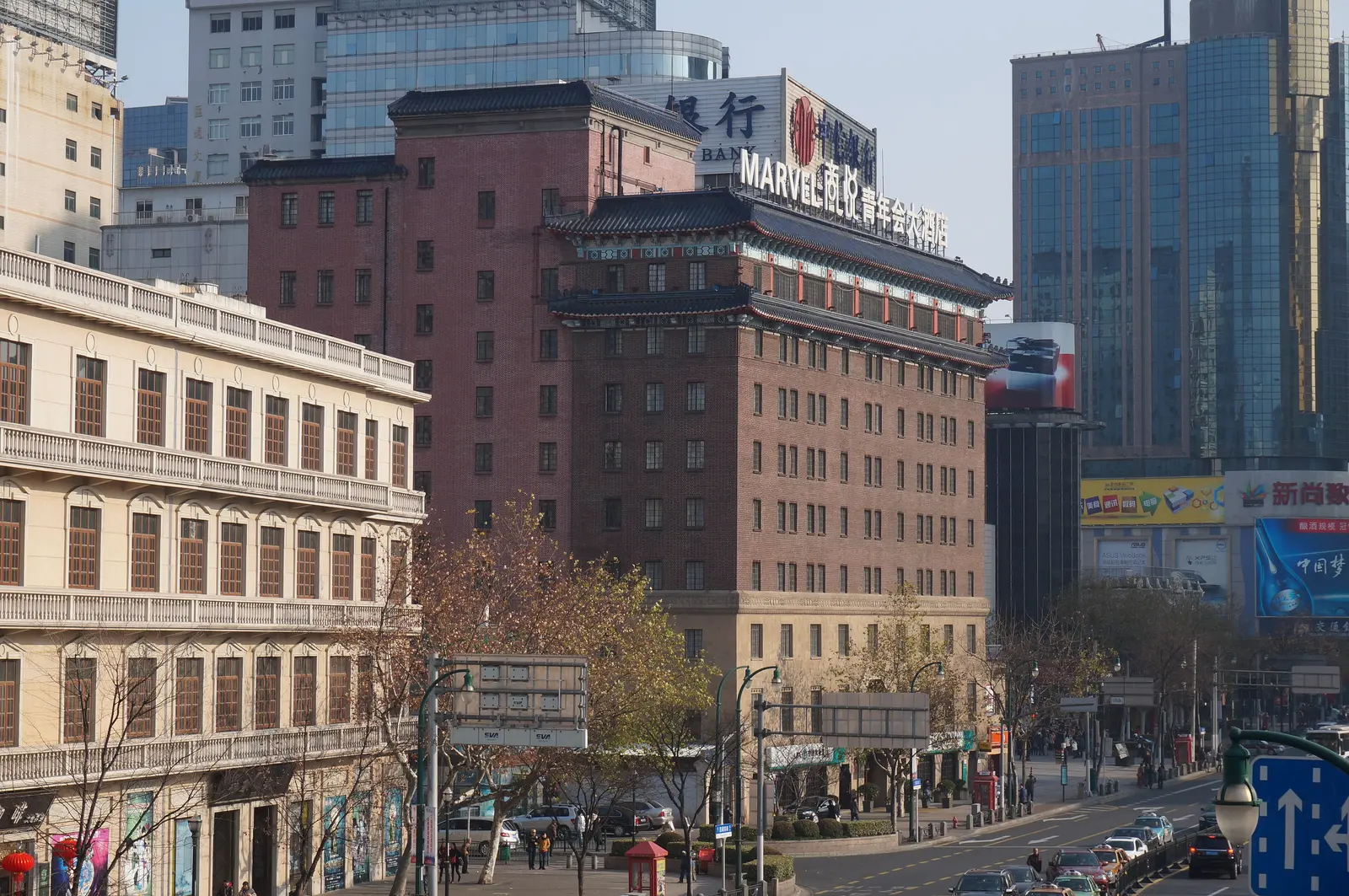
The former YMCA building on Xizang South Road, 2014.
Photo: Livelikerw, CC BY-SA 3.0, via Wikimedia Commons (resized) · CC BY-SA 3.0
What you're looking at
- Blue glazed tiles along the roofline.
- Projecting Chinese-style eaves and their bracket decoration.
- Red brick walls below the decorated roof.
The story
Blue glazed tiles and projecting eaves give this tall red building a Chinese roofline. Beneath them is a reinforced-concrete block completed in 1931 for the Chinese YMCA. Known as the Baxianqiao YMCA (八仙桥青年会, Bāxiānqiáo Qīngniánhuì), it stands beside Great World on Xizang Road South and now serves as a hotel. The YMCA’s earlier clubhouse, from 1907, still stands on Sichuan Road Middle.
Chinese forms on a modern building
Fan Wenzhao, Li Jinpei (李锦沛, Lǐ Jǐnpèi) and Zhao Shen designed the building together, with construction running from 1929 to 1931. Its ten storeys use a modern concrete structure, while the roof eaves and entrance draw on Chinese architectural forms.
Those details are the clearest way to read the design from the street. Look along the blue-tiled roof and the brackets beneath the projecting eaves, then follow the red brick walls down towards the entrance. Traditional decoration is concentrated around these parts of the tall building.
A place to meet
Its rooms were used for political meetings and art exhibitions. The Independence Hall of Korea records that Kim Ku and Yun Bong-gil met here at noon on 28 April 1932. Over a meal, they discussed the attack Yun would carry out at Hongkou Park the following day. The register identifies this surviving building, at 123 Xizang Road South, as the meeting place.
Four years later, the ninth floor hosted the second National Woodcut Exhibition. Lu Xun visited on 8 October 1936 and met young artists whose work was on display. Photographer Sha Fei took their group photograph. The Shanghai YMCA and YWCA’s account preserves this episode among the cultural gatherings held in the building.
The building is listed in Shanghai’s first batch of Outstanding Historical Buildings. Its hotel use continues, but public access to the hotel interiors has not been verified. The roofline and street façade are the starting point for a visit; ask the hotel before entering.
How to visit
- Status
- Exterior only
- Opening times and prices not yet confirmed; check before you go.
- Nearest metro
- Dashijie大世界Line 8Line 14Exit 1· 1 min walkPlan a metro journey here →
Chinese address — show this to a taxi driver
上海市黄浦区西藏南路123号
123 Xizang Road South, Huangpu District
How to search this address in AmapAmap (高德地图) works best in mainland China; Apple Maps on iPhone. Both open in the app when it is installed.
Nearby
Loading map…
Within a 10-minute walk
- Great World大世界2 min walk
- Shanghai Concert Hall上海音乐厅3 min walk
- Siming Gongsuo (Ningbo Guild Hall site)四明公所旧址7 min walk
- Shanghai Museum上海博物馆7 min walk
- Dajing Pavilion大境阁8 min walk
- Baiyun Taoist Temple (White Cloud Temple, Shanghai)白云观8 min walk
On these walks
- The Korean Provisional Government in the French Concession3.9 km · 107 min
People
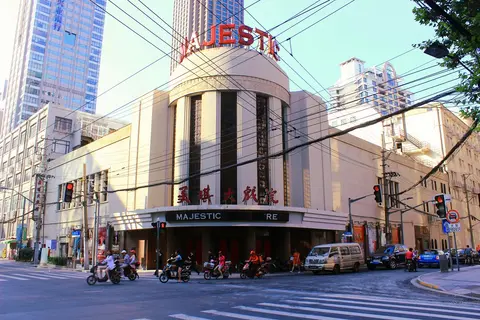 Fan Wenzhao范文照architect(designed)
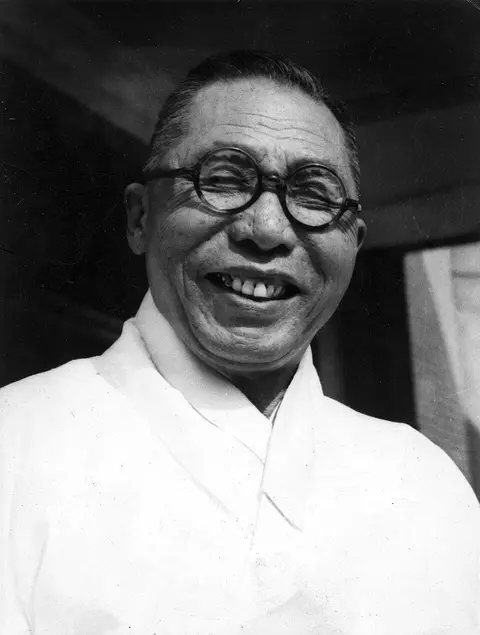 Kim Ku金九independence activist, head of the Korean Provisional Government, memoirist(site)
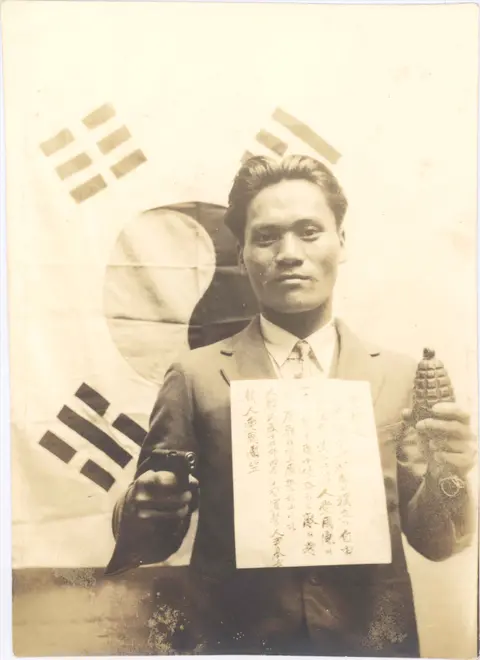 Yun Bong-gil尹奉吉independence activist, rural educator(site)
- Zhao Shen赵深architect
Stories
Sources
- 1.Overseas independence-movement sites: the Chinese YMCA building (상하이 윤봉길 의거 협의 장소 (중국기독교청년회관) - 국외독립운동사적지), Independence Hall of Korea — entry text; paragraph beginning 4월 28일 정오 and the following account of 29 Aprilwebsite
- 2.Reading architecture: Fan Wenzhao and his representative buildings (阅读建筑|近代中国建筑师及其建筑代表作品:范文照,在时代风格流变中感受兼容并包的上海地域特征), 市历保中心、上海建筑设计研究院有限公司, 上海建设交通党建, 2025 — 02. 八仙桥基督教青年会; published 10 March 2025; 02. 八仙桥基督教青年会, architectural description; 02. 八仙桥基督教青年会, paragraph beginning 目前大楼article
- 3.The Paper: article on Fan Wenzhao and his works (澎湃新闻:范文照与南京大戏院、美琪大戏院等作品(newsDetail 22079040)), 澎湃新闻 (The Paper) — paragraph on the YMCA: identifies the three architects and says they completed the design in 1931article
- 4.Recalling the history of the Shanghai YMCA building (红色大楼与红色故事在这里相融——追忆上海基督教青年会大楼里的激情岁月), 上海基督教青年会、女青年会, 中国基督教三自爱国运动委员会、中国基督教协会(《天风》), 2021 — paragraph beginning 在多方资助下; paragraph beginning 1936年10月8日article
- 5.Shanghai Outstanding Historical Buildings list (batches 1–5) (上海市优秀历史建筑名录(第一至第五批)), 上海市人民政府 / 上海市房屋管理局 — https://fgj.sh.gov.cn/yxlsjz/20200331/fe7b4d6f35774b708a2c5122849065bd.html, row 1A011official-list
- 6.The Shanghai YMCA and its buildings: Sichuan Road site given in 1905, east block finished 1907 to an Algar design, red brick with a white stone arched entrance, west block 1914, later the YMCA middle school (Sohu) (悦读上海 你所不知道的上海基督教青年会及其大楼), 搜狐, 2018 — closing paragraphsarticle