Stories
A government in rented rooms: the Korean Provisional Government in Shanghai, 1919–1932
How Korean exiles founded a republic in the French Concession in 1919, ran it from lane houses for thirteen years, and left after the Hongkou Park bomb.
This page in other languages: 한국어
Loading map…
On the night of 10 April 1919 twenty-nine Korean exiles met in a house on a quiet street of the French Concession and, by the next day, had founded a republic. They called it Daehan Minguk (大韓民國), the Republic of Korea, the name South Korea still uses. For thirteen years its government ran from rented rooms in the streets around today’s Xintiandi, until a bomb thrown in Hongkou Park in April 1932 forced its leaders out of Shanghai.
Its final Shanghai office, a lane house at 306 Madang Road, survives as a small museum. Most earlier premises have been demolished, but records of their addresses trace the government’s work, the surrounding Korean community and the pressure that eventually drove its leaders from the city.
Why did Korean exiles choose the French Concession?
Korea was then ruled by Japan. After the March First Movement of 1919, the activists who wanted to turn its declaration of independence into a government needed somewhere Japan could not easily reach them.
The National Memorial Hall of the Korean Provisional Government, the Korean state museum for this history, identifies several reasons for choosing Shanghai’s French Concession. The Concession did not ask exiles or migrants for visas. France had a tradition of sheltering political refugees. There were already Koreans living there, and Shanghai had good transport and communications.
The community was small. In 1920 the Korean residents’ association counted 538 Koreans in Shanghai: 367 men and 91 women aged 18 or over, and 80 children. By 1932 about 1,000 Koreans lived in the French Concession, among some 430,000 people, of whom about 420,000 were Chinese and only about 1,200 French. Koreans made up less than a quarter of one per cent of the Concession’s population.
The groundwork had been laid before 1919. The New Korea Youth Party (신한청년당), organised in Shanghai in 1918 with Yeo Un-hyeong (呂運亨, 여운형) among its leaders, sent Kim Kyu-sik to lobby the Paris Peace Conference. In the spring of 1919 the pastor Hyeon Sun (玄楯, 현순) arrived with 2,000 won raised in Korea and opened a Provisional Independence Office at 329 Route Paul Brunat (宝昌路, today’s Huaihai Road), with himself as general secretary. The building is gone. The site is opposite Exit 1 of Middle Huaihai Road station.
The assembly and charter, April 1919
The delegates met from ten o’clock at night on 10 April. On the motion of Jo So-ang (趙素昻, 조소앙) they called themselves the Provisional Assembly (臨時議政院) and elected Yi Dong-nyeong (李東寧, 이동녕) as speaker. The next day they proclaimed a Provisional Charter and set up a government.
The charter is ten articles long, and the text survives in Korea’s national history database. Article 1 makes the country a democratic republic. Article 3 declares its people equal “without distinction of sex, rank or wealth”. Article 9 abolishes the death penalty, corporal punishment and licensed prostitution. Article 7 commits the Republic to joining the League of Nations. Article 8 promises courteous treatment to the former imperial house, and Article 10 promises a national assembly within a year of the country’s recovery.
The charter names the first cabinet. Syngman Rhee (李承晩, 이승만), then in the United States, was premier. Ahn Changho (安昌浩, 안창호) took the interior, Kim Kyu-sik foreign affairs, Yi Si-yeong justice, Choe Jae-hyeong finance, Yi Dong-hwi the military and Mun Chang-beom transport. Several of them were not in Shanghai. Other Korean groups had declared governments of their own in Seoul and in the Russian Far East, and in September 1919 the three were merged under a provisional constitution drafted in Shanghai. Following the Seoul list, Rhee became president and Yi Dong-hwi premier.
The disputed site of the first meeting
The exact house has not been established. The official record of the first assembly says the delegates met on Rue du Père Robert (金神父路), today Ruijin Road No. 2, but it gives no house number. Two participants, Yeo Un-hyeong and Jo Dong-ho, later remembered the meeting on Route Joffre, around No. 460, near the corner of today’s Huaihai and Ruijin roads.
In 2016 Huangpu District put up a sign with a QR code at No. 50 Ruijin Road No. 2, which was No. 22 Rue du Père Robert in 1919, naming it the birthplace of the Provisional Government. The Korean historian Shin Ju-baek, who went inside in July 2025, notes that no participant named No. 22, that no Japanese police report puts the meeting there, and that the district has not published how it reached its conclusion. One fact points to the house: of the twenty-nine delegates, only Hyeon Sun gave No. 22 as his address. The house itself, a three-storey terrace of 1912–1918 that Chinese writers say belonged to the Catholic church, survives and is lived in. It is a private home, so look from the street.
Offices, schools and community life
For most of its Shanghai years the government had no fixed home. From April to August 1919 it shared the Korean residents’ association office at Chang’anli No. 267. From about early August, Ahn Changho rented a two-storey Western house at 321 Route Joffre, and photographs show the Korean flag over its door. It lasted ten weeks. On 17 October 1919, after repeated Japanese demands, the French authorities ordered the office closed. Its location was worked out only in 2018, when the researcher Kim Gwang-jae matched a photograph caption to a 1920 map of the Concession. An H&M store stands on the spot, near 651 Huaihai Road Middle, and there is no marker.
After that the government moved repeatedly, through offices at Baokangli on Route Paul Brunat, at Chang’anli on Rue Kaiser (today Jinling Road), at 21 Route Pichon (today Changle Road) and at 439 Rue Brenier de Montmorand (today Taicang Road). None of these buildings is known to survive.
The Koreans lived close together. The local historian Xu Hongxin (许洪新) describes Baokangli, a lane at 315 Route Joffre, as the main block of the Korean community: more than ten leaders and senior officials of the movement lived there at one time or another. It was demolished, and Shui On Plaza at 333 Huaihai Road Middle now stands on the site.
A government of exiles still had citizens to serve. The residents’ association, founded as a friendly society in autumn 1918, became the Shanghai Korean Residents’ Association in January 1920 under Yeo Un-hyeong and the Korean Residents’ Union in October that year. It ran the Inseong School, which had grown out of a Korean Christian primary school opened in September 1916 with four pupils and had 50 to 70 by the late 1920s. From Easter 1921 Korean Christians worshipped at the Sanyitang chapel near Baxianqiao. Both sites are gone: the school’s is under a metro station and a café.
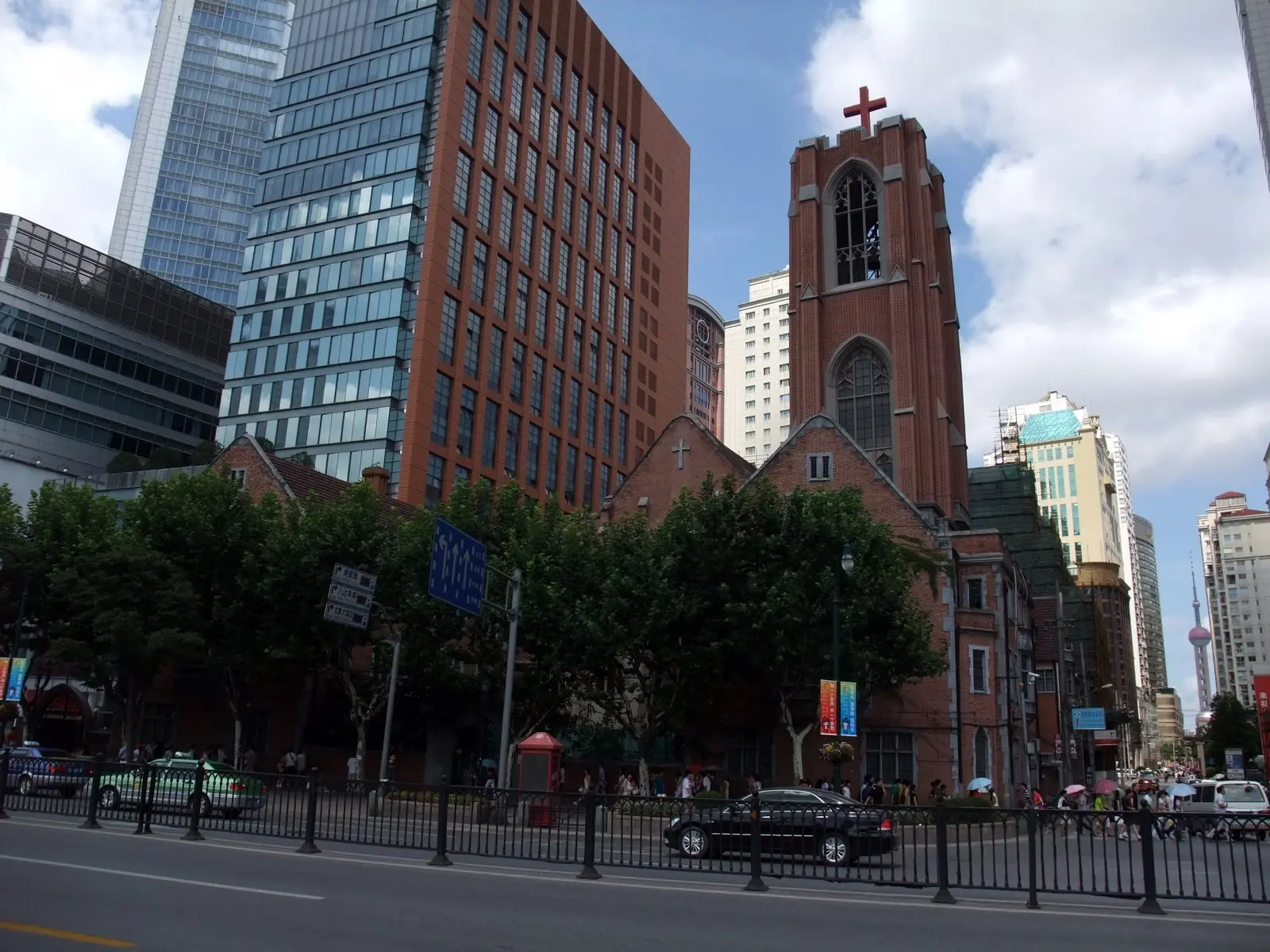
Public occasions borrowed bigger halls. On 1 March 1920 the government and residents marked the first anniversary of the March First Movement at the Olympic Theatre on Bubbling Well Road. In January 1923 the National Representatives’ Conference, called to settle the movement’s quarrels, opened at Moore Memorial Church. It failed, and Kim Ku, by then interior minister, ordered it dissolved. In October 1922 Kim and six others had founded the Korean Labour-Soldier Society at Jo Sang-seop’s house, to train soldiers and raise money for a war of independence.
Leadership disputes continued. Syngman Rhee spent only about six months in Shanghai as president, from December 1920, and left for America in May 1921. In March 1925 the assembly impeached him and elected the historian Park Eun-sik (朴殷植, 박은식) in his place. Sources give 11 March or 21 March for the impeachment.
Kim Ku and his family in Yongqingfang
Kim Ku (金九, 김구) reached Shanghai on 13 April 1919, landing at Pudong from a ship of the Yirong line from Andong, two days after the government was proclaimed. He asked to be the government’s doorkeeper and was made police chief instead, with the job of unmasking Japanese spies. He became interior minister in 1923 (some sources say 1922) and premier on 14 December 1926.
From 1922 to 1926 his family lived upstairs at No. 10 Yongqingfang, a lane off Rue Amiral Bayle, with his mother Kwak Nak-won, his wife Choe Jun-rye (최준례) and their sons Kim In and Kim Sin. Choe fell ill after the birth of Sin and a fall in the house, and died in 1924. In 1925 the activist Na Seok-ju pawned his own clothes to give the widowed Kim a birthday meal there. Later Kim’s mother took the baby back to Korea. Choe Jun-rye, born in 1889, was recognised by the South Korean government as an independence patriot in August 2026.
The lane is at today’s Lane 350, Huangpi Road South, a few minutes’ walk from Madang Road. A Korean correspondent who visited in 2023 found Cantonese restaurants and beauty salons in it; No. 10 itself has not been identified.
It was in Shanghai, between early 1928 and 3 May 1929, that Kim wrote the first volume of his memoir, the Baekbeom Ilji, as a letter to his two sons.
The office on Madang Road
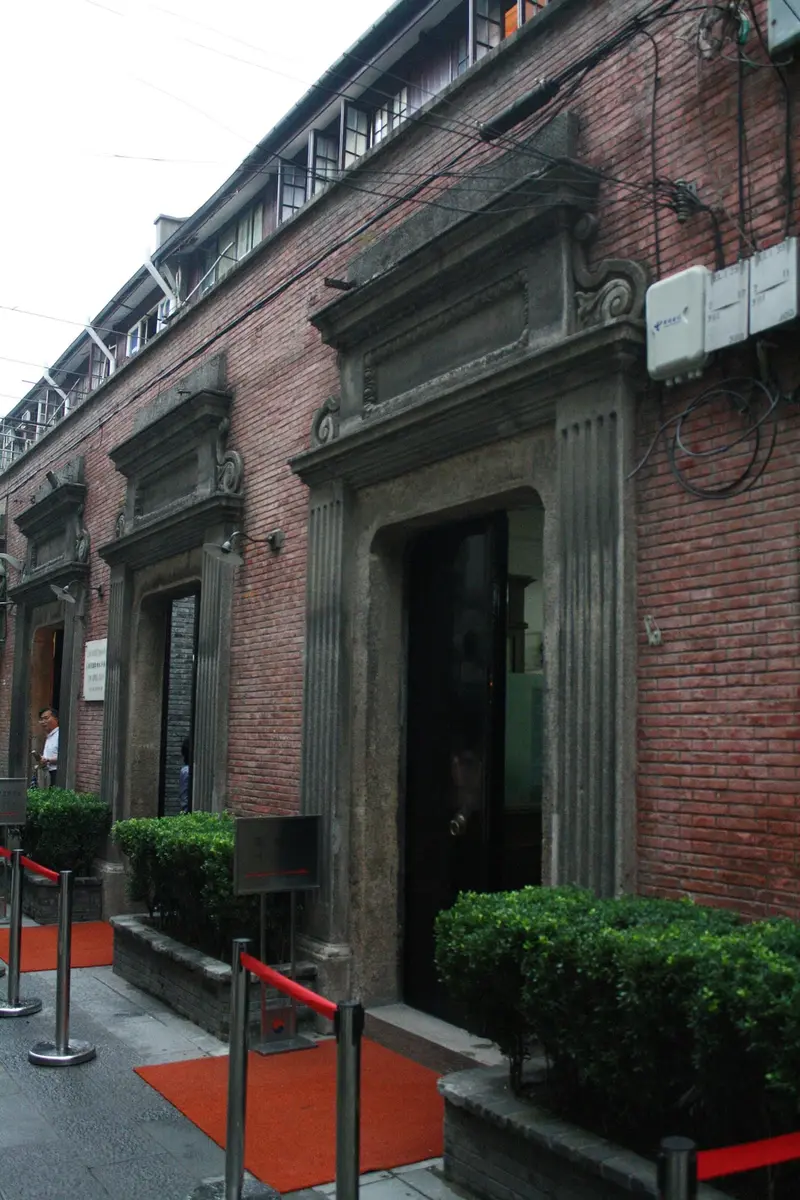
In about July 1926 the government moved to Puqingli No. 4 (普庆里4号), today Lane 306 No. 4 Madang Road. Kim Ku was elected premier that December, and the house was both his home and the government’s office.
The house was built in 1925 as part of a shikumen lane. It has four rooms: the kitchen on the ground floor, the office on the first floor and bedrooms above. The government stayed six years, longer than anywhere else in Shanghai.
The Korean Patriotic Organisation
By the late 1920s the government had little money and many factions. In 1931 Kim Ku set up a secret unit, the Korean Patriotic Organisation (韩人爱国团, 한인애국단), to carry out attacks on Japanese leaders. Its name came into use on 13 December 1931, when Lee Bong-chang (李奉昌, 이봉창) took its oath at An Gong-geun’s house with a grenade in each hand.
On 8 January 1932 Lee threw a grenade at Emperor Hirohito’s procession in Tokyo. It missed, and he was executed on 10 October 1932.
On 28 January, three weeks after Lee’s attack, fighting broke out between Japanese and Chinese forces in Shanghai’s northern districts. The story of the 1932 fighting covers it; talks on ending it were still going on at the end of April.
What happened in Hongkou Park on 29 April 1932?
Yun Bong-gil (尹奉吉, 윤봉길) was 23. Born in 1908 in Yesan, he had run night classes for farmers before leaving home on 6 March 1930 with a note to his family saying that a man who leaves home does not return alive until his work is done. He worked for about a year in a laundry in Qingdao, then in Shanghai in a factory owned by the Korean businessman Park Jin, studying English on the side. In the spring of 1932 he posed as a vegetable seller to watch Japanese troops.
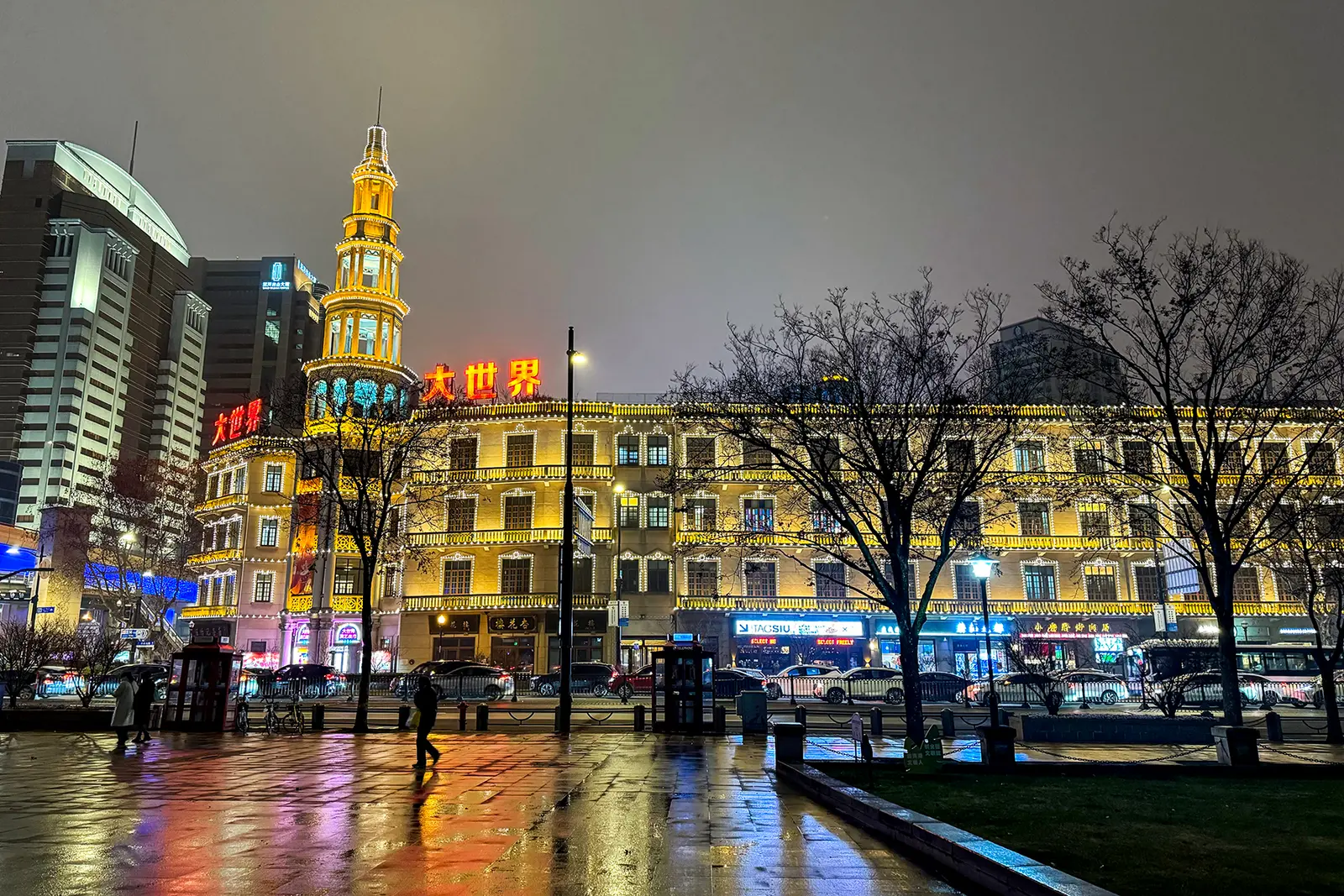
On 26 April he joined the Korean Patriotic Organisation and wrote an oath to kill the officers of the enemy invading China. At noon on 28 April he and Kim Ku ate together at the Chinese YMCA building beside Great World at Baxianqiao. The Independence Hall also lists a tea house at 169–171 Xingye Road, a block from Madang Road, as a place where the two discussed the plan. The bombs came through a Korean officer in the Chinese army, Kim Hong-il, and the Shanghai arsenal.
On the morning of 29 April Yun had breakfast with Kim Ku at Kim Hae-san’s house. He gave Kim his new watch and took Kim’s old one. He left with two bombs: one in a lunch box, one in a water bottle.
That day was the Emperor’s birthday, and the Japanese held a military review in Hongkou Park, with more than 10,000 Japanese troops and more than 10,000 Japanese residents in attendance. At 1 p.m. the American minister, Nelson T. Johnson, cabled Washington. At about 11:30, he reported, during the review “an unknown Oriental approached reviewing stand in Hongkew Park and threw a bomb onto the speakers’ stand”. Yun threw it as the Japanese anthem was ending.
The casualties are recorded differently from source to source. Kawabata Teiji, head of the Japanese residents’ association, died, either on the spot or the following night. General Shirakawa Yoshinori, the commander in Shanghai, died in late May; sources give the 24th, 25th and 26th. The minister to China, Shigemitsu Mamoru, lost a leg. Admiral Nomura Kichisaburō lost the sight of an eye. General Ueda Kenkichi is said in some sources to have lost a leg and in others to have broken four toes.
Yun was seized on the spot. A Japanese military court sentenced him to death on 25 May; on 18 November he was shipped to Japan, and on 19 December 1932 he was shot near Kanazawa. One encyclopedia entry gives 18 December, the day he reached Kanazawa.
The day after the attack, China’s Foreign Ministry cabled its legation that the bomb-thrower was a Korean already in Japanese hands, and that the park had been guarded by Japanese troops “where Chinese could not enter”. On 1 May Japan told the British minister that it would go on negotiating the cessation of hostilities “notwithstanding the Hongkew Park incident”. The truce was signed on 5 May.
South Korea honours Yun Bong-gil as a patriot and awarded him its highest order of merit in 1962. Japanese accounts record the attack as the killing and maiming of officials at a public ceremony.
Why did the government have to leave Shanghai?
Before 1932 the French police had largely left the Korean movement alone, though a French instruction of 1925 made asylum conditional on police surveillance, and activists who used force had been handed to the Japanese. After 29 April they cooperated actively with Japanese arrests, and only became less willing after the truce of 5 May.
The round-up caught Ahn Changho at Yi Yu-pil’s house in Baokangli. He was taken to Seoul, imprisoned, and died in 1938. Most of the other leaders escaped. Jo So-ang and Kim Cheol reached Hangzhou on 10 May 1932.
Kim Ku hid in the house of George A. Fitch, an American YMCA secretary born in Suzhou. Fitch later wrote that Kim and his companions stayed thirty-one days as “upstairs guests” while the police searched the city. Then Kim escaped to Jiaxing, to the home of Chu Fucheng (褚辅成).
A Shanghai family tells its own part in the escape. In 2015 Zhu Shanji, whose family had lived in the Madang Road house, handed more than two hundred pages of family papers to Huangpu District’s local-history office. In the family’s telling, their neighbours at Puqingli included Yi Si-yeong, Yi Dong-nyeong and Kim Cheol. When the hunt began, the lawyer Gu Shouxi, Zhu’s uncle, warned them to leave and gave them 400 silver dollars wrapped in four red cloths. They handed over the house in return, and the family lived in it until the memorial opened in the early 1990s. Kim Cheol’s wife, a midwife, had delivered the Gus’ two children.
The government spent the next eight years moving across China, through Hangzhou, Jiaxing, Zhenjiang and Guangzhou, before reaching Chongqing in 1940. Kim Ku came home with the first group of its members on 23 November 1945.
The memorial house and later commemorations
The Madang Road house was identified and restored as a memorial in the late twentieth century. In 1989 a Korean professor, Choi Seo-myeon, traced the Zhu family to it, and delegations of Korean officials and journalists followed. Korea and Shanghai had begun a joint survey of the government’s sites in 1988. On 5 June 1990 Luwan District listed the house as a cultural relic, restoration began in 1992, and it opened to the public on 13 April 1993. The exhibits were replaced in 2015. Presidents Roh Tae-woo, Kim Young-sam, Kim Dae-jung, Roh Moo-hyun and Lee Myung-bak all came. Lee Jae-myung visited on 7 January 2026, the house’s centenary, and said that nearly half of Korea’s independence-movement sites are in China. In the summer of 2026 the house closed from 1 August to 14 September for repairs.
The dead were brought home too. Shin Gyu-sik (申圭植, 신규식), one of the first exiles in Shanghai, who had lived at No. 5 Yuyangli on today’s Nanchang Road, opposite Chen Duxiu, died there on 25 September 1922 after a 25-day fast and was buried at the International Cemetery. In August 1993 his remains and those of Park Eun-sik and three others were exhumed there and flown to Seoul; two more followed in 1995. Several Korean grave markers remain at the cemetery, which is now the Soong Ching-ling Mausoleum.
In Korea the Shanghai government became a founding fact of the state. The 1987 constitution opens by upholding the legitimacy of the Provisional Government born of the March First Movement. The founding anniversary was long kept on 13 April, the day the cabinet was announced; in 2018 the government moved it to 11 April, the day the name, charter and cabinet were adopted.
What to look for
Start at the Madang Road house, Lane 306 No. 4, near Exit 6 of Xintiandi station. It is the only one of the government’s Shanghai offices that survives and is open. Inside are Kim Ku’s office on the first floor and the bedrooms above. Opening hours have not been verified; check before visiting.
Walk two blocks east to the Yongqingfang lane on Huangpi Road South, where Kim Ku’s wife died, and north to 169–171 Xingye Road, beside the First CPC Congress site, where the tea house stood. Shui On Plaza on Huaihai Road stands on the site of Baokangli.
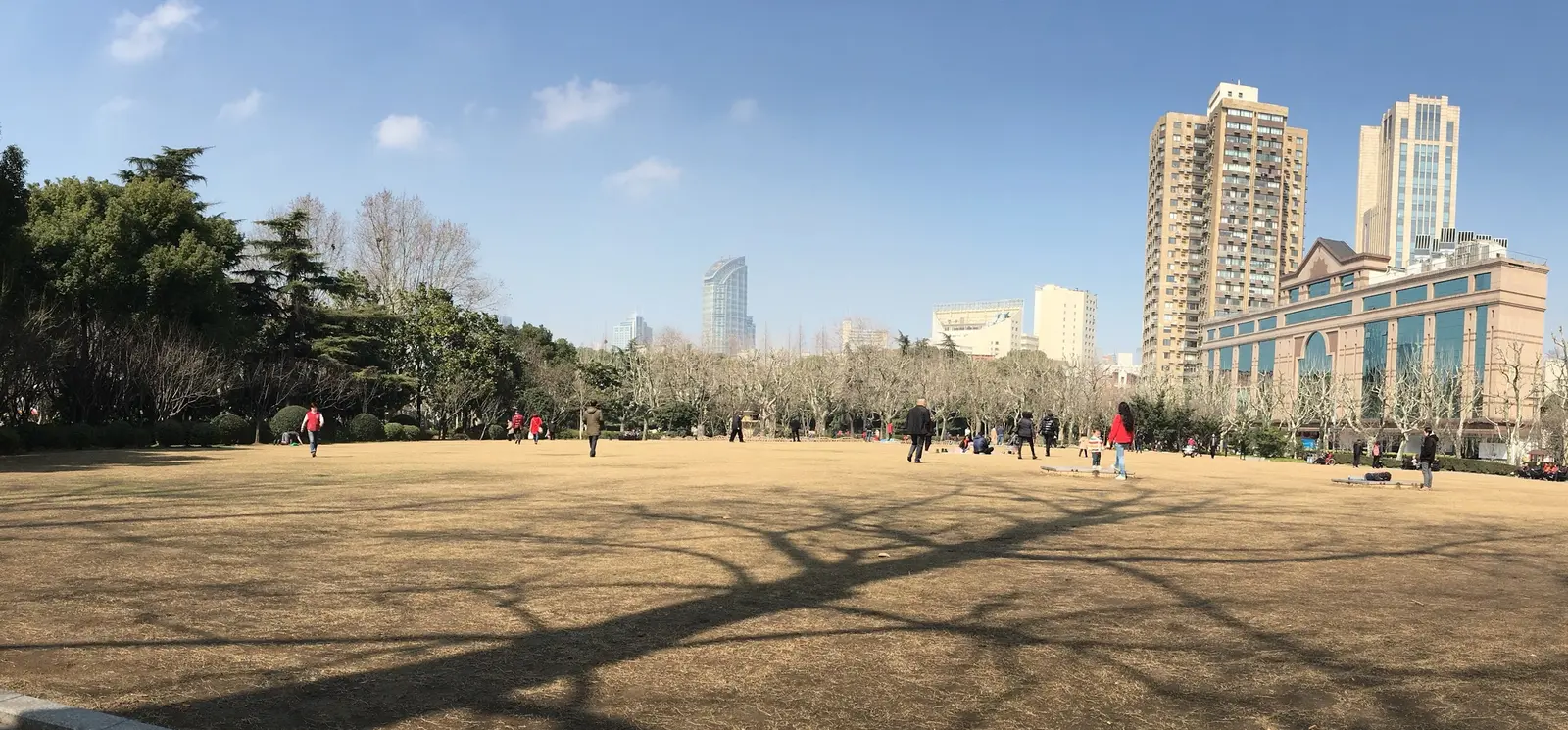
West along Huaihai Road there is nothing to see of the 1919 office or the Independence Office, but you can stand at Ruijin Road No. 2 and look at No. 50, the house Huangpu District names as the birthplace. It remains a private home; view it from the street. Fuxing Park, where Koreans met and posed for photographs, is a short walk south.
To follow 28 and 29 April 1932, go to the YMCA building on Xizang Road South beside Great World, then take Metro Line 8 from Dashijie to Hongkou Football Stadium. In Lu Xun Park the Meixuan pavilion, named after Yun’s pen name, was built in 1994, and a memorial stone stands 40 metres away. Some researchers doubt that the marker is on the exact spot.
What is gone: the first offices, the school, the church, Baokangli and the house at 321 Route Joffre. What is not marked: almost everything except Madang Road, Hongkou Park and the plaque at Yuanchangli.
Places mentioned
Tap a name in the text, or “map” in this list, to see where it is; names with their own page link to it.
- 01Provisional Independence Office (site)独立临时事务所旧址(宝昌路329号)map329 Route Paul Brunat (宝昌路), opened in spring 1919; today around 717 Huaihai Road Middle, opposite Exit 1 of Middle Huaihai Road station (Line 13). Nothing survives. Approximate position.approximate position
- 02Rue du Père Robert (Ruijin Road No. 2) — the 1919 assembly金神父路(今瑞金二路)The first Provisional Assembly met on this street on the night of 10 April 1919. Huangpu District marks No. 50 (then No. 22) as the site; that identification is disputed. A private house. Approximate position.approximate position
- 03Government office, 321 Route Joffre (site)霞飞路321号临时政府办公处旧址mapRented from August to 17 October 1919; today about 651 Huaihai Road Middle, a clothing store. No marker. Approximate position.上海市黄浦区淮海中路651号approximate position
- 04Baokangli lane (site), now Shui On Plaza宝康里旧址(今瑞安广场)mapThe lane at 315 Route Joffre where more than ten Korean leaders lived; Ahn Changho was arrested at No. 54 in 1932. Demolished; Shui On Plaza, 333 Huaihai Road Middle, stands here. Approximate position.上海市黄浦区淮海中路333号approximate position
- 05Yongqingfang lane, Kim Ku's family home 1922–1926永庆坊(金九旧居)mapNo. 10 Yongqingfang, Rue Amiral Bayle (贝勒路); today around Lane 350, Huangpi Road South. The lane has shops; the house itself has not been identified. Approximate position.上海市黄浦区黄陂南路350弄approximate position
- 06Former Site of the Provisional Government (Puqingli No. 4)大韩民国临时政府旧址map
- 07Inseong School (site)仁成学校旧址No. 1 Xiechengli, Rue Ratard area; today near 464 Hefei Road. Demolished; a metro station and a café stand on the site. Approximate position.上海市黄浦区合肥路464号approximate position
- 08Sanyitang chapel, the Korean church (site)三一堂旧址A Methodist chapel near Baxianqiao used as the Korean church from Easter 1921; today around 262 Ninghai Road East. Demolished. Approximate position.上海市黄浦区宁海东路262号approximate position
- 09Olympic Theatre (site)夏令配克影戏院旧址Bubbling Well Road; the first anniversary of the March First Movement was marked here on 1 March 1920. Today around 762 Nanjing Road West. Approximate position.approximate position
- 10Moore Memorial Church沐恩堂map
- 11Korean Labour-Soldier Society founding site韩国劳兵会成立地旧址No. 24 on today's Xing'an Road, Jo Sang-seop's house, 28 October 1922; demolished, Hong Kong Plaza stands here. Approximate position.上海市黄浦区淮海中路282-283号approximate position
- 12Fuxing Park (French Park)复兴公园map
- 13Shin Gyu-sik's house, Yuyangli No. 5申圭植旧居(南昌路100弄5号)mapLane 100 Nanchang Road, No. 5; opposite the New Youth editorial office. Whether the house is original has not been confirmed. Approximate position.approximate position
- 14Chinese YMCA building, Baxianqiao中华基督教青年会大楼(西藏南路123号)map123 Xizang Road South, beside Great World. Kim Ku and Yun Bong-gil met here at noon on 28 April 1932. The building survives as a hotel. Approximate position.上海市黄浦区西藏南路123号approximate position
- 15Tea house on Xingye Road兴业路169–171号(原茶馆)map169–171 Xingye Road, where Kim Ku and Yun Bong-gil are recorded discussing the attack; later shops. Approximate position.上海市黄浦区兴业路169号approximate position
- 16Kim Hae-san's house (identification disputed)元昌里13号(雁荡路)mapNo. 13 Yuanchangli, off Yandang Road, where Yun is said to have eaten his last breakfast. A private home with a Korean plaque of 2020; historians question the identification. Yuanchangli is Lane 56, Yandang Road. Approximate position.上海市黄浦区雁荡路56弄approximate position
- 17Hongkou Park, now Lu Xun Park虹口公园(今鲁迅公园)map
- 18International Cemetery, now Soong Ching-ling Mausoleum万国公墓(今宋庆龄陵园)21 Songyuan Road, Changning. Five Korean leaders' remains were taken home from here in 1993; several Korean grave markers remain.上海市长宁区宋园路21号
Places in this story

Site· 1925
Former Site of the Provisional Government of the Republic of Korea
大韩民国临时政府旧址Dàhán Mínguó Línshí Zhèngfǔ Jiùzhǐ
A restored three-storey lane house on Madang Road, used 1926-1932 as the office of the Korean Provisional Government and now an exhibition hall.

Park· 1909
Fuxing Park
复兴公园Fùxīng Gōngyuán
A park laid out by the French Concession authorities and opened in 1909, with a French formal garden, a Chinese garden and a Marx and Engels statue.

Protestant church· 1929–1931
Moore Memorial Church
沐恩堂Mù'ēn Táng
A Neo-Gothic Methodist church designed by László Hudec and opened in 1931, beside People's Square, with Sunday services.

Building· 1917–1928
Great World
大世界Dàshìjiè
An amusement hall opened in 1917 and rebuilt in 1928, now a venue for intangible cultural heritage performances at Yan'an Road and Xizang Road.
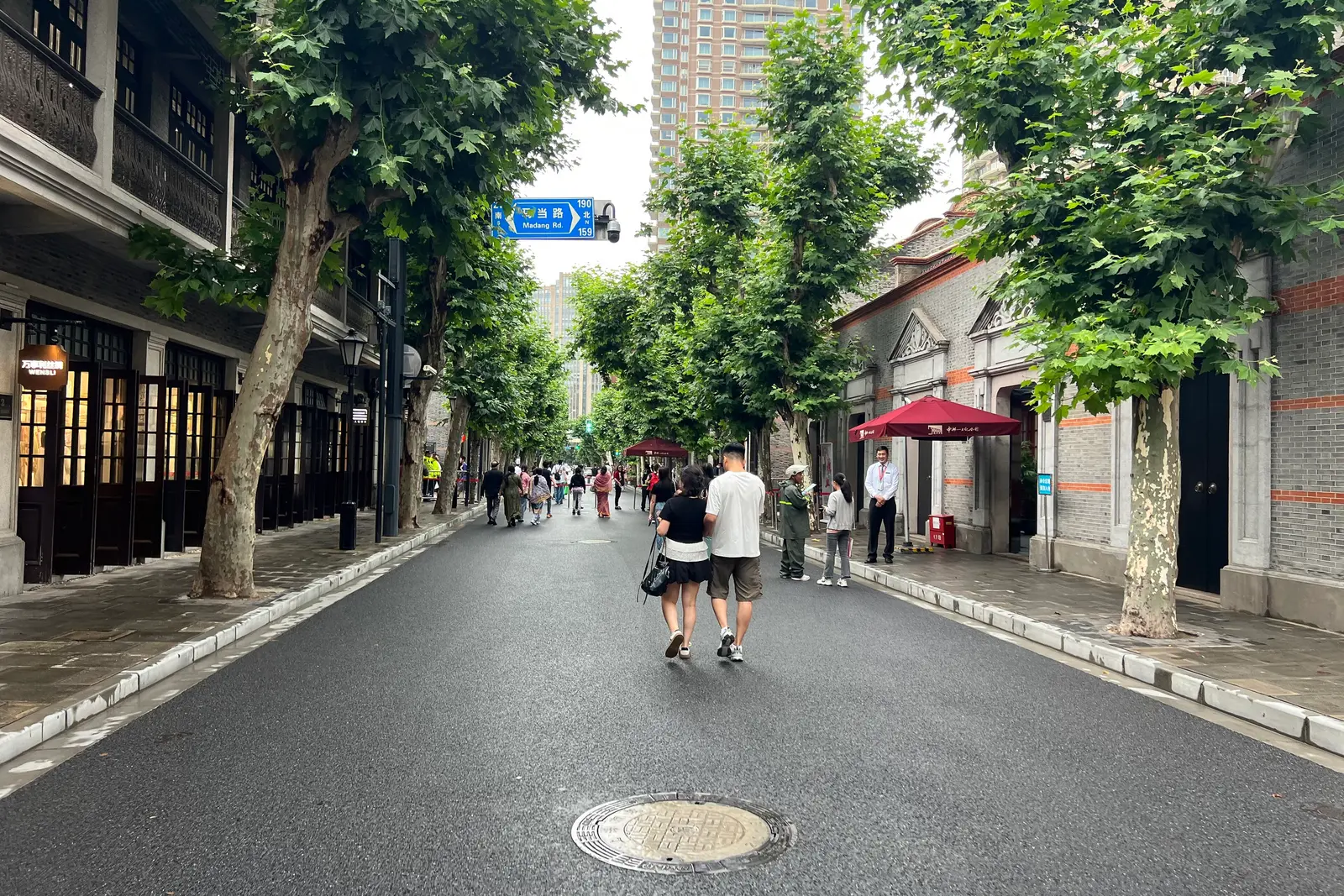

Lane· c. 1996–2001
Xintiandi
新天地Xīntiāndì
A car-free district of restored shikumen houses, now restaurants and shops (2001), in the former French Concession.
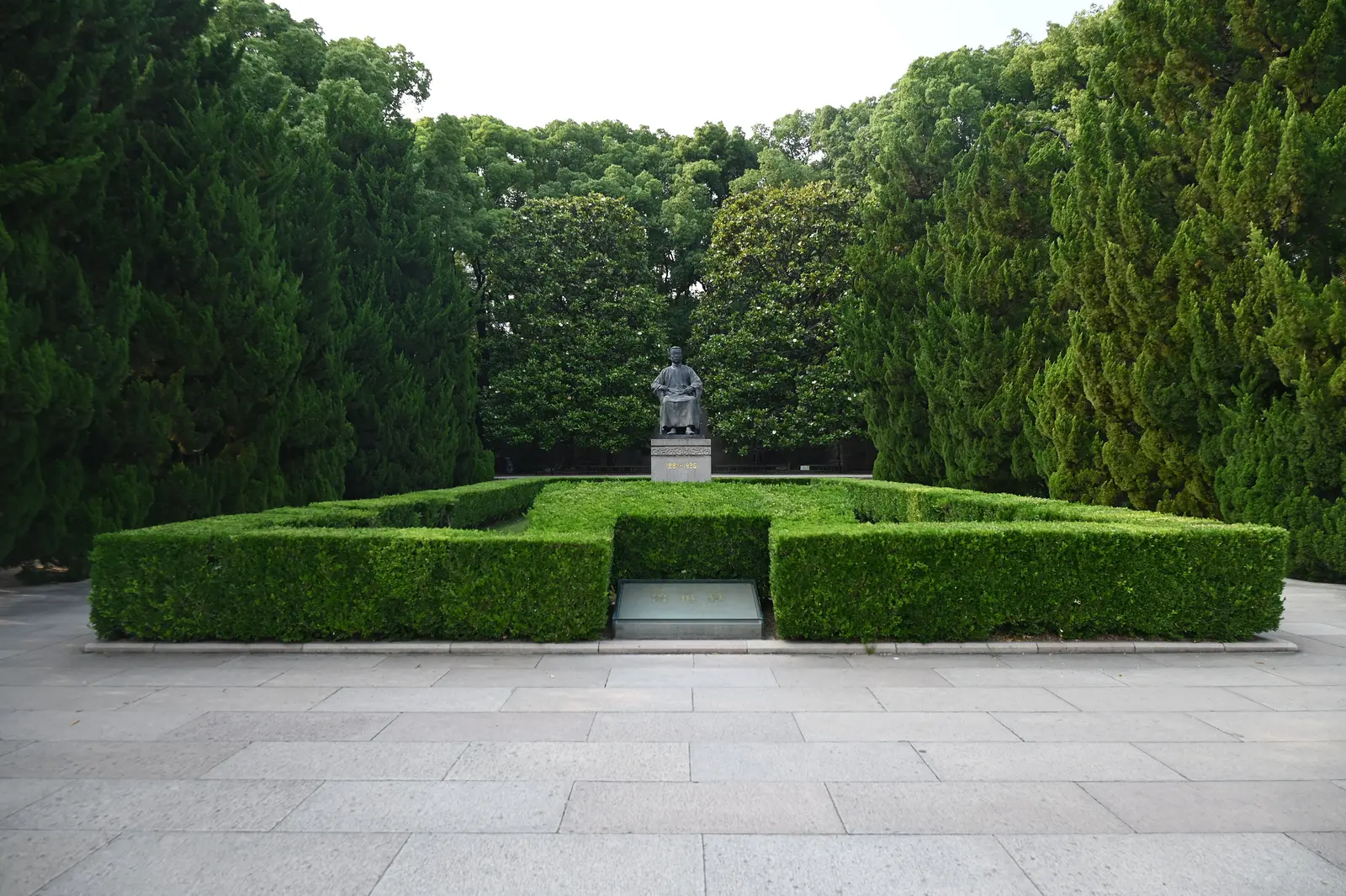

Park· 1909
Lu Xun Park
鲁迅公园Lǔ Xùn Gōngyuán
A Hongkou park laid out by the Shanghai Municipal Council in 1909, now holding Lu Xun's tomb, his memorial hall and a memorial to Yun Bong-gil.
People in this story
Sources
- 1.Overseas independence-movement sites: the Provisional Independence Office (상하이 독립임시사무소 터 - 국외독립운동사적지), Independence Hall of Korea — entry text, paragraphs on 독립임시사무소; entry text: '1919년 4월 10일 상하이 프랑스 조계 김신부로(金神父路)에서 회합 ... 29명'website
- 2.'New Korea Youth Party', Encyclopedia of Korean Culture (신한청년당 - 한국민족문화대백과사전), Academy of Korean Studies — body: '바오창로(寶昌路) 329호에 독립임시사무소를 설치'; 개설 and 활동website
- 3.'Yeo Un-hyeong', Encyclopedia of Korean Culture (여운형 - 한국민족문화대백과사전), 허종, Academy of Korean Studies, 2012 — 생애: '신한청년당의 조직을 주도'website
- 4.The Korean Provisional Government and the Shanghai French Concession (대한민국 임시정부와 상하이 프랑스조계), National Memorial Hall of the Korean Provisional Government (webzine), 2022 — section on why the French Concession; population paragraph; office paragraph; French police section; French police section (5 May truce)article
- 5.'Korean Residents' Association of Shanghai', Encyclopedia of Korean Culture (상해대한인거류민단 - 한국민족문화대백과사전), 윤상원, Academy of Korean Studies, 2021 — 개설/연원; 연원 및 변천website
- 6.'Provisional Assembly', Encyclopedia of Korean Culture (임시의정원 - 한국민족문화대백과사전), 이연복, Academy of Korean Studies, 1995 — 내용: '1919년 4월 10일 1차 회의에서 조소앙(趙素昻)의 동의에 임시의정원이라는 명칭이 결정'; '이승만(李承晩)을 국무총리로 하는 국무원(國務院)을 구성'website
- 7.Where was 10 April 1919? (column) (신주백의 사연 史淵: 1919년 4월10일의 장소성, 대한민국 뿌리 찾기), 신주백, Kyunghyang Shinmun, 2025 — column, on the first Assembly record (제1회 임시의정원기사록); column by Shin Ju-baek, 3 Nov 2025; column, description of the house; column: '8월부터 10월17일까지 안창호의 진두지휘로 임차해 쓴 곳'; column: '창안리 267호 ... 1919년 4월 어느 날부터 8월까지'article
- 8.'Korean Provisional Government', Encyclopedia of Korean Culture (대한민국 임시정부 - 한국민족문화대백과사전), 김정인, Academy of Korean Studies, 2023 — 개설/설립 경위; 통합 임시정부; 1932website
- 9.Provisional Charter of the Republic of Korea, April 1919 (KPG documents collection) (大韓民國臨時憲章 (1919. 4. 11) - 대한민국임시정부자료집), National Institute of Korean History (국사편찬위원회), 1919 — articles 1–10; signatoriesarchive
- 10.Provisional Constitution of the Republic of Korea, 11 September 1919 (大韓民國臨時憲法 (1919. 9. 11) - 대한민국임시정부자료집), National Institute of Korean History (국사편찬위원회), 1919 — title and art. 2archive
- 11.Overseas independence-movement sites: KPG office, Route Joffre (Huaihai Road) (대한민국임시정부 상하이 청사 (하비로) - 국외독립운동사적지), Independence Hall of Korea — entry textwebsite
- 12.Overseas independence-movement sites: KPG office, Malang Road (Madang Road) (대한민국임시정부 상하이 청사 (마랑로) - 국외독립운동사적지), Independence Hall of Korea — entry text: '1919년 10월 17일 임시정부 청사 폐쇄를 명령'; '안정적인 청사를 구성한 시점은 1926년 7월경'; entry textwebsite
- 13.Huangpu District gazetteer office receives papers on the Korean Provisional Government site (2015) (黄浦区方志办收到大韩民国临时政府上海旧址相关资料), Shanghai Gazetteer Office (上海市地方志办公室), 2015 — paragraph 5; paragraphs 2, 6 and 8; paragraph 9gazetteer
- 14.On urban-district research and local gazetteers (存史之急资治之需深研之途修志之实——浅说城区研究与地方志关系), 许洪新, Shanghai Gazetteer Office (上海市地方志办公室), 2018 — section on the Huaihai Road districtarticle
- 15.Overseas independence-movement sites: Inseong School (상하이 인성학교 터 - 국외독립운동사적지), Independence Hall of Korea — entry textwebsite
- 16.'Inseong School', Encyclopedia of Korean Culture (인성학교 - 한국민족문화대백과사전), Academy of Korean Studies — 개설/변천website
- 17.Overseas independence-movement sites: Sanyitang meeting hall (상하이 한인집회장소 (삼일당 터) - 국외독립운동사적지), Independence Hall of Korea — entry textwebsite
- 18.Overseas independence-movement sites: the Olympic Theatre (상하이 3.1독립선언일 기념식장 터 (올림픽대극장) - 국외독립운동사적지), Independence Hall of Korea — entry textwebsite
- 19.Overseas independence-movement sites: Moore Memorial Church (상하이 한인집회장소 (모이당) - 국외독립운동사적지), Independence Hall of Korea — entry text: '1923년 1월 30일에는 국민대표회의 정식 개막식'website
- 20.Independence activist of the month: Kim Ku (August 2019) (이달의 독립운동가: 김구 (2019년 8월)), Ministry of Patriots and Veterans Affairs (e-Gonghun), 2019 — 1920s section; 망명 section; 1926; 1932 section; 환국website
- 21.'Syngman Rhee', Encyclopedia of Korean Culture (이승만 - 한국민족문화대백과사전), 박태균, Academy of Korean Studies, 2024 — 임시정부 시기website
- 22.'Park Eun-sik', Encyclopedia of Korean Culture (박은식 - 한국민족문화대백과사전), 신용하, Academy of Korean Studies, 1995 — 1925website
- 23.'Kim Ku', Encyclopedia of Korean Culture (김구 - 한국민족문화대백과사전), 임중빈, Academy of Korean Studies, 2025 — 생애website
- 24.Overseas independence-movement sites: KPG leaders' residence, Yongqingfang (상하이 대한민국임시정부 요인 거주지 (영경방) - 국외독립운동사적지), Independence Hall of Korea — entry textwebsite
- 25.Kim Ku's wife Choe Jun-rye recognised as an independence patriot (백범 배우자 최준례 여사 건국훈장), Kyeongin Ilbo, 2026 — bodyarticle
- 26.This day in history, 29 April: the Hongkou Park bombing (历史上的今天:4月29日(虹口公园爆炸事件发生)), Shanghai Gazetteer Office (上海市地方志办公室) — 1932 entry, first paragraph; 1932 entrygazetteer
- 27.Xinhua report on the Korean president's visit to the Shanghai Provisional Government site (新华社报道:韩国总统参观上海大韩民国临时政府旧址(2026-01-07)), Xinhua, 2026 — bodyarticle
- 28.A trip to Shanghai's independence-movement sites (100년 전 뜨거운 시간 속으로: 상하이 독립운동 사적지 여행), National Memorial Hall of the Korean Provisional Government (webzine) — Madang Road paragrapharticle
- 29.'Korean Patriotic Organisation', Encyclopedia of Korean Culture (한인애국단 - 한국민족문화대백과사전), 윤상원, Academy of Korean Studies, 2021 — 개설website
- 30.'Lee Bong-chang', Encyclopedia of Korean Culture (이봉창 - 한국민족문화대백과사전), 이현희, Academy of Korean Studies, 2023 — 생애website
- 31.'Yun Bong-gil', Encyclopedia of Korean Culture (윤봉길 - 한국민족문화대백과사전), 이현희, Academy of Korean Studies, 2023 — 생애; 생애, last paragraphwebsite
- 32.Independence activist of the month: Yun Bong-gil (December 2019) (이달의 독립운동가: 윤봉길 (2019년 12월)), Ministry of Patriots and Veterans Affairs (e-Gonghun), 2019 — bodywebsite
- 33.Biographical Dictionary of the Independence Movement: Yun Bong-gil (독립운동인명사전: 윤봉길), 신용하, Independence Hall of Korea — body, oath text; bodywebsite
- 34.Overseas independence-movement sites: the Chinese YMCA building (상하이 윤봉길 의거 협의 장소 (중국기독교청년회관) - 국외독립운동사적지), Independence Hall of Korea — entry textwebsite
- 35.Overseas independence-movement sites: the tea house on Xingye Road (상하이 윤봉길 의거 협의지 (사해다관) - 국외독립운동사적지), Independence Hall of Korea — entry textwebsite
- 36.Foreign Relations of the United States 1932, vol. III, document 781 (The Minister in China (Johnson) to the Acting Secretary of State, Shanghai, April 29, 1932, 1 p.m.), Nelson T. Johnson, Office of the Historian, U.S. Department of State, 1932 — full textarchive
- 37.'Shanghai Tenchōsetsu bombing', Japanese Wikipedia (上海天長節爆弾事件), Wikimedia Foundation — 被害; 事件後wikipedia
- 38.'Shirakawa is dead': after Yun Bong-gil's attack ((97) '시라카와가 죽었다' 윤봉길 의거 그 후), Weekly Kyunghyang, 2023 — bodyarticle
- 39.'Hongkou Park attack', Encyclopedia of Korean Culture (훙커우공원 의거 - 한국민족문화대백과사전), 신재홍, Academy of Korean Studies, 2023 — 내용website
- 40.Foreign Relations of the United States 1932, vol. III, document 787 (The Chinese Ministry of Foreign Affairs at Nanking to the Chinese Legation, April 30, 1932), Office of the Historian, U.S. Department of State, 1932 — full textarchive
- 41.Foreign Relations of the United States 1932, vol. III, document 790 (The Minister in China (Johnson) to the Acting Secretary of State, Shanghai, May 1, 1932, 4 p.m.), Nelson T. Johnson, Office of the Historian, U.S. Department of State, 1932 — full textarchive
- 42.Overseas independence-movement sites: Yi Yu-pil's house, Baokangli (상하이 이유필 거주지 터 - 국외독립운동사적지), Independence Hall of Korea — entry textwebsite
- 43.English Wikipedia (article given in each fact's locator) (English Wikipedia), Wikimedia Foundation — Hongkou Park Incident; Kim Ku (quoting Fitch, My Eighty Years in China, 1967); January 28 incidentwikipedia
- 44.'Ahn Changho', Encyclopedia of Korean Culture (안창호 - 한국민족문화대백과사전), 손인수, Academy of Korean Studies, 2022 — 생애website
- 45.Fitch, George Ashmore (Biographical Dictionary of Chinese Christianity) (Fitch, George Ashmore), Biographical Dictionary of Chinese Christianity, 1998 — first paragraphwebsite
- 46.This day in history, 11 April: the Korean Provisional Government founded in Shanghai (历史上的今天:4月11日(大韩民国临时政府在上海成立)), Shanghai Gazetteer Office (上海市地方志办公室) — 1919 entrygazetteer
- 47.Constitution of the Republic of Korea (1987), preamble (대한민국헌법 (헌법 제10호, 1987. 10. 29.) 전문), Korea Legislation Research Institute, 1987 — preambleofficial-list
- 48.Constitution of the Republic of Korea, English translation (Korea (Republic of)'s Constitution of 1948 with Amendments through 1987), Constitute Project — preamblewebsite
- 49.National commemoration days: Provisional Government Foundation Day (11 April) (국가기념일: 대한민국 임시정부 수립 기념일(4. 11.)), Ministry of the Interior and Safety, Republic of Korea — 연혁official-list
- 50.Prime Minister: Provisional Government foundation day to be marked on 11 April (이 총리, 임시정부 수립일 4월 11일로 수정 (2018-04-13)), Korea Policy Briefing (korea.kr), 2018 — bodyarticle
- 51.Overseas independence-movement sites: graves at the International Cemetery (상하이 독립운동가 묘 (만국공묘) - 국외독립운동사적지), Independence Hall of Korea — entry textwebsite
- 52.Exhumation in Shanghai of five Provisional Government leaders (임정선열 5위 상해 천묘식 이모저모 (1993-08-06)), Seoul Shinmun, 1993 — bodyarticle
- 53.'Shin Gyu-sik', Encyclopedia of Korean Culture (신규식 - 한국민족문화대백과사전), 홍순옥, Academy of Korean Studies, 1995 — 생애website
- 54.Overseas independence-movement sites: Hongkou Park and the Yun Bong-gil memorial (상하이 윤봉길 의거지 (윤봉길의사기념관) - 국외독립운동사적지), Independence Hall of Korea — entry textwebsite
- 55.On Kim Ku's road in China: Kim Ku and Yun Bong-gil ([중국 백범 김구 로드를 가다] 백범과 홍커우 의거 윤봉길과 만남과 이별), 장용준, Namdo Ilbo (via Daum), 2026 — Hongkou section; bodyarticle
- 56.President Lee at the provisional government site in Shanghai (7 January 2026) (President Lee stresses Korea-China shared history during provisional gov't site visit in Shanghai), Sarah Kim, Korea JoongAng Daily, 2026 — bodyarticle
- 57.Shanghai Provisional Government site closed August–September for repairs (상하이 임시정부청사 8∼9월 휴관, 시설 보수), 강정규, YTN, 2026 — bodyarticle
- 58.Kim Ku reconsidered: the Baekbeom Ilji (白凡 재조명: 백범일지 (1998-06-15)), Seoul Shinmun, 1998 — bodyarticle
- 59.Overseas independence-movement sites: founding place of the Korean Labour-Soldier Society (상하이 한국노병회 결성지 터 - 국외독립운동사적지), Independence Hall of Korea — entry textwebsite
- 60.Overseas independence-movement sites: Shin Gyu-sik's house, Nanchang Road (상하이 신규식 거주지 - 국외독립운동사적지), Independence Hall of Korea — entry textwebsite
- 61.Visiting Shanghai's independence-movement sites ([상하이 독립운동지를 가다] 상하이 곳곳 서린 독립운동가 발자취), 배인선, Ajunews, 2023 — body; Yongqingfang paragrapharticle
- 62.Overseas independence-movement sites: Fuxing Park (상하이 한인집회장소 (부흥공원) - 국외독립운동사적지), Independence Hall of Korea — entry textwebsite