Stories
Rockbund: seventeen years to restore the Bund's oldest blocks
How the blocks behind the old British consulate were emptied, argued over and restored as Rockbund between the 2000s and 2023.
Loading map…
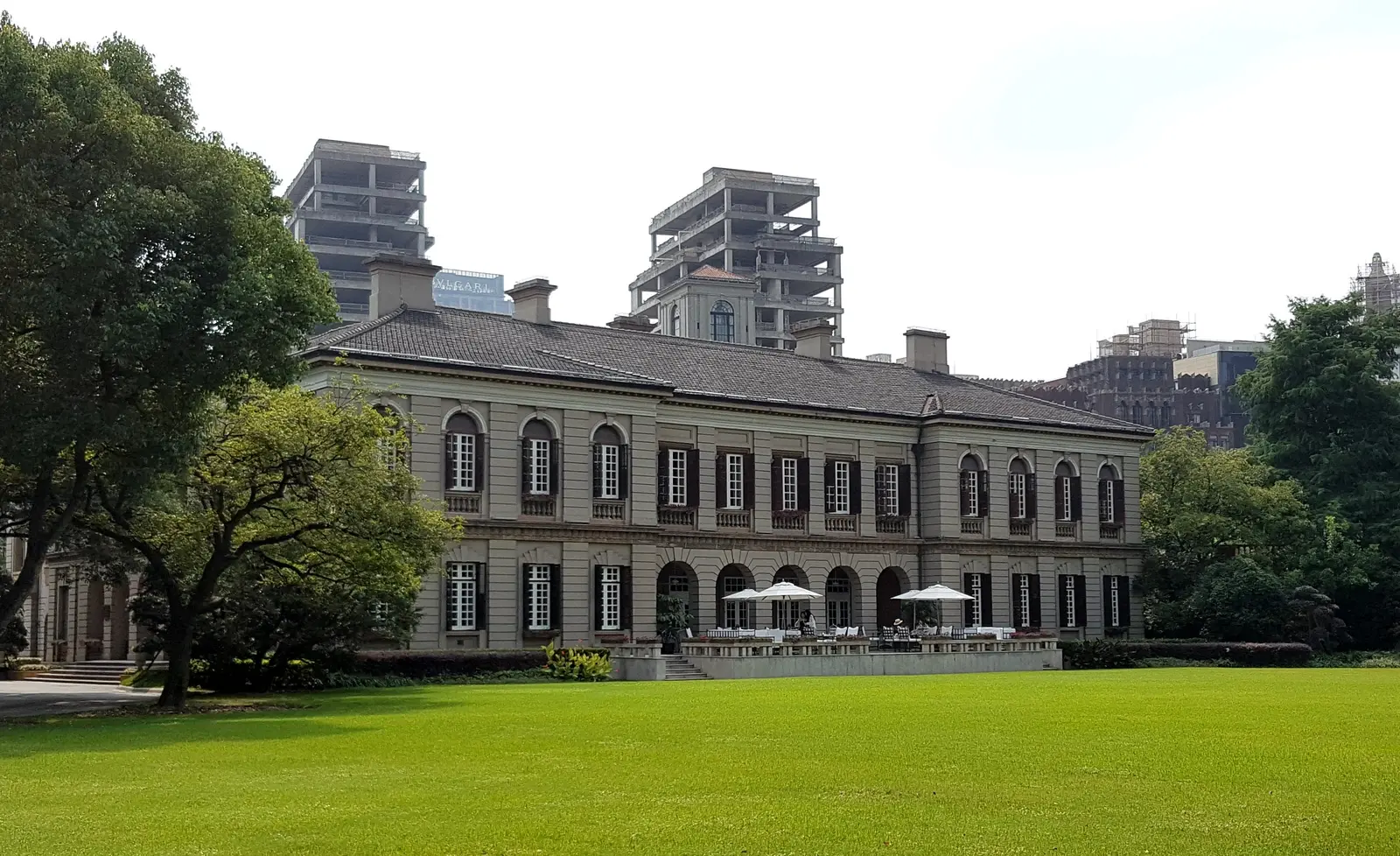
The blocks behind the old British consulate look calm now. Courtyards open off Huqiu Road, a flight of wide steps leads up from Museum Plaza, and the lanes between the old office buildings are paved and lit. That calm took a long time. The project was approved in the early 2000s and only declared finished in September 2023, and in between it changed owners, architects, demolition lists and business plans.
This is the last part of a series on Waitanyuan (外滩源), “the source of the Bund”. The earlier parts explain what was here: the consulate, the theatre, museum and clubs of Museum Road, and the mission offices of Yuanmingyuan Road. This part is about how those buildings were emptied, restored and reopened.
A district company and an American developer
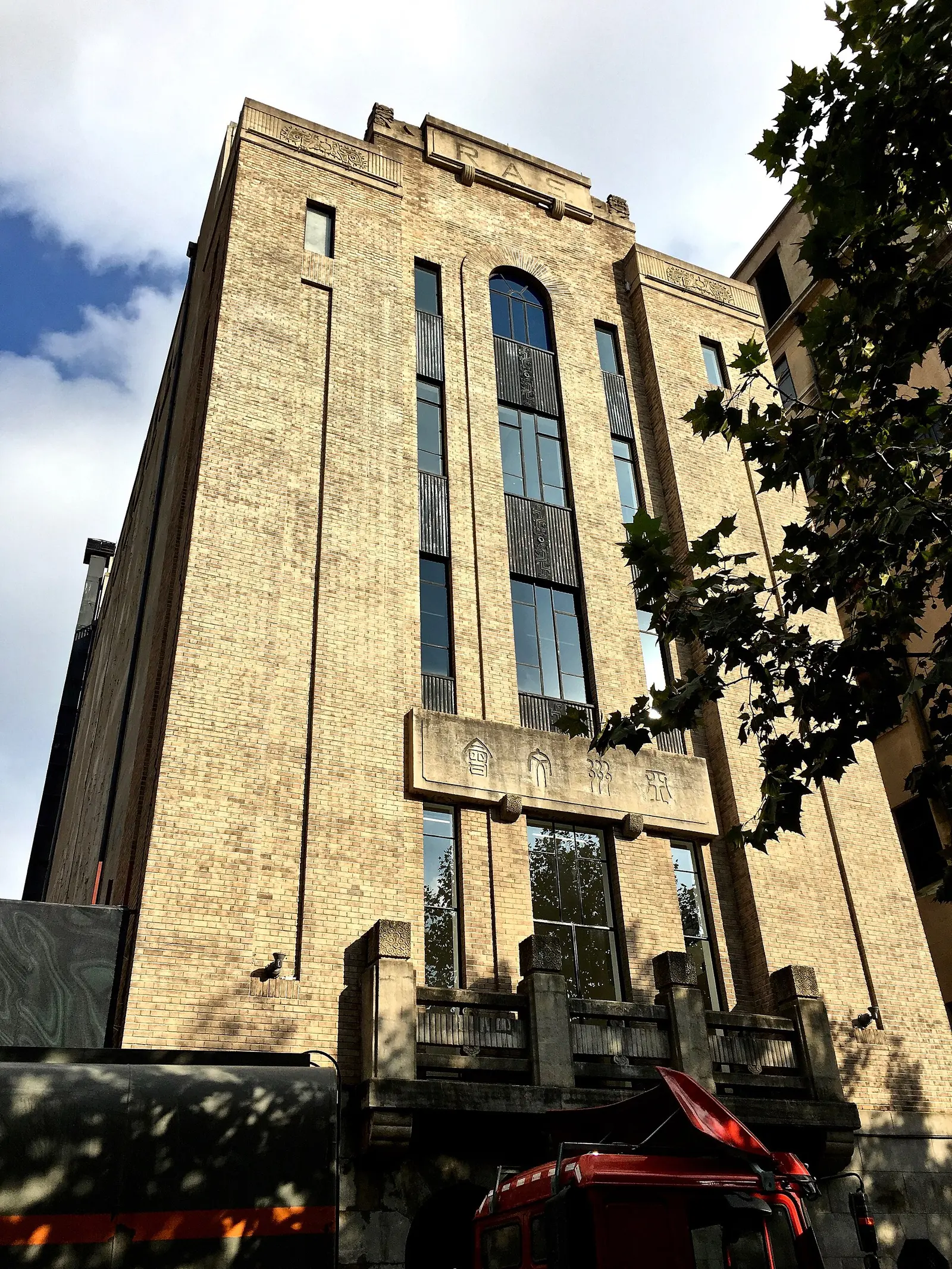
By the early 2000s the buildings had been divided for decades. The Royal Asiatic Society building is a typical case: by 2000 its old museum floors were flats with shared kitchens. The district approved a redevelopment of the area in three phases. The first phase covered the two blocks between Yuanmingyuan Road, Beijing East Road, Huqiu Road and Suzhou Creek, together with the old consulate compound on the Bund. A district company, the New Huangpu Group (新黄浦集团), was put in charge of relocation and development.
It looked for a foreign partner. The project was first announced in 2004, then stalled over residents’ relocation and disagreements over design. On 1 December 2005 the Rockefeller Group, a unit of the Japanese company Mitsubishi Estate, announced a joint venture in which it held 91 per cent, with 9 per cent for New Huangpu and backing from the Hong Kong company Sinolink. Rockefeller would choose the architects and control the planning. It was the group’s first project in China, with an initial budget for the stage before construction of US$169 million. Sinolink became a partner in 2006, and by 2024 the venture was owned 51:49 by Rockefeller and Sinolink.
Moving people out
Before any restoration could start the buildings had to be emptied. When the joint venture was announced in 2005, relocation was reported as one reason the project had stalled. The residents of the Royal Asiatic Society building were moved out in 2006. Phase 2 was harder still. A 2014 report on the area called relocation and rehousing its biggest bottleneck, slowed by rising house prices and changing policy.
What was nearly lost
The demolition list was not fixed at the start. The Shanghai Rowing Club on the creek bank was scheduled to come down in June 2009. Heritage specialists objected the day before demolition, and it was kept. One architect argued that the consulate, the Union Church and the rowing club belonged together, as the government, worship and sport of the old settlement. The clubhouse survived and was restored; the boathouse part did not. Between 2018 and 2021 a landscape project turned the club’s former swimming pool into a covered public space under a steel-truss roof.
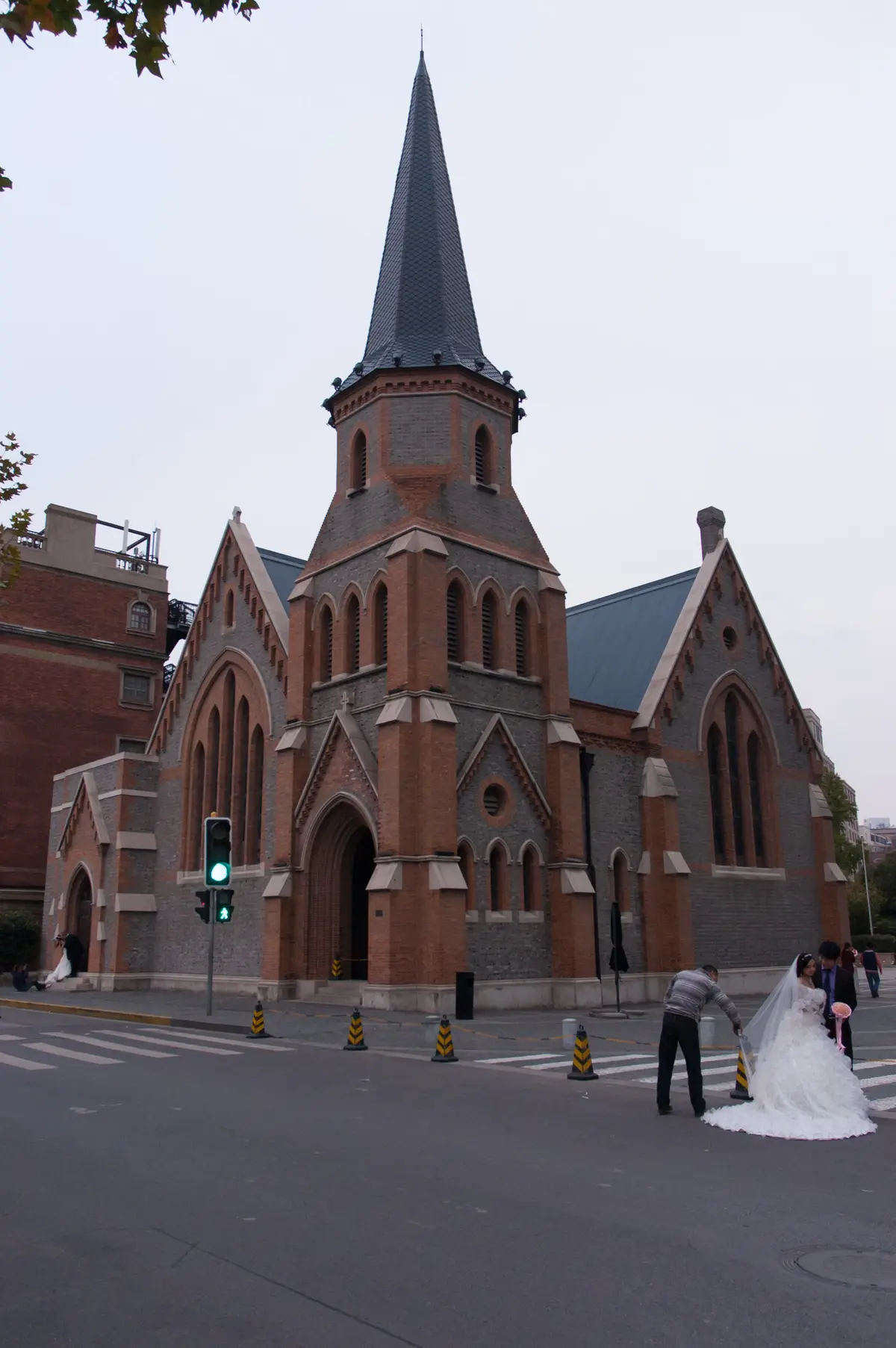
The Union Church nearly went another way. In January 2007, while it stood disused, a fire badly damaged it. The church was then taken down piece by piece and put back together with the surviving bricks and measured drawings, in work led by a Tongji University team that was reported complete in 2010.
Some things were removed deliberately. On the old consular land south of the consulate stood the Friendship Store, which in the 1980s sold imported goods for foreign exchange certificates. It was demolished, and the Peninsula hotel was built on its site.
Restoring eleven buildings
In 2006 the developers brought in the British architect David Chipperfield’s firm to restore, upgrade and convert eleven historic buildings. Construction started in 2009. The first building to reopen was the Royal Asiatic Society building, as the Rockbund Art Museum, in 2010; the restored consulate reopened the same year as Bund Origin No. 1. Restoration of the historic facades was finished in 2011.
The approach was cautious. The architects described the aim as showing buildings that had “aged with dignity”. Facades were cleaned and repaired without stripping original material, and later additions and alterations were taken off. Where new facades were needed on extensions, they were finished in Shanghai plaster to match the old buildings next to them. The firm Arquitectonica designed five new buildings.
The boldest move is on Beijing East Road. At the Andrews & George Building a three-storey historic facade was kept at street level, and eleven storeys of new brick tower were stacked on top. The tower’s shell was finished in 2021.
Selling the place
Restoration was only half the problem; the buildings had to pay. In October 2012 Patek Philippe moved from No. 18 the Bund into the former consul-general’s residence. Next door at Yifeng Waitanyuan the leasing plan changed twice. A long-term deal with Saks Fifth Avenue as anchor fell through after the 2008 financial crisis, and in 2010 slow lettings pushed the owner to switch to independent shops. By 2014, apart from expensive restaurants, retail trade was weak. In 2013 luxury retail along the whole Bund was struggling; Armani’s store at Three on the Bund had closed.
The public face of the project was also criticised. The lawn east of the consulate had been promised as an outdoor living room for the city. In 2014 its iron gates were often half-shut, and few ordinary people went in.
Offices proved easier to fill. In May 2024 the joint venture agreed to sell two office buildings, at 219 Yuanmingyuan Road and the Andrews & George tower, to their tenant, the online insurer ZhongAn, for RMB 1.44 billion. The retail side, the same report noted, had struggled to keep luxury tenants even before the pandemic.
Opening the lanes
The last phase changed how the blocks are used. In the old district the lanes behind the buildings were service space, left over between the backs of offices. Chipperfield’s final phase turned them into a public route, linking small squares between the historic buildings on the east with the new residential buildings on the west. The Museum Plaza in front of the art museum got a broad flight of steps.
Rockbund reopened to the public on a Friday in late September 2023, seventeen years after the architects started. It now has eleven historic buildings, from 1896 to 1932, and six new ones. In early 2025 the tenants included a cosmetics shop in the old Baptist publishing building, galleries, cafés and a library, while the Missions Building has shops and offices with a restaurant on its top floor.
What phase 2 has to solve
Phase 1 covered only two blocks. Phase 2, blocks 171, 172 and 173, runs south from Suzhou Creek to Dianchi Road and west to Sichuan Middle Road. In Huangpu’s 2023 action plan those blocks were still at the expropriation stage, the legal process by which property is taken over for redevelopment. The wider area behind the Bund still had more than 2,000 households without sanitation of their own. Phase 2 is not just a matter of restoring facades: it means rehousing residents first. The story on the streets behind the Bund sets out what the district’s plans propose.
Walking through it
The clearest way to see what the project did is to walk through the middle of it. Start at the Rockbund Art Museum on Huqiu Road, cross Museum Plaza and follow the lanes east towards Yuanmingyuan Road. Before 2023 none of this was open to the public. Then go round to Beijing East Road to see the Andrews & George tower, and north to South Suzhou Road for the rebuilt Union Church and the rowing club that was nearly demolished.
Places mentioned
Tap a name in the text, or “map” in this list, to see where it is; names with their own page link to it.
- 01Former British Consulate (Bund Origin No. 1)外滩源壹号mapRestored and reopened in 2010; the consul-general's residence became a watch retailer's Shanghai house in 2012.
- 02The Peninsula Shanghai上海半岛酒店New hotel on the southern part of the old consular land, where the Friendship Store stood.approximate position
- 03Union Church新天安堂mapBadly damaged by fire in 2007 and rebuilt piece by piece.
- 04Shanghai Rowing Club划船俱乐部mapListed for demolition in June 2009 and kept after objections; the pool became a covered public space.
- 05Rockbund Art Museum and Museum Plaza上海外滩美术馆mapThe first building to reopen, in 2010; Museum Plaza and the lanes behind it opened in 2023.
- 06Andrews & George Building, Beijing East Road安培洋行大楼(北京东路)A three-storey historic facade with an eleven-storey brick tower above, completed as a shell in 2021. Position approximate.approximate position
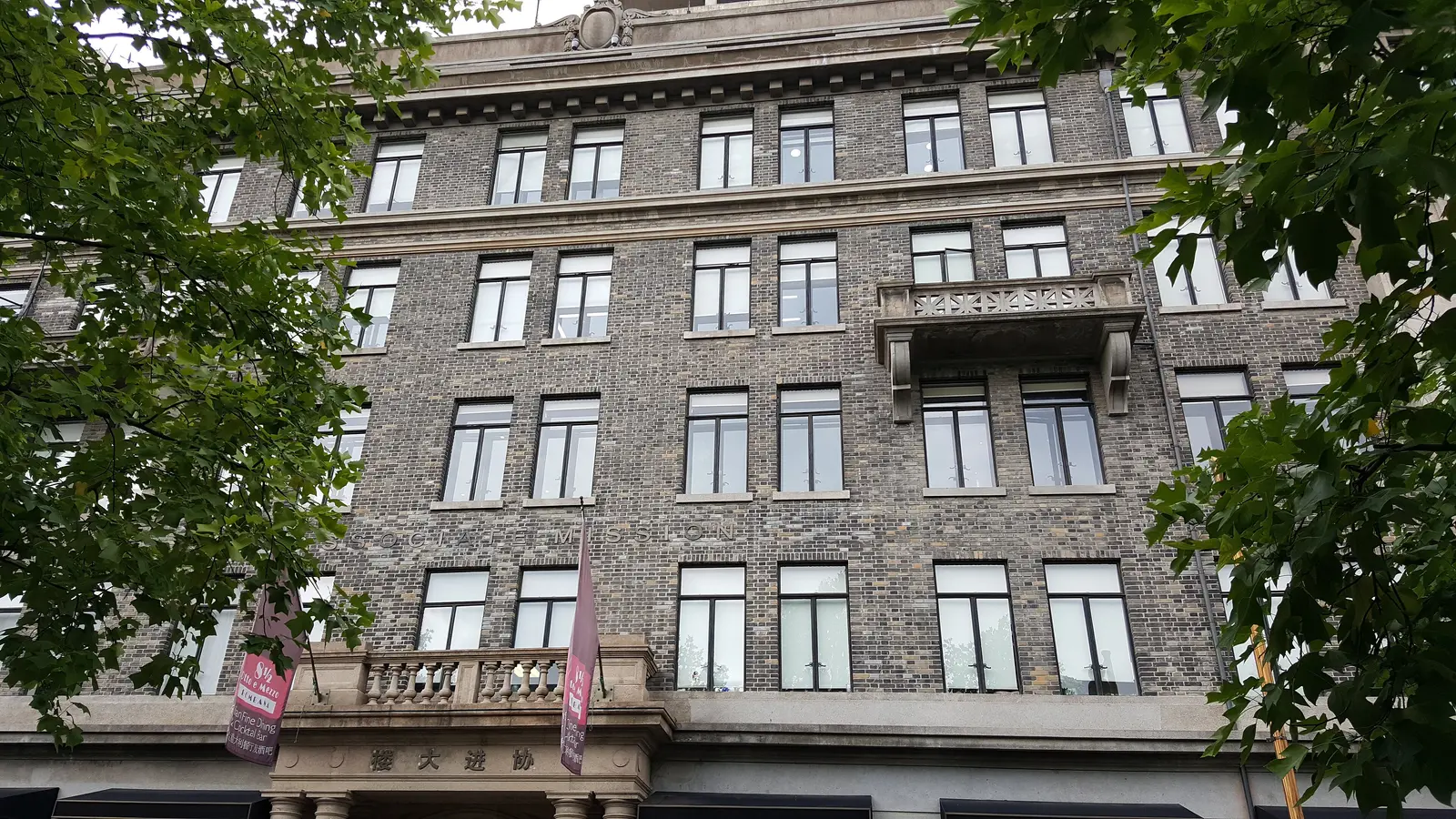
- 07Missions Building协进大楼mapOne of the eleven restored historic buildings.
- 08Rockbund phase 2 (blocks 171–173)外滩源二期The blocks south and west of phase 1, still in redevelopment expropriation in 2023.approximate position
Places in this story

Building· 1872–1873
Former British Consulate-General
原英国驻沪总领事馆Yuán Yīngguó Zhù Hù Zǒnglǐngshìguǎn
The Bund's oldest surviving Western-style building: the British consulate rebuilt in 1872-73 after a fire, now an exhibition venue (Bund Origin No. 1).

Museum· 1932–1933
Rockbund Art Museum
上海外滩美术馆Shànghǎi Wàitān Měishùguǎn
A contemporary art museum with no permanent collection, in the 1933 Art Deco Royal Asiatic Society building off the Bund, redesigned by David Chipperfield.

Protestant church· 1885–1886
Union Church
新天安堂xīn tiān ān táng
The British and American Union Church on Suzhou Creek, founded in 1886 for foreign residents and rebuilt after a 2007 fire.
Building· c. 1904–1905
Shanghai Rowing Club
划船总会Huáchuán Zǒnghuì
The former home of the Shanghai Rowing Club on Suzhou Creek, with its restored clubhouse and an old swimming pool now open to the sky.

Building· 1923–1924
Associate Mission Building
协进大楼Xiéjìn Dàlóu
A 1923–24 office block on Yuanmingyuan Road for the National Christian Council and mission societies, with a granite entrance porch.

Building
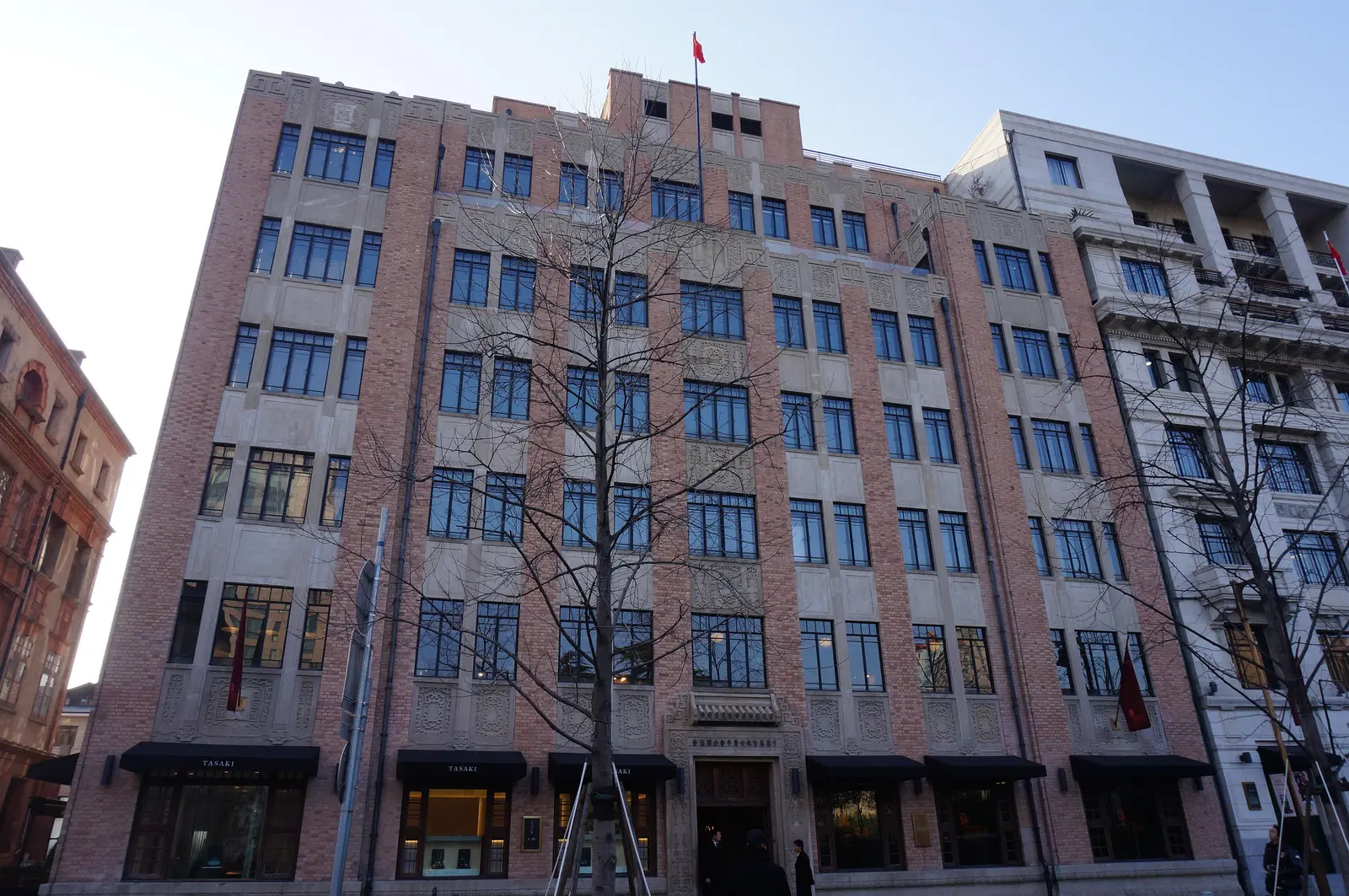
YWCA Building
女青年会大楼Nǚ Qīngniánhuì Dàlóu
An Art Deco home for the national YWCA on Yuanmingyuan Road, with Chinese carved details and upper floors that step back.

Building· 1929
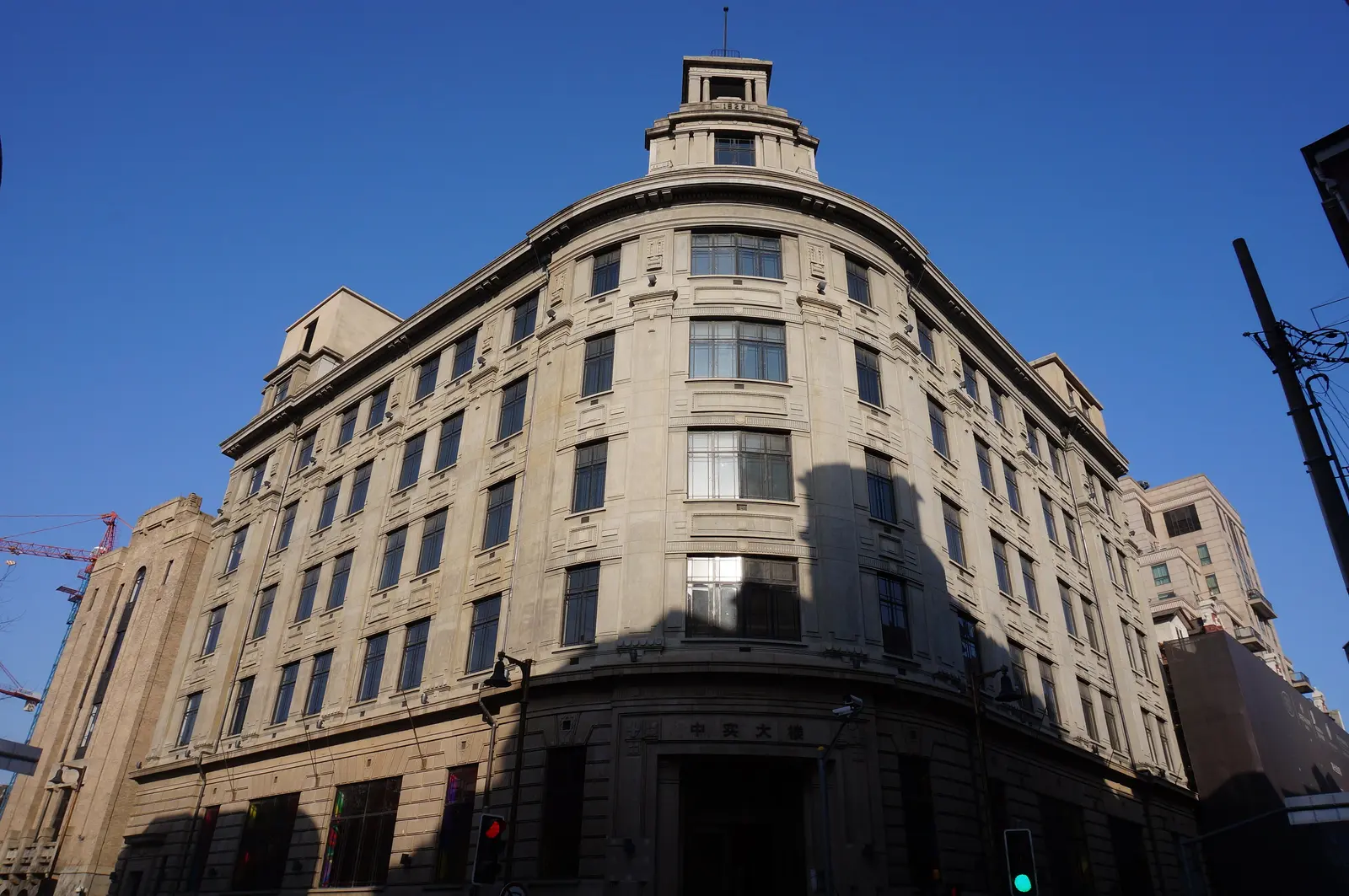
National Industrial Bank Building
中实大楼Zhōngshí Dàlóu
A six-storey bank headquarters of 1929 at the corner of Huqiu Road and East Beijing Road, with a granite base, restored as part of Rockbund.
Sources
- 1.Chinese Wikipedia (article given in each fact's locator) (中文维基百科), Wikimedia Foundation — 外滩源 (history section); 原英国驻上海总领事馆wikipedia
- 2.Rockefeller Group sets joint venture for landmark Shanghai property project (Rockefeller Group sets joint venture for landmark Shanghai property project), The Star (Malaysia), wire report, 2005 — whole articlearticle
- 3.ZhongAn to buy Rockbund offices for RMB 1.44 billion (ZhongAn to buy Rockbund offices), Kevin He, Mingtiandi, 2024 — background paragraphs; building description; whole articlearticle
- 4.The Royal Asiatic Society Building: The Museum on Museum Road (The Royal Asiatic Society Building: The Museum on Museum Road), Historic Shanghai — later usewebsite
- 5.Waitanyuan: the dignity and awkwardness of going upmarket (外滩源:“高大上”的体面与尴尬), 什雅, 上观新闻(上海观察), 2014 — phase 1 and Friendship Store paragraphs; Rowing Club paragraph; Patek Philippe and leasing paragraphs; lawn paragraph; phase 2 paragrapharticle
- 6.The Bund (Waitanyuan and the Bund buildings) (外滩·源), 杨嘉祐, 上海人民出版社, 2012 — 新天安堂; 划船俱乐部book
- 7.A tale of two churches (Shanghailander, Hugues Martin, 23 March 2009) (A tale of two churches), Hugues Martin, Shanghailander, 2009 — A tale of two churchesarticle
- 8.New spaces on Suzhou Creek: from the rowing club to the petrol-station café (The Paper) (苏河新空间丨从划船俱乐部到加油站咖啡馆,从繁华到繁花盛开), 澎湃新闻(湃客), 2022 — pool and boathousearticle
- 9.ROCKBUND (ROCKBUND), David Chipperfield Architects, David Chipperfield Architects — project data and description; descriptionwebsite
- 10.First Bund architecture festival; David Chipperfield as artistic director (首届外滩建筑节举行,普利兹克得主戴卫·奇普菲尔德出任艺术总监), 林子人, 界面新闻, 2023article
- 11.Historic buildings of Shanghai Bund reopen (Historic buildings of Shanghai Bund reopen), China Daily, 2023 — whole articlearticle
- 12.Luxury retail fails on Shanghai's Bund (Luxury Retail Fails on Shanghai's Bund), Michael Cole, Mingtiandi, 2013 — whole articlearticle
- 13.Huangpu District: urban renewal action plan for the Bund second-facade area (黄浦区外滩第二立面区域城市更新行动计划), 上海市黄浦区人民政府, 上海市黄浦区人民政府, 2023 — §2 footnotes 1–2; §3 (2), pp. 4–5official-list
- 14.Bund renewal moves on to the second facade (新貌可期!上海外滩地区城市更新已向“第二立面”建筑群推进), 臧鸣, 澎湃新闻, 2019article
- 15.ROCKBUND in Shanghai unveils its 2025 New Year's Map (operator press release) (ROCKBUND in Shanghai unveils its 2025 New Year's Map), ROCKBUND, PR Newswire, 2025 — tenant listarticle
- 16.The Missions Building on Yuanmingyuan Road (圆明园路上的传教楼 (The Missions Building symbolized Christian influence in China)), 上海市人民政府新闻办公室(感知上海·今日上海), 2014 — people; later useswebsite
- 17.English Wikipedia (article given in each fact's locator) (English Wikipedia), Wikimedia Foundation — Former Consulate-General of the United Kingdom, Shanghaiwikipedia