Topic
Xu Guangqi's Shanghai: the scholar, the old town and the tomb that named Xujiahui
Three stories on Xu Guangqi, who translated Euclid with Matteo Ricci: his life, his family's old-town places, and the grave that named Xujiahui.
Xujiahui, the district of Xuhui, Guangqi Park: three Shanghai names come from one man. Xu Guangqi was born in the walled county town in 1562, kept failing the provincial exams, then rose to be a Grand Secretary of the Ming. On the way he became a Catholic and, with the Jesuit Matteo Ricci, put the first six books of Euclid into Chinese. He was buried west of the town in 1641, and his family’s village grew up round the grave.
The scholar follows his life, from a poor family in the walled town through the examinations, the Euclid translation, army training and the calendar reform, to his death in Beijing with nothing in his purse.
The old town stays in Shanghai: the remnant of the family house on Qiaojia Road, the gardens where he grew the first sweet potatoes, the Jesuit he invited in 1608 and the church his granddaughter helped buy.
The tomb that named Xujiahui follows the grave from 1641 to the 2026 renovation, through the Jesuits’ arrival next door, the cross added in 1903 and the park it became.
Each part can be read on its own. The map brings together the places they mention, from the Old City to Xujiahui.
Read in order
Part 1 · The scholar
Xu Guangqi: the Shanghai scholar who put Euclid into Chinese, 1562–1633
How a Shanghai boy who kept failing his exams became a Catholic, translated Euclid with Matteo Ricci, reformed the calendar and died a Grand Secretary.
7 min read
Part 2 · The old town
Xu Guangqi's Shanghai: sweet potatoes, a Jesuit guest and the old town's first church
Xu Guangqi's family places in and around the walled town: the Nine-Bay House, his sweet-potato gardens, and the church his granddaughter helped buy.
5 min read
Part 3 · The tomb that named Xujiahui
The tomb that named Xujiahui: Xu Guangqi's grave, 1641–2026
How a Ming grave west of Shanghai became a village, a Jesuit headquarters, a district name and a park, and what the tomb has been through since 1641.
5 min read
Everything on one map
Every place the parts mention. Numbers run through the parts in reading order.
Loading map…
People, families and firms
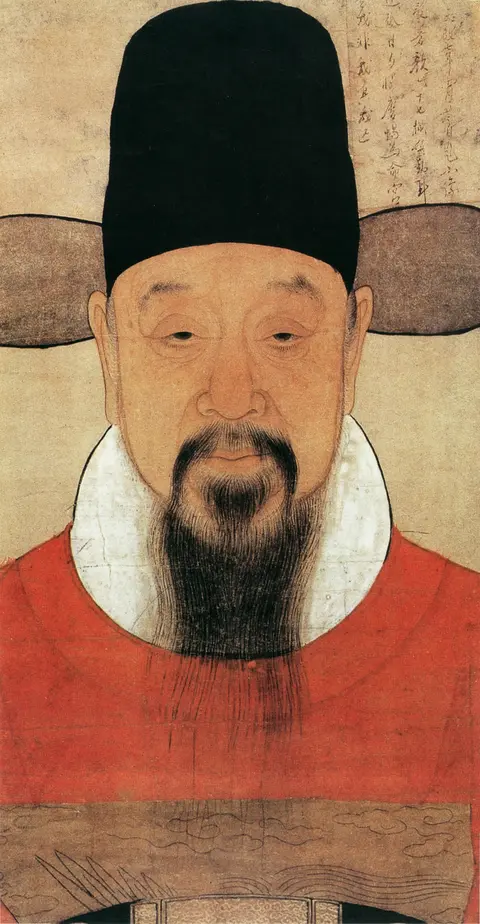 Xu Guangqi徐光启Ming official from Shanghai (1562–1633) who translated Euclid with Matteo Ricci and reformed the calendar; his grave gave Xujiahui its name.
Places to see
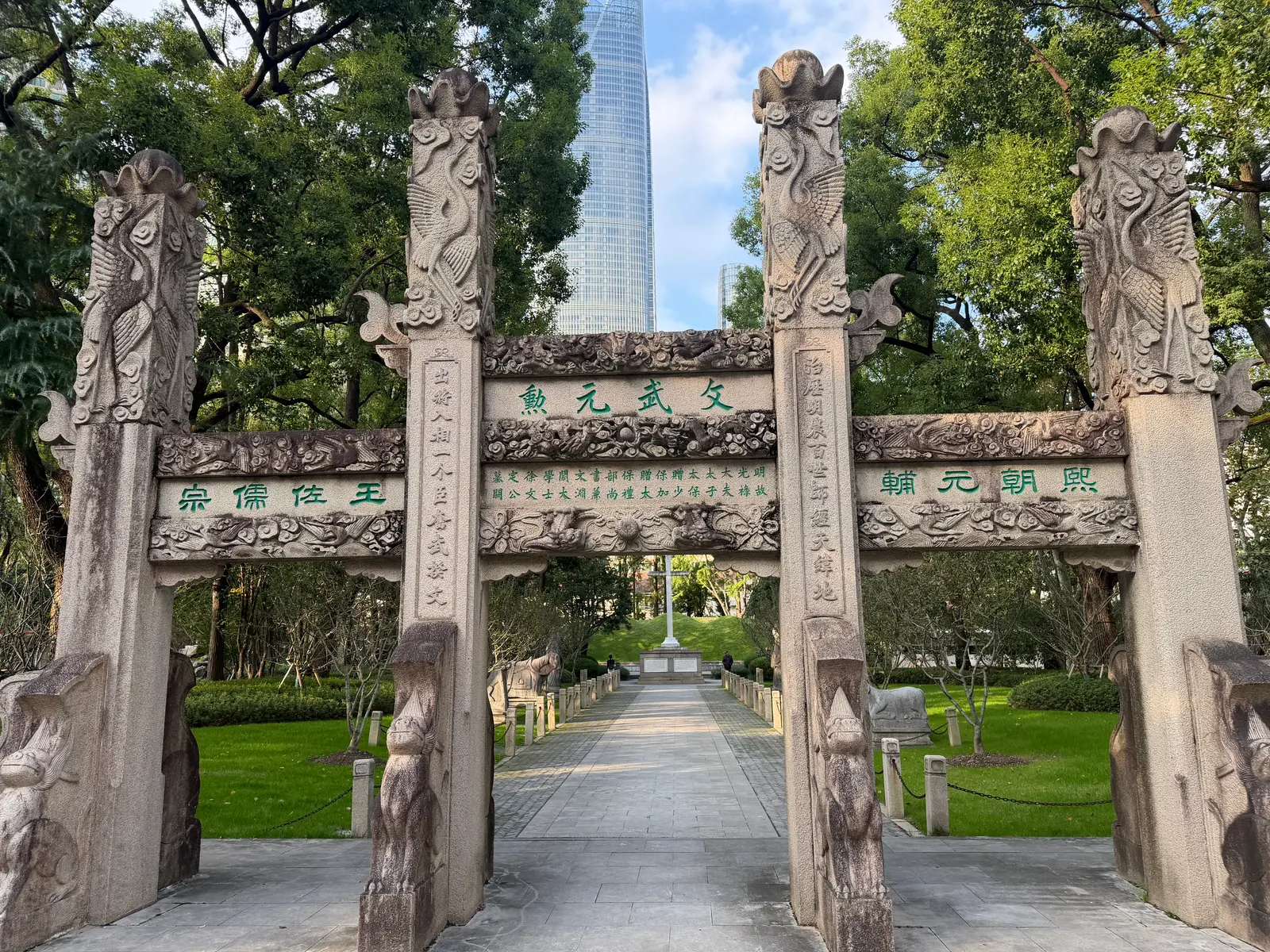
Park· 1641–1983
Guangqi Park
光启公园Guāngqǐ Gōngyuán
A small Xujiahui park around the tomb of Xu Guangqi, the Ming scholar who translated Euclid with Matteo Ricci and gave Xujiahui its name.
Building
Jiujian Lou (Xu Guangqi's former residence)
九间楼Jiǔjiān Lóu
What survives of Xu Guangqi's family house in the Old City: a two-storey Ming dwelling on Qiaojia Road, still lived in.
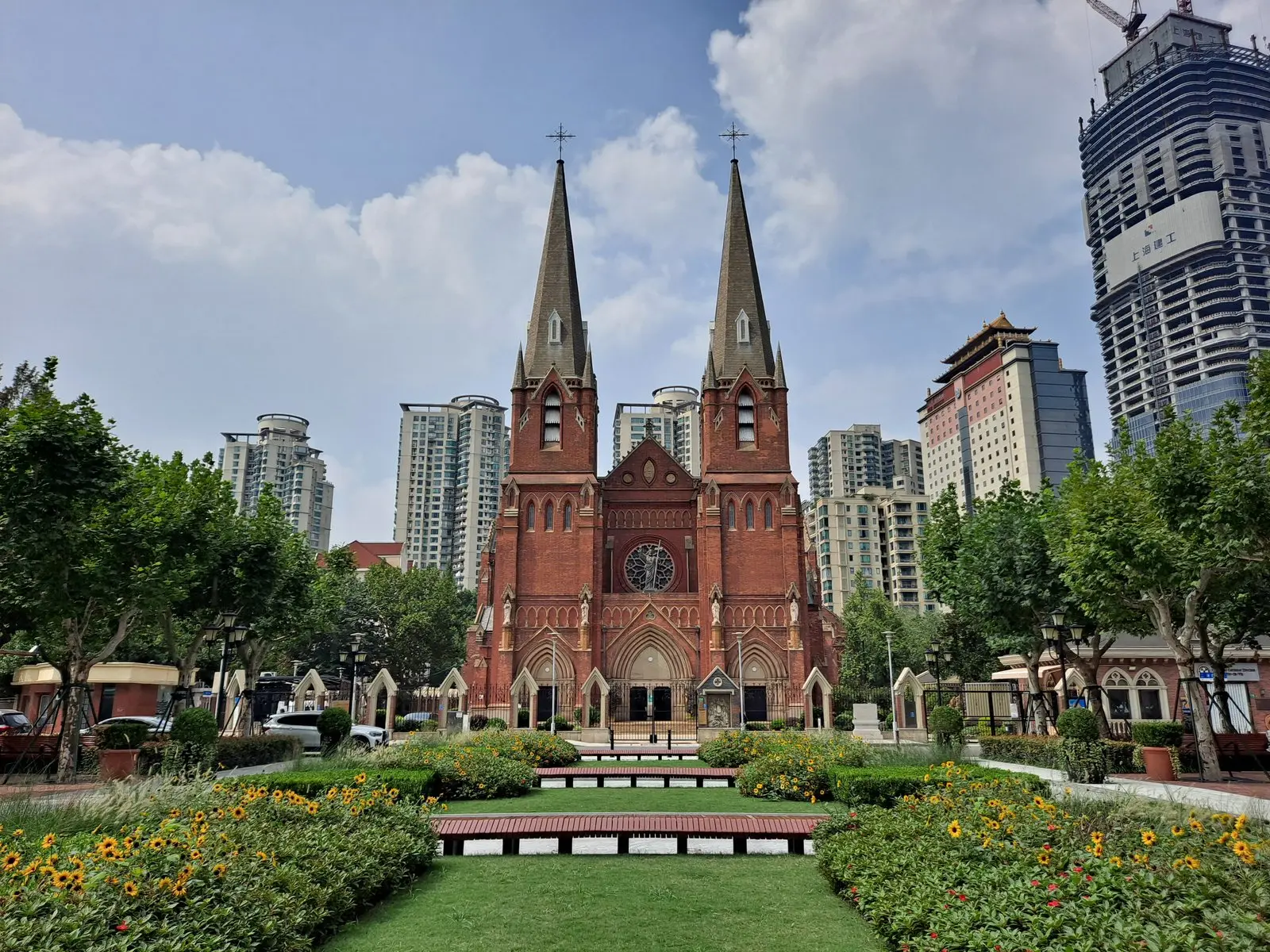

Catholic church· 1906–1910
St Ignatius Cathedral, Xujiahui
徐家汇天主堂Xújiāhuì Tiānzhǔtáng
Shanghai’s Catholic cathedral, completed in 1910, with twin red-brick spires and stained glass incorporating Chinese characters.
Sources
- 1.Xuhui District Gazetteer (first series), biography of Xu Guangqi (徐汇区志 · 人物 · 徐光启(1562~1633)), 上海市徐汇区志编纂委员会, Shanghai Local Chronicles Office, 1997 — paras. 1, 3 and finalgazetteer
- 2.Xuhui District: Xu Guangqi and Guangqi Park (海派之源,中西使者——徐光启和光启公园), 徐汇区绿化和市容管理局, 上海市徐汇区人民政府, 2021 — Euclid sentencewebsite
- 3.Shanghai Civil Affairs Bureau place-name series: Xuhui District (地名文化漫谈|徐汇区:因明末著名科学家徐光启得名), 上海市民政局, 上海市民政局网站, 2023 — 徐汇区 paragraphswebsite