Park · in Xujiahui and the West Bund
Guangqi Park
光启公园Guāngqǐ Gōngyuán
A small Xujiahui park around the tomb of Xu Guangqi, the Ming scholar who translated Euclid with Matteo Ricci and gave Xujiahui its name.
- Built
- 1641–1983
- Heritage listing
- Major Historical and Cultural Site Protected at the National Level (Tomb of Xu Guangqi) · national · 3 · 1988
- Status
- Open to visitors
- Then in
- Chinese territory throughout; outside the foreign settlements
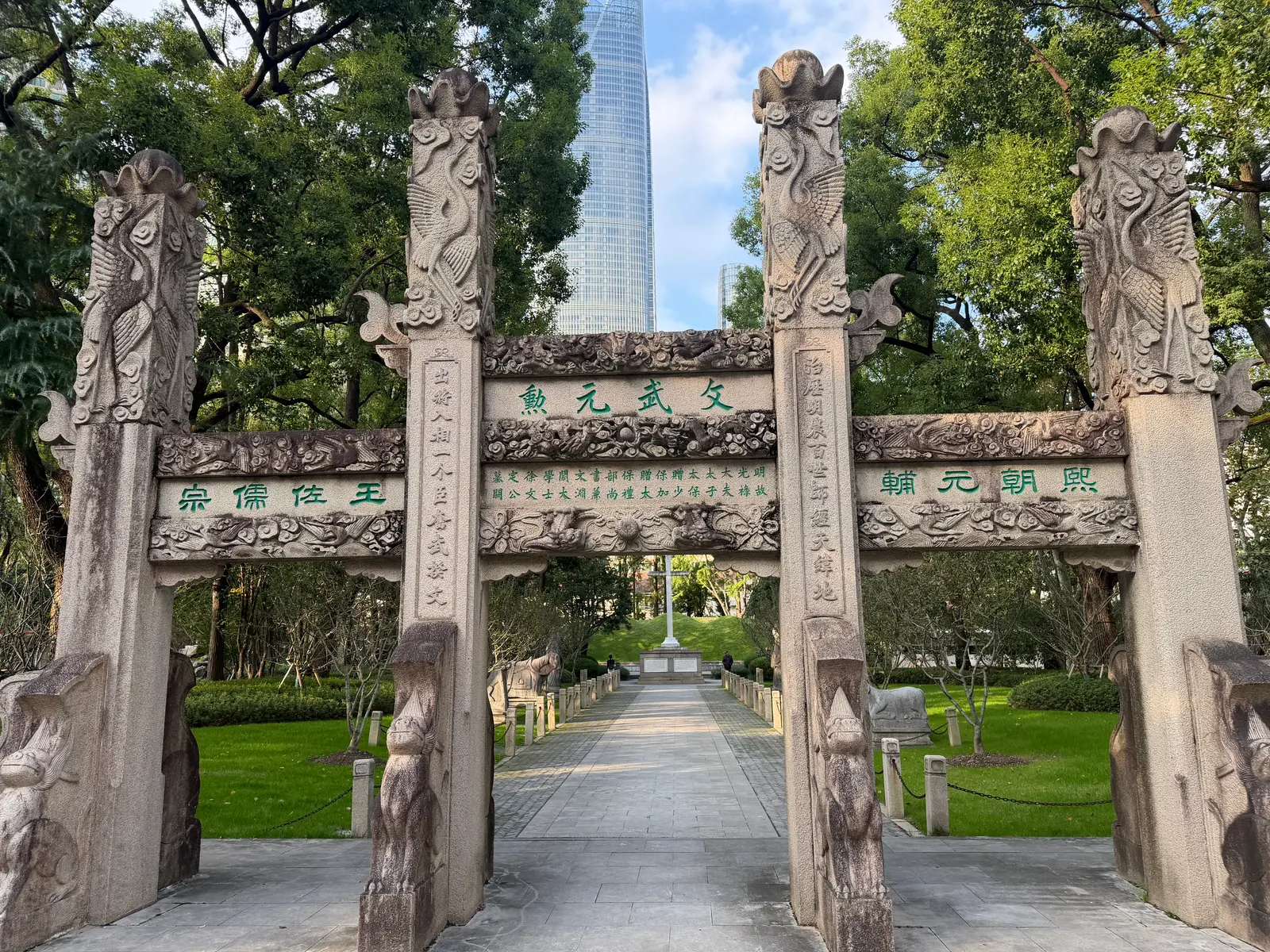
The stone archway at the gate, rebuilt in 2003 to the Ming pattern. The top panel reads 文武元勛, 'first in civil and military merit'; the path beyond is the spirit way to the cross and the grave mound.
Photo: the site owner, Shanghai Story MapWhat you're looking at
- The oval grave mound at the north end, with the inscription 明徐光启墓 in the mathematician Su Buqing's hand.
- The stone cross in front of the tomb: a Catholic grave marker on a Ming official's tomb.
- The lone stone horse west of the tomb, a survivor of the original row of stone figures.
- The corridor of inscribed stones with Xu's own calligraphy, including his preface to Euclid.
- Four sculptures along the path: Xu with Ricci, the sweet-potato garden, the stars, the cannon.
- The pedestal of the cross: Latin on the side facing the path, Ma Xiangbo's Chinese record of 1903 on the other three.
- The broken Latin slab under glass by the Nandan Road railings, a piece of the original 1903 tablet.
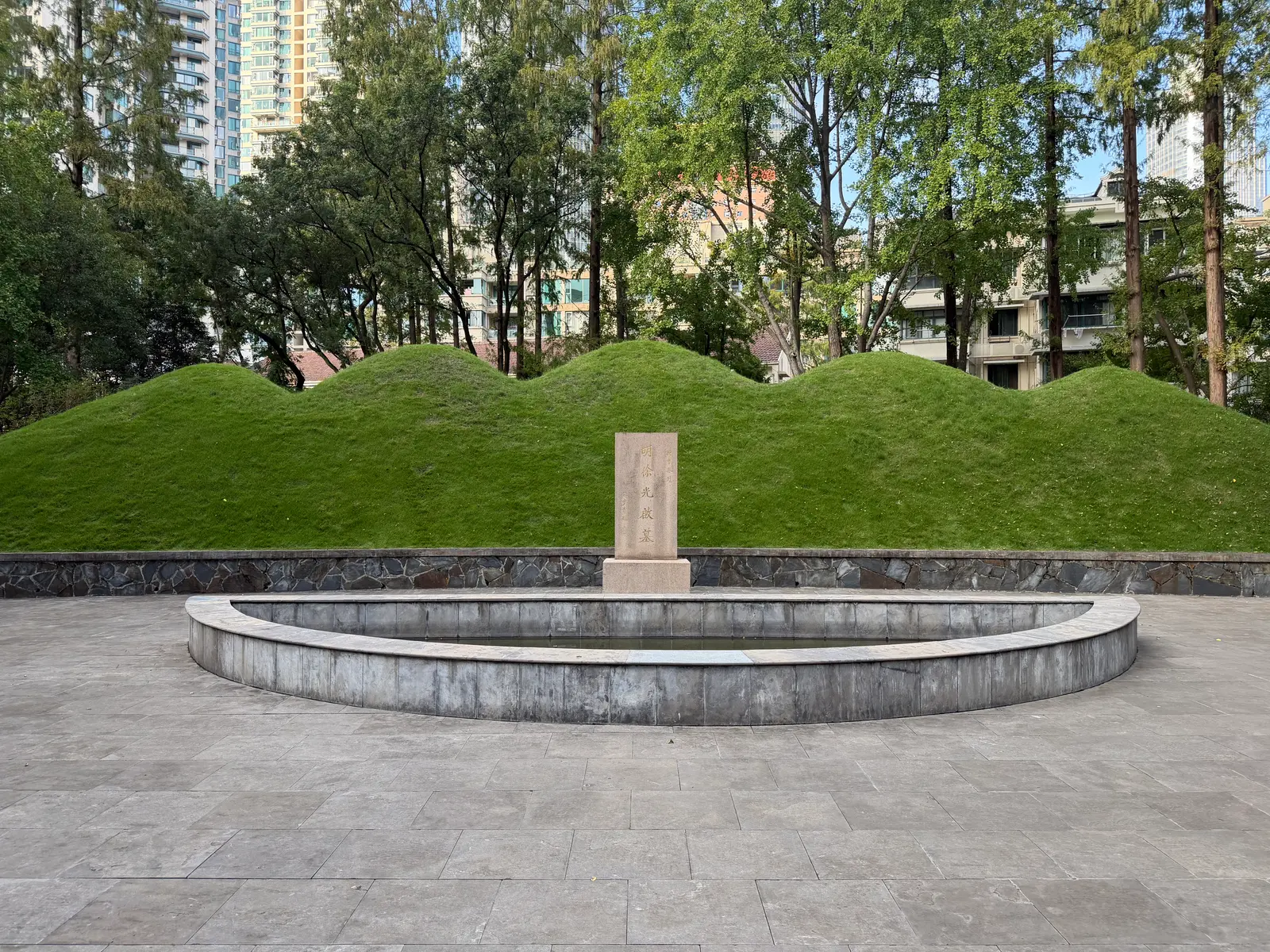
The grave mound, rebuilt in 1981, with the headstone 明徐光启墓 in front. Xu, his wife and four grandsons with their wives lie beneath.
Photo: the site owner, Shanghai Story Map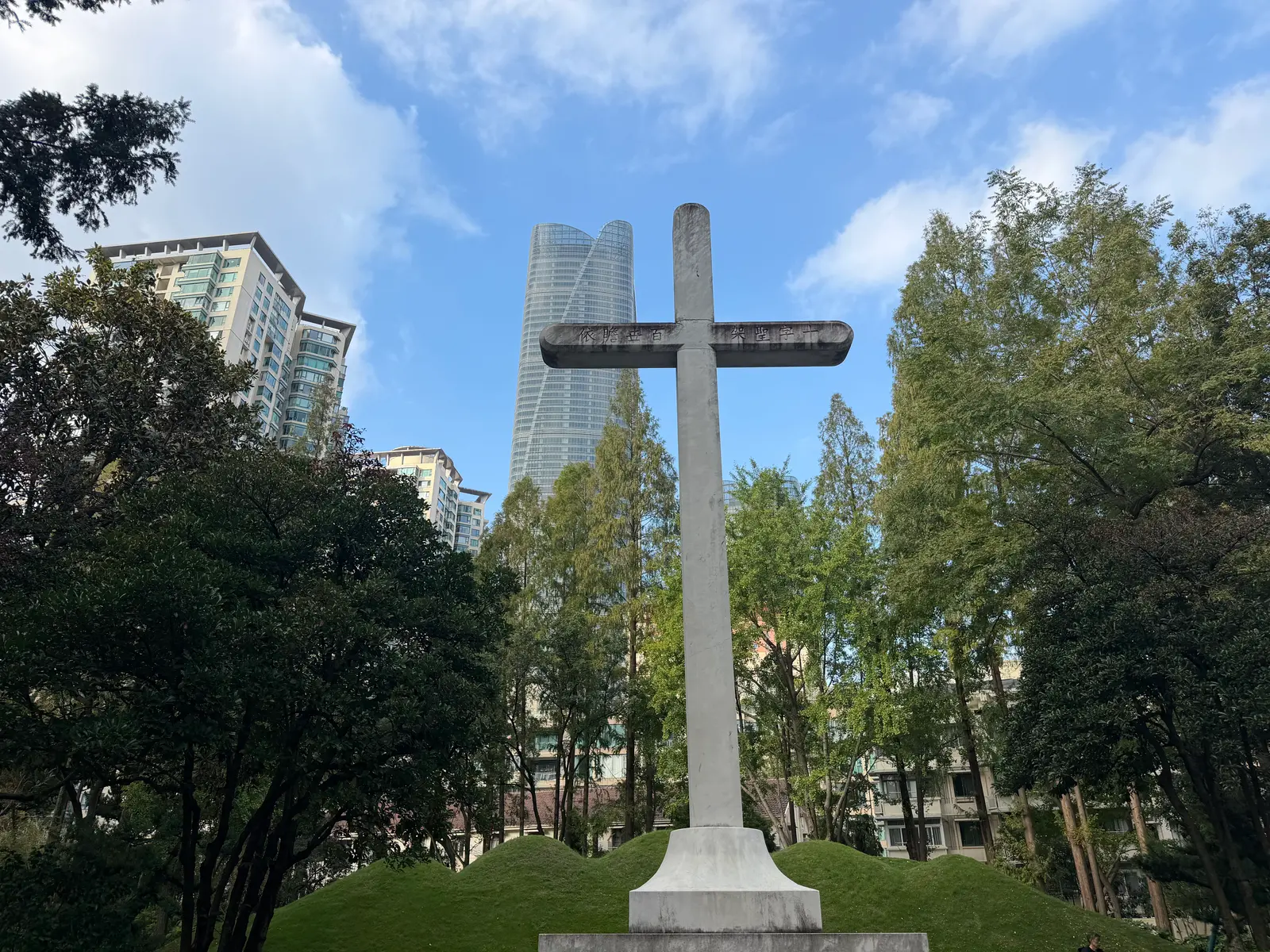
The white marble cross, first raised in 1903 and set up again in 2003. The arms read 十字聖架 · 百世瞻依: 'the holy cross, looked to for a hundred generations'.
Photo: the site owner, Shanghai Story Map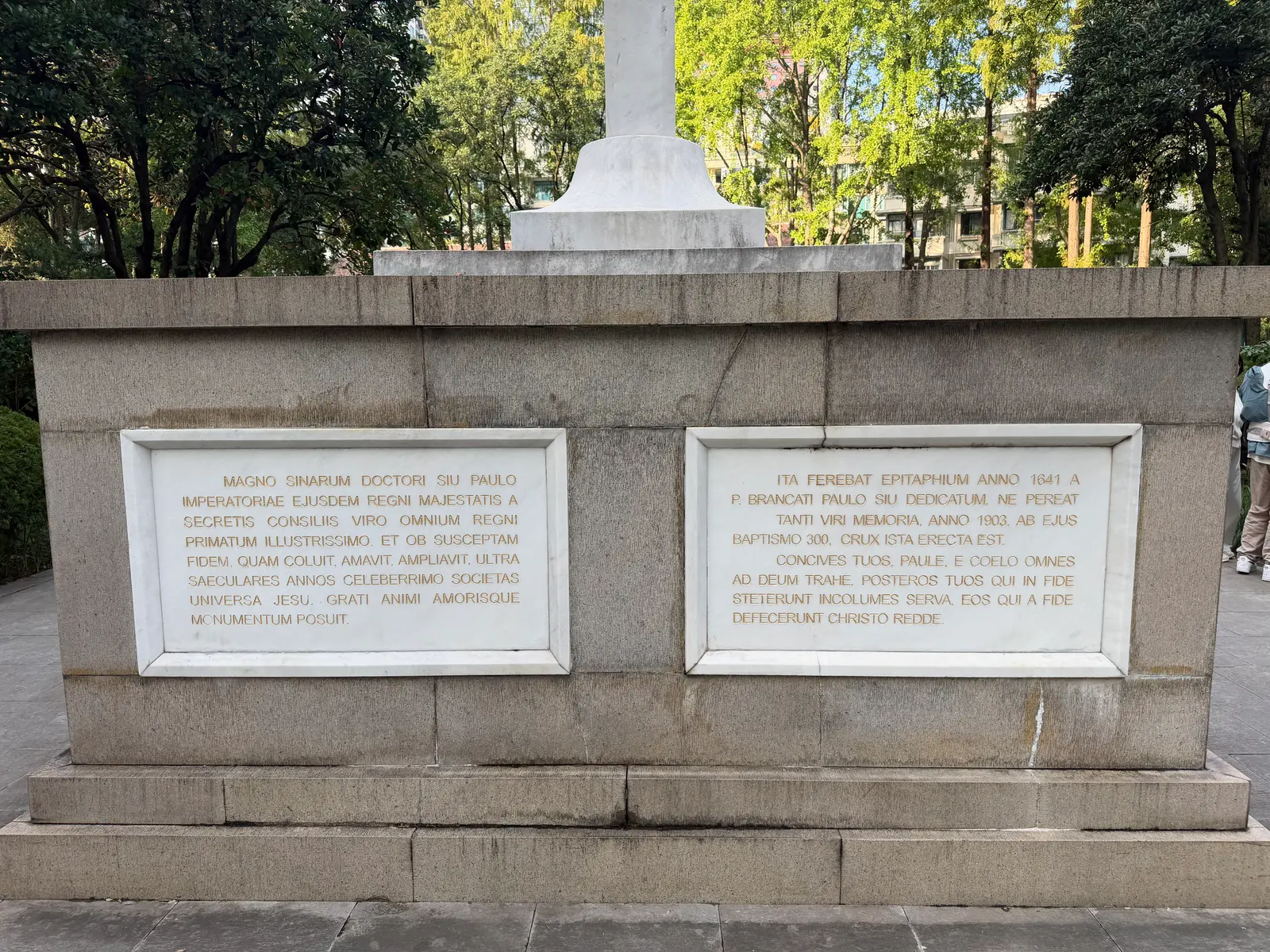
The Latin side of the pedestal. The left tablet gives the epitaph Francesco Brancati wrote for Xu in 1641; the right one records the cross of 1903. Both were blank after 2003 and were carved in 2007, once the text had been found in a Spanish magazine of 1904.
Photo: the site owner, Shanghai Story Map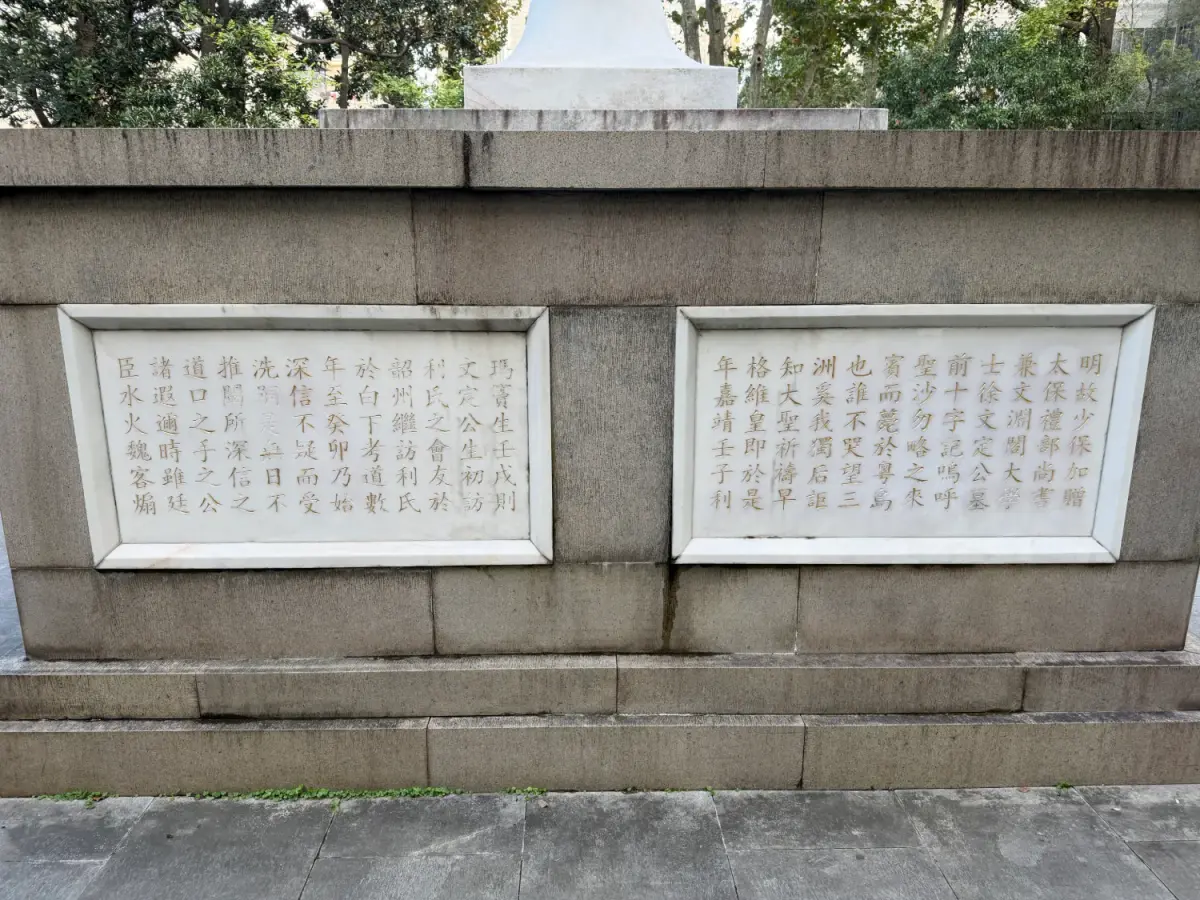
The first two Chinese tablets of Ma Xiangbo's 1903 'Record of the cross before the tomb of Xu Wending'. The text starts on the right and reads down each column, right to left.
Photo: the site owner, Shanghai Story Map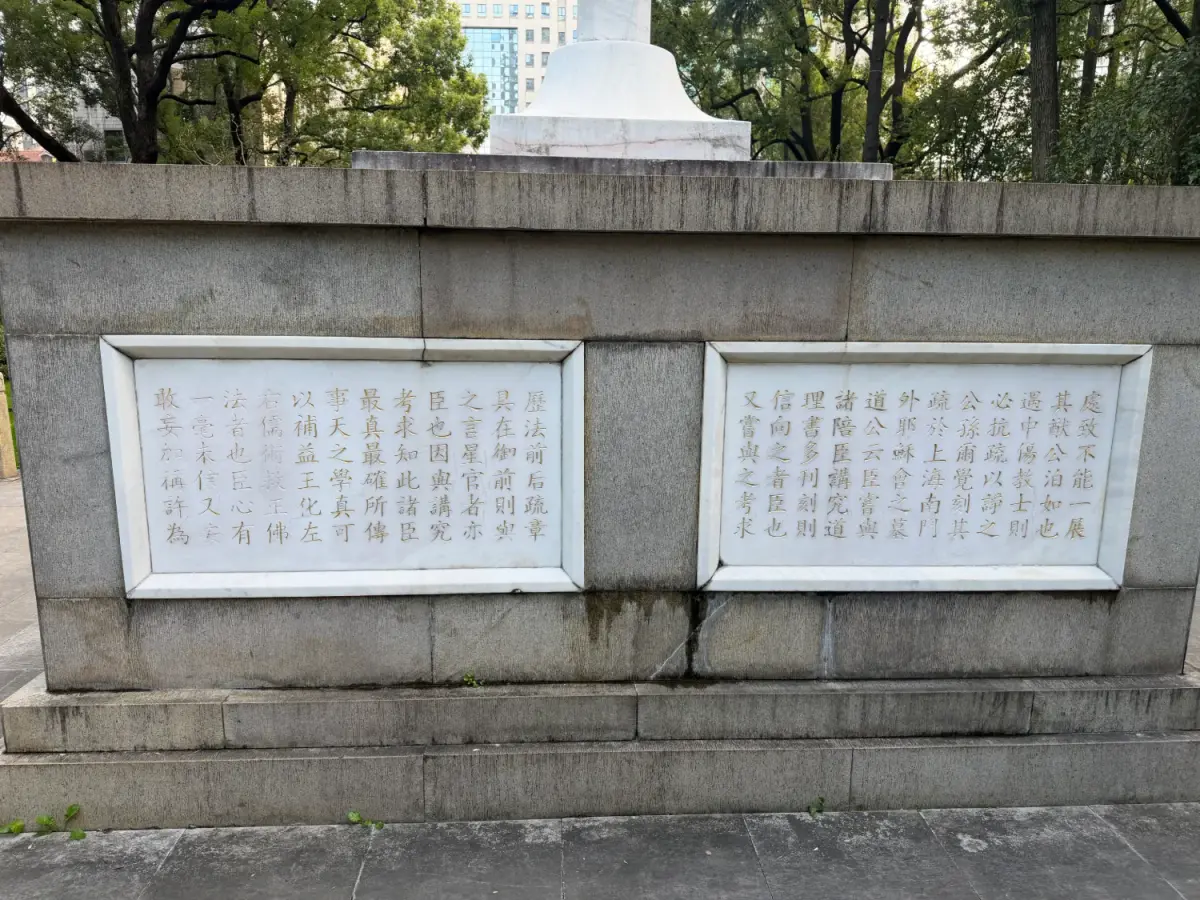
The middle two tablets of Ma Xiangbo's record, quoting Xu's own memorial of 1616 in defence of the missionaries.
Photo: the site owner, Shanghai Story Map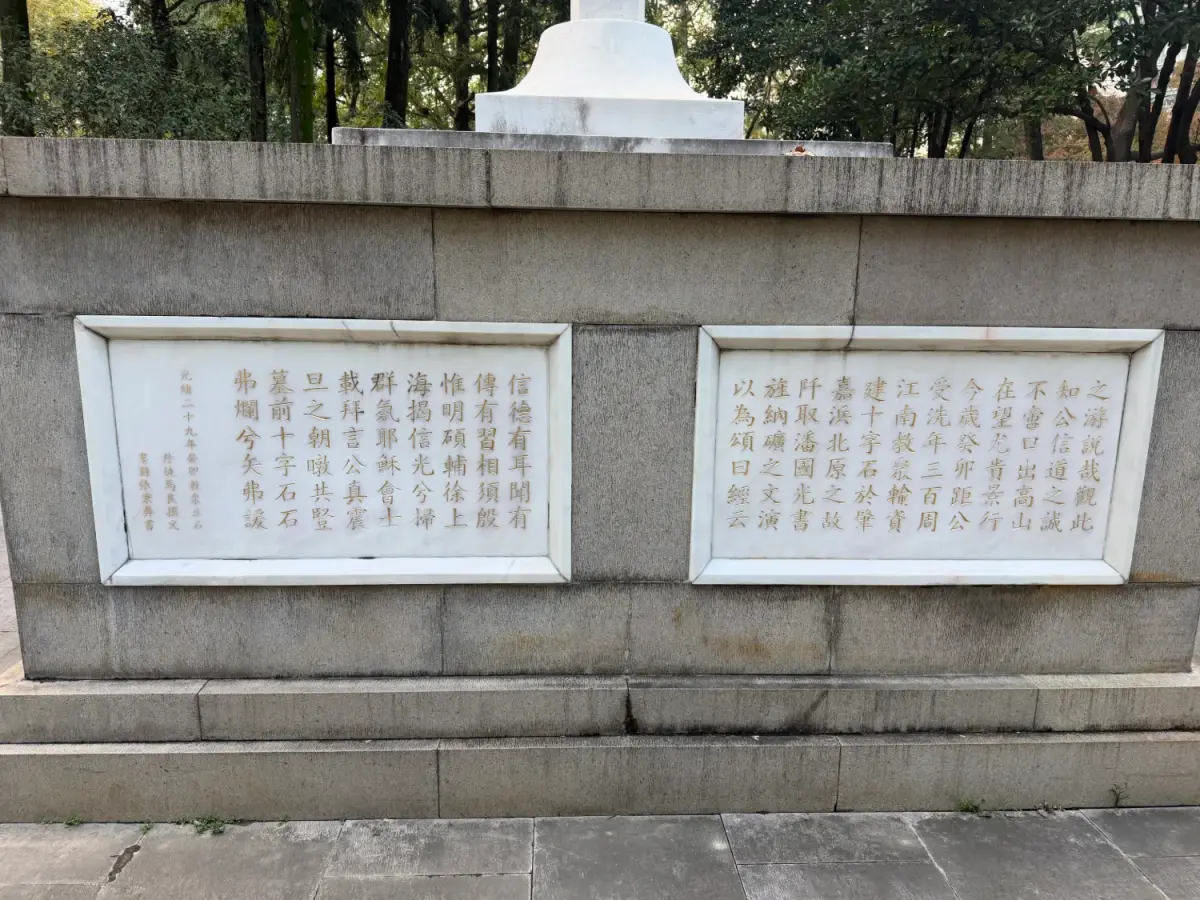
The last two tablets of Ma Xiangbo's record, ending with a short hymn and the date line: set up by the Catholic faithful in 1903, text by Ma Liang, calligraphy by Zhang Bingyi.
Photo: the site owner, Shanghai Story Map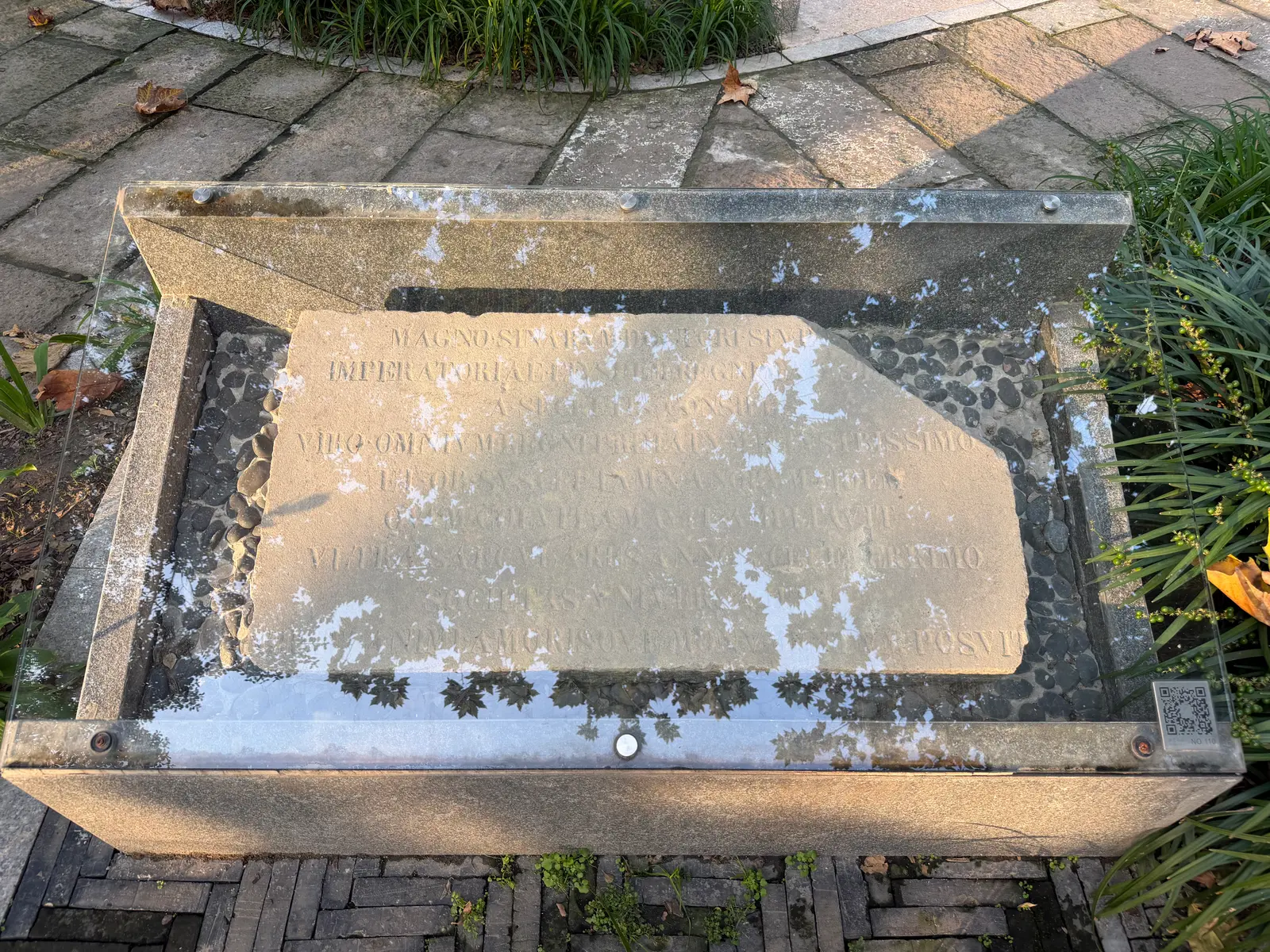
The broken slab under glass near the Nandan Road railings: a piece of the original 1903 Latin tablet, the same epitaph now recarved on the pedestal, spelled with V for U (SINARVM, PAVLO).
Photo: the site owner, Shanghai Story MapThe story
Guangqi Park is a pocket of trees and lawns a few minutes’ walk south of the Xujiahui crossroads. It exists because of one grave. Xu Guangqi (徐光启, Xú Guāngqǐ), a Shanghai man who rose to the top of the Ming government, worked with the Jesuit Matteo Ricci on the first Chinese translation of Euclid and became a Catholic, was buried here in 1641. His descendants lived round the tomb, and by about 1800 the place was known as Xujiahui: the Xu family’s spot where three creeks met. The park is the old family burial ground, and the tomb is still its centre.
The tomb and its cross
Xu died in Beijing in 1633. His coffin was brought home to Shanghai and kept for several years at his garden outside the city’s south gate before the burial in 1641. The original burial ground covered 20 mu and held ten graves: Xu and his wife in the middle, flanked by four grandsons and their wives. In front stood a tablet, stone figures of officials and horses, a pair of ornamental columns and a stone archway inscribed “first in civil and military merit”.
By 1903 the archway had gone. That year was the 300th anniversary of Xu’s baptism, and the Catholic Church in the region, whose Jesuits had made Xujiahui their headquarters in 1847, restored the grave and set a large stone cross in front of it, with a Latin inscription. That is why a Ming grand secretary’s tomb carries a cross. In 1933, for the 300th anniversary of his death, the cross got an iron railing and a cement path. Wartime neglect followed, and the open ground was dug into vegetable plots.
The tomb was repaired and listed in 1957, then lost its archway and columns in the Cultural Revolution. In 1978 the site opened as a public park under the name Nandan Park. The grave you see now is an oval mound built in 1981, 2.2 metres high, with an inscription by the mathematician Su Buqing. On 8 November 1983, the 350th anniversary of Xu’s death, the city renamed the park after him. In 1988 the tomb was listed as a nationally protected site. In 2003 the archway and the spirit way leading to the grave were rebuilt in the manner of a Ming official’s tomb, so the archway in front of the tomb dates from 2003, not from the Ming.
The cross and its lost Latin
The cross stands on a granite pedestal set with eight marble tablets. Six of them, on three sides, carry a Chinese record of Xu’s life and faith, composed for the 1903 anniversary by the scholar Ma Xiangbo. The two on the side facing the path are in Latin. The first gives the epitaph the Jesuit Francesco Brancati wrote for Xu’s burial in 1641; the second says the cross was raised in 1903, three hundred years after his baptism, and asks Xu to bring his fellow citizens and his descendants to God. In 1641 the epitaph was not cut in stone. It was written in gold on the white silk laid over the coffin, and a Chinese version stood by the grave until it, too, was lost.
When the cross went back up in 2003, Ma’s Chinese was easy to recut: it had been printed in his collected works. The Latin was another matter. Nobody at Xujiahui knew what it had said, no photograph showed it, and the two front tablets were left blank. Ad Dudink, a scholar of Chinese Christianity at Leuven, heard this on a visit in May 2006 and went looking. Through a great bibliography of mission literature he found a short Spanish report on the celebrations of 1 November 1903, written by Edmond Moreau, a French Jesuit then at Xujiahui, and printed in a Bilbao devotional monthly, El Mensajero del Corazón de Jesús, in 1904. On page 278 Moreau had copied out the whole inscription. The text reached Shanghai through the Fudan historian Li Tiangang, and shortly before National Day 2007 it was carved into the empty tablets.
The find settled a second puzzle. A broken slab with lines of Latin capitals had turned up years before, and was at first taken for the gravestone of 1641. Set beside Moreau’s text it matched, line for line, except that it spells U as V: SINARVM, PAVLO. It is a piece of the original 1903 tablet. It now lies under glass by the path along the Nandan Road railings, not far from the gate. Every inscription on the cross is transcribed and translated below.
The memorial hall and the inscribed stones
The Xu Guangqi Memorial Hall on the west side of the park is housed in South Chunhua Hall, a Ming-dynasty house taken down elsewhere and rebuilt here; the museum opened in early 2005. Its displays, about 220 square metres, are arranged in four sections: his view of the wider world, his science, his patriotism and his character.
Beside the tomb, a corridor of stones set up in 1983 carries Xu’s own calligraphy, including his preface to the Euclid translation, alongside a biography by the early Qing scholar Zha Jizuo and a copy of his portrait by the painter Cheng Shifa. One stone horse from the old grave goods still stands west of the mound. Four sculptures along the paths pick out his life: talking with Ricci, planting in his garden, watching the stars, and overseeing the casting of cannon.
The park closed in 2026 for its biggest upgrade since 2003 and reopened by September, open around the clock. The work was meant to keep the tomb as it was. Xujiahui Cathedral is a short walk north.
Inscriptions
The cross before Xu Guangqi's tomb, in full
徐光啟墓前十字架碑刻
Transcribed from the stones as they stand today. Chinese is carved in columns read top to bottom, starting from the right; on each pair of tablets the right-hand one comes first. The translations are ours.
On the arms of the cross
十字聖架百世瞻依
Right arm, then left armPhoto of this side
Translation
The holy cross, looked to and leaned on for a hundred generations.
The Latin side
The epitaph Francesco Brancati (潘國光) wrote for Xu's burial in 1641, followed by the note added when the cross went up in 1903. These two tablets stood blank from 2003 until 2007.
MAGNO SINARUM DOCTORI SIU PAULOIMPERATORIAE EJUSDEM REGNI MAJESTATIS ASECRETIS CONSILIIS VIRO OMNIUM REGNIPRIMATUM ILLUSTRISSIMO, ET OB SUSCEPTAMFIDEM, QUAM COLUIT, AMAVIT, AMPLIAVIT, ULTRASAECULARES ANNOS CELEBERRIMO SOCIETASUNIVERSA JESU, GRATI ANIMI AMORISQUEMONUMENTUM POSUIT.
Left tablet: the epitaph of 1641Photo of this side
Translation
To Paul Xu, great scholar of China, privy councillor to the imperial majesty of that same realm, the most illustrious of all its leading men, and famous beyond the centuries for the faith he took up, practised, loved and spread: the whole Society of Jesus set up this monument of gratitude and love.
ITA FEREBAT EPITAPHIUM ANNO 1641 AP. BRANCATI PAULO SIU DEDICATUM. NE PEREATTANTI VIRI MEMORIA, ANNO 1903, AB EJUSBAPTISMO 300, CRUX ISTA ERECTA EST.CONCIVES TUOS, PAULE, E COELO OMNESAD DEUM TRAHE. POSTEROS TUOS QUI IN FIDESTETERUNT INCOLUMES SERVA. EOS QUI A FIDEDEFECERUNT CHRISTO REDDE.
Right tablet: the note of 1903Photo of this side
Translation
So ran the epitaph that Father Brancati dedicated to Paul Xu in 1641. So that the memory of so great a man should not perish, this cross was set up in 1903, three hundred years after his baptism. Paul, from heaven draw all your fellow citizens to God. Keep safe those of your descendants who have stood firm in the faith; bring back to Christ those who have fallen away.
The Chinese sides: Ma Xiangbo's record of the cross
Six tablets on the other three sides of the pedestal, each twelve columns of six characters, composed in 1903 by Ma Liang (Ma Xiangbo, 1840–1939) and written out by Zhang Bingyi.
明故少保加贈太保禮部尚書兼文淵閣大學士徐文定公墓前十字記嗚呼聖沙勿略之來賓而薨於粵島也誰不哭望三洲奚我獨后詎知大聖祈禱早格維皇即於是年嘉靖壬子利
Tablet 1Photo of this side
Read top to bottom, right to left
Translation
Record of the cross before the tomb of Xu Wending of the Ming, Junior Guardian, posthumously Grand Guardian, Minister of Rites and Grand Secretary of the Wenyuan Hall. Alas! When Saint Francis Xavier came to these shores and died on an island off Guangdong, who did not weep and look across the world, asking why we alone should be left till last? Yet who knew that the great saint's prayers had already been answered? In that very year, the renzi year of Jiajing [1552], Matteo Ricci…
瑪竇生壬戌則文定公生初訪利氏之會友於韶州繼訪利氏於白下考道數年至癸卯乃始深信不疑而受洗嗣是無日不推闡所深信之道口之手之公諸遐邇時雖廷臣水火魏客煽
Tablet 2Photo of this side
Read top to bottom, right to left
Translation
…was born; and in the renxu year [1562] Lord Wending was born. He first called on a companion of Ricci's at Shaozhou, then on Ricci himself at Nanjing, and studied the doctrine for some years. Only in the guimao year [1603] did he come to believe it deeply and without doubt, and was baptised. From then on not a day passed without his explaining that faith, by word and by pen, and making it known far and near. Though the ministers at court were then at each other's throats, and Wei [Zhongxian] and Madame Ke stirred up…
虐致不能一展其猷公泊如也遇中傷教士則必抗疏以諍之公孫爾覺刻其疏於上海南門外耶穌會之墓道公云臣嘗與諸陪臣講究道理書多刊刻則信向之者臣也又嘗與之考求
Tablet 3Photo of this side
Read top to bottom, right to left
Translation
…cruelty, so that he could never carry out his plans, he stayed calm. Whenever the missionaries were slandered he sent up a memorial to defend them, and his grandson Erjue had that memorial carved at the Jesuit cemetery outside Shanghai's south gate. In it he wrote: 'I have studied doctrine with these men from abroad, and many of their books have been printed; the one who believes in them is I. I have also worked with them on…
歷法前后疏章具在御前則與之言星官者亦臣也因與講究考求知此諸臣最真最確所傳事天之學真可以補益王化左右儒術救正佛法者也臣心有一毫未信又安敢妄加稱許為
Tablet 4Photo of this side
Read top to bottom, right to left
Translation
…the calendar, and all my memorials on it lie before Your Majesty; the one who has spoken for them to the court astronomers is also I. From that study I know these men to be the most truthful and reliable, and the learning of serving Heaven they teach can truly aid the empire's government, support the Confucian way and correct Buddhism. If there were a hair's breadth of doubt in my heart, how would I dare to praise them so, and…
之游説哉觀此知公信道之誠不啻口出高山在望允貴景行今歲癸卯距公受洗年三百周江南教衆輸資建十字石於肇嘉浜北原之故阡取潘國光書旌納礦之文演以為頌曰經云
Tablet 5Photo of this side
Read top to bottom, right to left
Translation
…speak up for them?' From this we see how sincere his faith was: not words alone. A high mountain to look up to, a great road to follow. This year, guimao [1903], is three hundred years since his baptism. The Catholics of Jiangnan gave money to raise a stone cross at the old family grave on the rise north of the Zhaojiabang creek. Taking the words Pan Guoguang [Brancati] wrote on the banner laid in the grave, I have turned them into a hymn. Scripture says:
信德有耳聞有傳有習相須殷惟明碩輔徐上海揭信光兮掃群氛耶穌會士載拜言公真震旦之朝暾共豎墓前十字石石弗爛兮矢弗諼光緒二十九年癸卯教衆立石丹徒馬良撰文婁縣張秉彝書
Tablet 6Photo of this side
Read top to bottom, right to left
Translation
'Faith comes by hearing.' Preaching and learning go hand in hand. Xu of Shanghai, great minister of the Ming, raised the light of faith and swept away the gloom. The Jesuits bow and say: you were truly the morning sun of China. Together we raise this stone cross before your tomb; until the stone crumbles, our vow will not be forgotten.
Date line
Set up by the Catholic faithful in the guimao year, the 29th of Guangxu [1903]. Text by Ma Liang of Dantu; calligraphy by Zhang Bingyi of Lou county.
How to visit
- Status
- Open to visitors
- Hours
- Park open 24 hours (since its 2026 reopening)
- Hours and prices are from the official website or a government listing; we have not yet checked them on site.
- Nearest metro
- Xujiahui徐家汇Line 1Line 9Line 11Exit 1· 3 min walkPlan a metro journey here →
Chinese address — show this to a taxi driver
上海市徐汇区南丹路17号
17 Nandan Road, Xuhui District
How to search this address in AmapAmap (高德地图) works best in mainland China; Apple Maps on iPhone. Both open in the app when it is installed.
Before you go
Is Guangqi Park open, and when?
Yes. After a renovation it reopened in 2026 and is open 24 hours.
Can I visit the Xu Guangqi Memorial Hall?
The hall is in the park, on its west side. Its current hours are not published; before 2026 it opened Tuesday to Sunday in the daytime, so check before you go.
Nearby
Loading map…
Within a 10-minute walk
- St Ignatius Cathedral, Xujiahui徐家汇天主堂4 min walk
- Xujiahui Shopping District徐家汇商圈10 min walk
Within a 20-minute walk
- Pathé Little Red Building百代公司旧址(小红楼)19 min walk
People
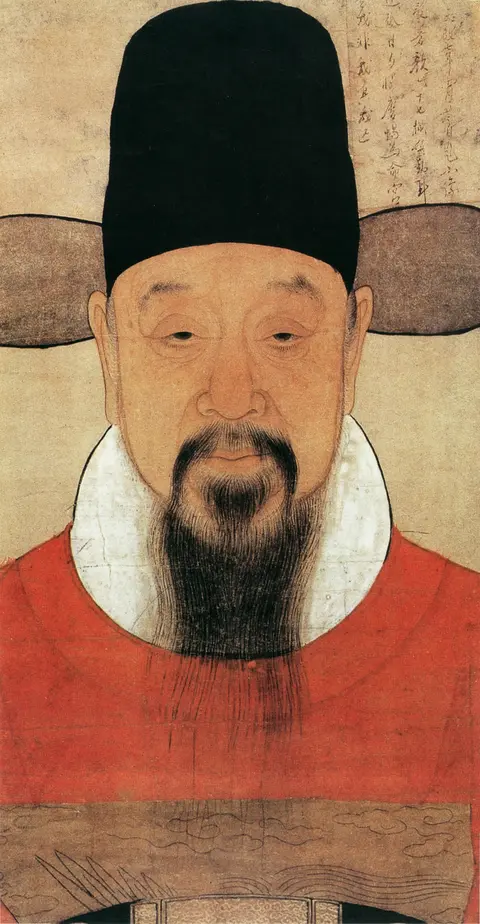 Xu Guangqi徐光启scholar-official, translator, agronomist, astronomer(site)
Stories
Sources
- 1.Tomb of Xu Guangqi (Meet in Shanghai, Shanghai Municipal Administration of Culture and Tourism) (Tomb of Xu Guangqi), Meet in Shanghai, 2025 — address and description; descriptionwebsite
- 2.Xuhui District Gazetteer (first series), parks, Guangqi Park (徐汇区志 · 第二节 公园 · 九、光启公园), 上海市徐汇区志编纂委员会, Shanghai Local Chronicles Office, 1997 — 九、光启公园gazetteer
- 3.Xuhui District Gazetteer (first series), biography of Xu Guangqi (徐汇区志 · 人物 · 徐光启(1562~1633)), 上海市徐汇区志编纂委员会, Shanghai Local Chronicles Office, 1997 — final paragraph; paras. 1 and 3gazetteer
- 4.Xuhui District Gazetteer (first series), protected sites, Xu Guangqi's tomb (徐汇区志 · 第一节 文物保护单位 · 一、徐光启墓), 上海市徐汇区志编纂委员会, Shanghai Local Chronicles Office, 1997 — 一、徐光启墓, para. 3; 一、徐光启墓, para. 4; 一、徐光启墓, para. 1gazetteer
- 5.The Paper: the Xu Guangqi stories kept in Guangqi Park (文史|关于徐光启的故事,全都藏在这座公园内), 澎湃新闻, 2021 — 1903 paragraph; 1957 and 文革 paragraphs; 1978 and 1981 paragraphs; 碑廊 paragraph; 2003 paragraph; sculptures paragraph; areaarticle
- 6.Xuhui District: Xu Guangqi and Guangqi Park (海派之源,中西使者——徐光启和光启公园), 徐汇区绿化和市容管理局, 上海市徐汇区人民政府, 2021 — 2003 sentence; memorial hall sentenceswebsite
- 7.Xu Guangqi Memorial Hall (Meet in Shanghai) (Xu Guangqi Memorial Hall), Meet in Shanghai, 2025 — descriptionwebsite
- 8.Guangqi Park reopens after renovation (Xuhui District official account) (光启公园焕新开放(上海徐汇官方账号)), 徐汇绿化市容;姚丽敏, 上海徐汇(网易号转载), 2026 — route section; opening and 开放时间 sectionsarticle
- 9.Shanghai Civil Affairs Bureau place-name series: Xuhui District (地名文化漫谈|徐汇区:因明末著名科学家徐光启得名), 上海市民政局, 上海市民政局网站, 2023 — 徐汇区 paragraph on Xu Guangqi; 徐家汇 name paragraph; Jesuits paragraphwebsite
- 10.Shanghai Religion Gazetteer, Catholicism, the Society of Jesus (上海宗教志 · 第四编天主教 · 第二章团体 · 第一节 耶稣会), 《上海宗教志》编纂委员会, Shanghai Local Chronicles Office, 2001 — 二、耶稣会士重返上海gazetteer
- 11.Note on the restored site (2003) of Xu Guangqi's tomb at Shanghai (Note on the restored site (2003) of Xu Guangqi's tomb at Shanghai), Adrian Dudink (杜鼎克), KU Leuven, Sino-Western Cultural Relations Journal XXIX (2007), pp. 34–37; preprint with an additional remark of Sept. 2017 on academia.edu, 2007 — paras. 2–3 and n. 3; paras. 3–4; para. 2, n. 4; para. 3, n. 5; additional remark, Sept. 2017article
- 12.Inscriptions on the cross and its pedestal before Xu Guangqi's tomb, Guangqi Park; photographed by the site owner (光启公园徐光启墓前十字架及基座碑刻(站长拍摄)), 马良(马相伯)撰文、张秉彝书(中文);潘国光墓志及1903年题记(拉丁文), Shanghai Story Map, 2026 — pedestal tablets and date line; Latin tabletsfieldwork
- 13.Feast of the third centenary of the baptism of Dr Paul Zi-ko-lao (Xu Guangqi) (Fiesta del tercèr centenario del bautismo del Dr. Pablo Zi-ko-lao), Edmond Moreau SJ, El Mensajero del Corazón de Jesús XXXVII (Bilbao, 1904), pp. 276–281; Latin inscription on p. 278. Cited from Dudink (src-16336), n. 5, after Bibliotheca Missionum XIII, p. 514, 1904 — p. 278article
- 14.Looking for Xu Guangqi's lost epitaph (Xinmin Evening News, 10 Nov 2007, reprinted by Xinde) (寻找散失的徐光启墓志铭), 宋浩杰, 新民晚报;信德网转载, 2007 — paras. 2–5; final paragraphsarticle