Stories
The tomb that named Xujiahui: Xu Guangqi's grave, 1641–2026
How a Ming grave west of Shanghai became a village, a Jesuit headquarters, a district name and a park, and what the tomb has been through since 1641.
Loading map…
Most people who know the name Xujiahui know it as a metro interchange ringed by department stores. The name is older than any of that. It means, roughly, “the Xu family’s meeting of the waters”, and the Xu family is that of Xu Guangqi, the Ming scholar who translated Euclid with Matteo Ricci and died a Grand Secretary in 1633. The first part of this series tells his life. This part follows his grave, which is the reason the district has its name.
Eight years to a burial
Xu died in Beijing in November 1633. The emperor sent an official to escort the coffin home to Shanghai, where it was laid in one of his own gardens just outside the county town’s south gate. It stayed there for eight years.
In 1641 he was buried on open ground beside his farm, more than ten li west of the town’s west gate, in the countryside of Gaochang township. The farm was the one he had set up during his mourning years thirty years earlier, to try out new crops. The second part tells that story.
What the grave looked like
This was a grand secretary’s tomb, and it was laid out like one. The burial ground covered 20 mu and held ten graves: Xu and his wife in the centre, and four grandsons with their wives on either side.
In front stood a stone tablet, stone figures of men and horses, a pair of ornamental columns and a stone archway. The archway’s centre panel read 文武元勋, “first in civil and military merit”, flanked by two more panels of praise and a line giving his full titles. Its couplet summed up his career in two lines. A loose rendering: “He fixed the calendar and taught farming, a teacher for a hundred generations, who ordered heaven and earth; he led armies and served as minister, a single servant, vigorous in war and in letters.”
A family village
His descendants did not leave him alone out in the fields. In 1641 they built houses to guard the tomb, and they stayed. The settlement was called Xujiashe (徐家厍) and, by the early Qing, Xujiawan, “the Xu family’s bend”. Over time it grew into a small market town.
The name Xujiahui (徐家汇) appears by around 1800. Hui means a meeting of waters. Here three creeks met: the Zhaojiabang, which ran to the Huangpu; the Fahua creek, which ran north to the Wusong River; and the Puhuitang, coming in from the south-west.
The Jesuits move in
For two centuries Xujiahui was a quiet country place with a famous grave. Then, in the 1840s, French Jesuits came back to the Shanghai area after a long absence. The bishop then in charge of the region would not let them live or build inside the walled city. They tried two other sites first, Zhangpuqiao near Sheshan and Hengtang, and in 1847 chose Xujiahui as the centre of their mission.
A church and the library, the Bibliotheca Zi-Ka-Wei, came first, in 1847. The College of St Ignatius, now Xuhui High School, followed in 1850, then an observatory and printing and teaching houses. The great cathedral that dominates the crossroads was completed in 1910. A Ming convert’s family grave now had a Catholic town growing up beside it.
A cross on a Ming grave
By the early twentieth century the tomb was in poor shape. The archway had gone, though the stone figures, horses and columns still stood. In 1903 the Catholic Church in the region marked a double anniversary, 300 years since Xu’s baptism and 270 since his death, by restoring the grave. It placed a large stone cross in front of it, with a dedication and an inscription in Latin. That is why the tomb of a Ming grand secretary carries a Christian cross.
Thirty years later came the 300th anniversary of his death. A commemoration was held on 24 November 1933, and the cross got an iron railing, a balustrade and a cement path. Catholic writers used the occasion too. The former diplomat Lu Zhengxiang, by then a Benedictine monk, wrote a tribute presenting Xu as a model for Chinese Catholics. By then the burial ground itself had shrunk to 18 mu.
Vegetable plots, a park, a new mound
The war years were hard on the site. The grave was neglected and the open ground was dug into vegetable plots. In 1957 the Shanghai Culture Bureau repaired it, rebuilt the platform and listed it as a city-protected site. In 1962, for the 400th anniversary of Xu’s birth, it was repaired again, and the mathematician Su Buqing wrote a new inscription for the tomb. In the Cultural Revolution the archway and the columns were destroyed.
In 1978 the burial ground opened to the public as Nandan Park. In 1981 a new oval mound was raised in its northern part, 2.2 metres high and covering 300 square metres, with the inscription 明徐光启墓, “Tomb of Xu Guangqi of the Ming”, in Su Buqing’s hand. In 1983, the 350th anniversary of Xu’s death, the path in front was widened into a granite platform with a half-length granite statue of him in official robes, and a corridor of inscribed stones went up beside the grave, carrying his calligraphy, an early Qing biography and a copy of his portrait. On 8 November 1983, the anniversary itself, the park was renamed Guangqi Park. In 1988 the tomb was listed as a nationally protected site.
Even the district name followed the grave. In 1947, when Shanghai’s numbered districts were renamed after places, the Xujiahui District was shortened to Xuhui.
The tomb today
In 2003 the archway, the spirit way leading up to the grave and the mound were rebuilt in the manner of a Ming official’s tomb. In early 2005 a memorial hall opened in the south-west corner of the park, in South Chunhua Hall, a Ming house moved here from elsewhere to save it. In 2026 the park closed for its biggest overhaul since 2003 and reopened by September, open around the clock, with four sculptures of scenes from Xu’s life marking a route through the grounds.
So what you see is layered. The archway is from 2003, the cross goes back to 1903, the mound to 1981, and the inscribed stones to 1983. A stone horse stands west of the mound. Beneath it all, in the same spot since 1641, lie Xu, his wife, and four grandsons with their wives.
To see it, take the metro to Xujiahui and walk south for a few minutes to Guangqi Park on Nandan Road. Then walk back north past the crossroads, where the creeks once met, to the cathedral and the library, which grew up beside the Xu family’s village.
Places mentioned
Tap a name in the text, or “map” in this list, to see where it is; names with their own page link to it.
- 01Guangqi Park, Xu Guangqi's tomb光启公园(徐光启墓)map17 Nandan Road.
- 02Xujiahui Cathedral徐家汇天主堂mapThe Jesuits' great church, opened in 1910.
- 03Bibliotheca Zi-Ka-Wei (Xujiahui Library)徐家汇藏书楼80 North Caoxi Road; founded by the Jesuits in 1847. Approximate position.approximate position
- 04Xujiahui crossroads徐家汇mapWhere the creeks once met.
Places in this story
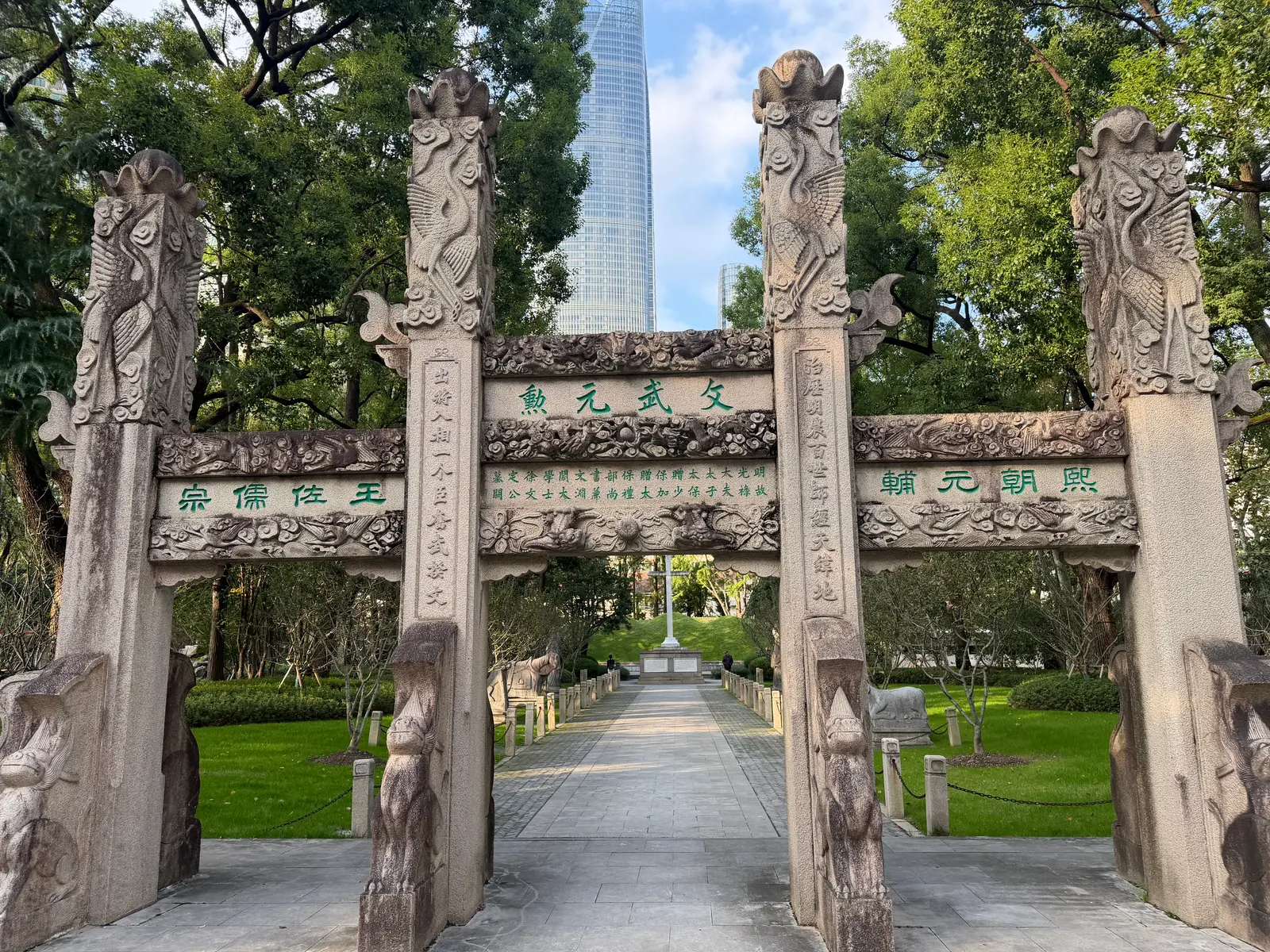
Park· 1641–1983
Guangqi Park
光启公园Guāngqǐ Gōngyuán
A small Xujiahui park around the tomb of Xu Guangqi, the Ming scholar who translated Euclid with Matteo Ricci and gave Xujiahui its name.
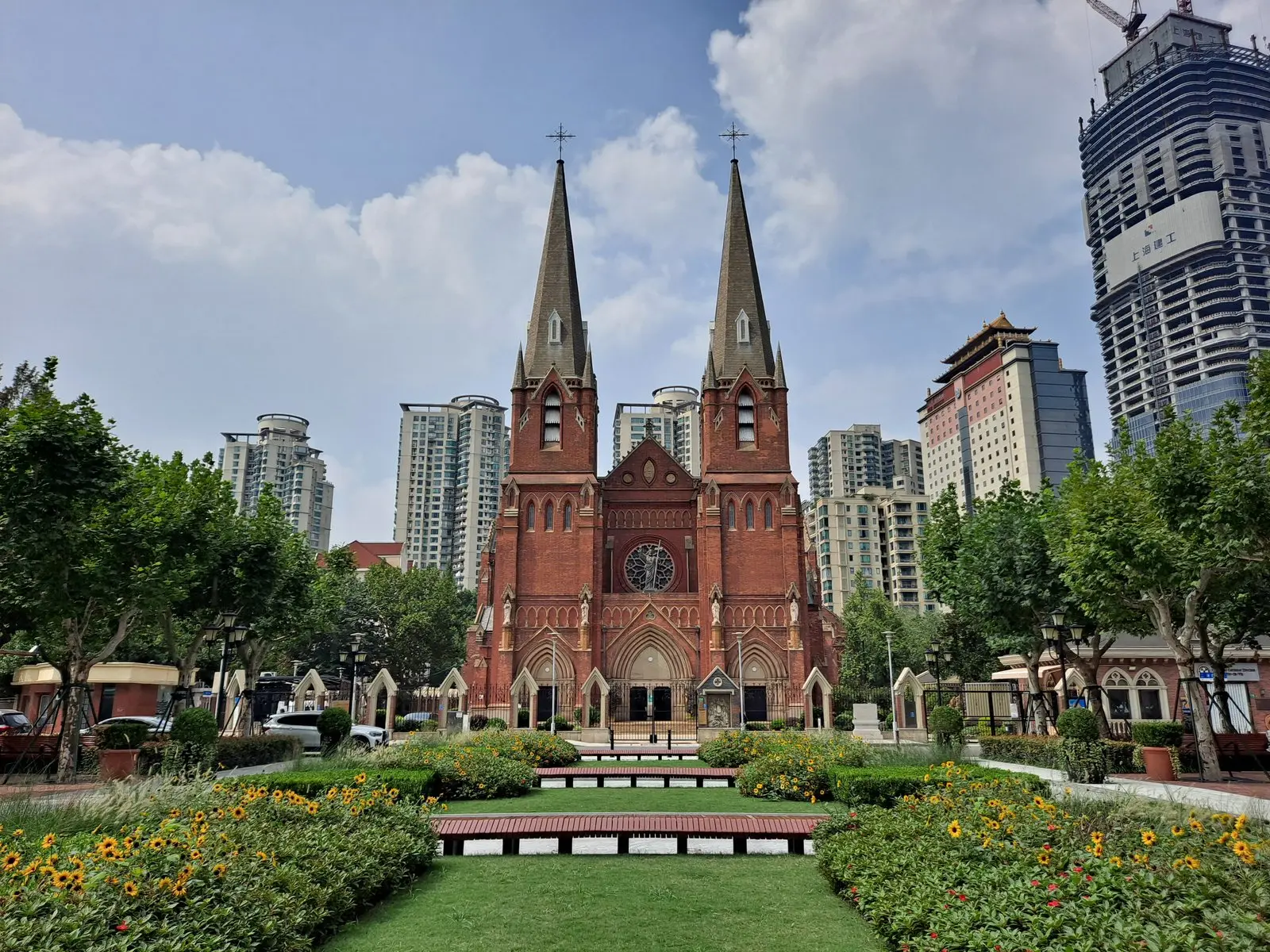

Catholic church· 1906–1910
St Ignatius Cathedral, Xujiahui
徐家汇天主堂Xújiāhuì Tiānzhǔtáng
Shanghai’s Catholic cathedral, completed in 1910, with twin red-brick spires and stained glass incorporating Chinese characters.
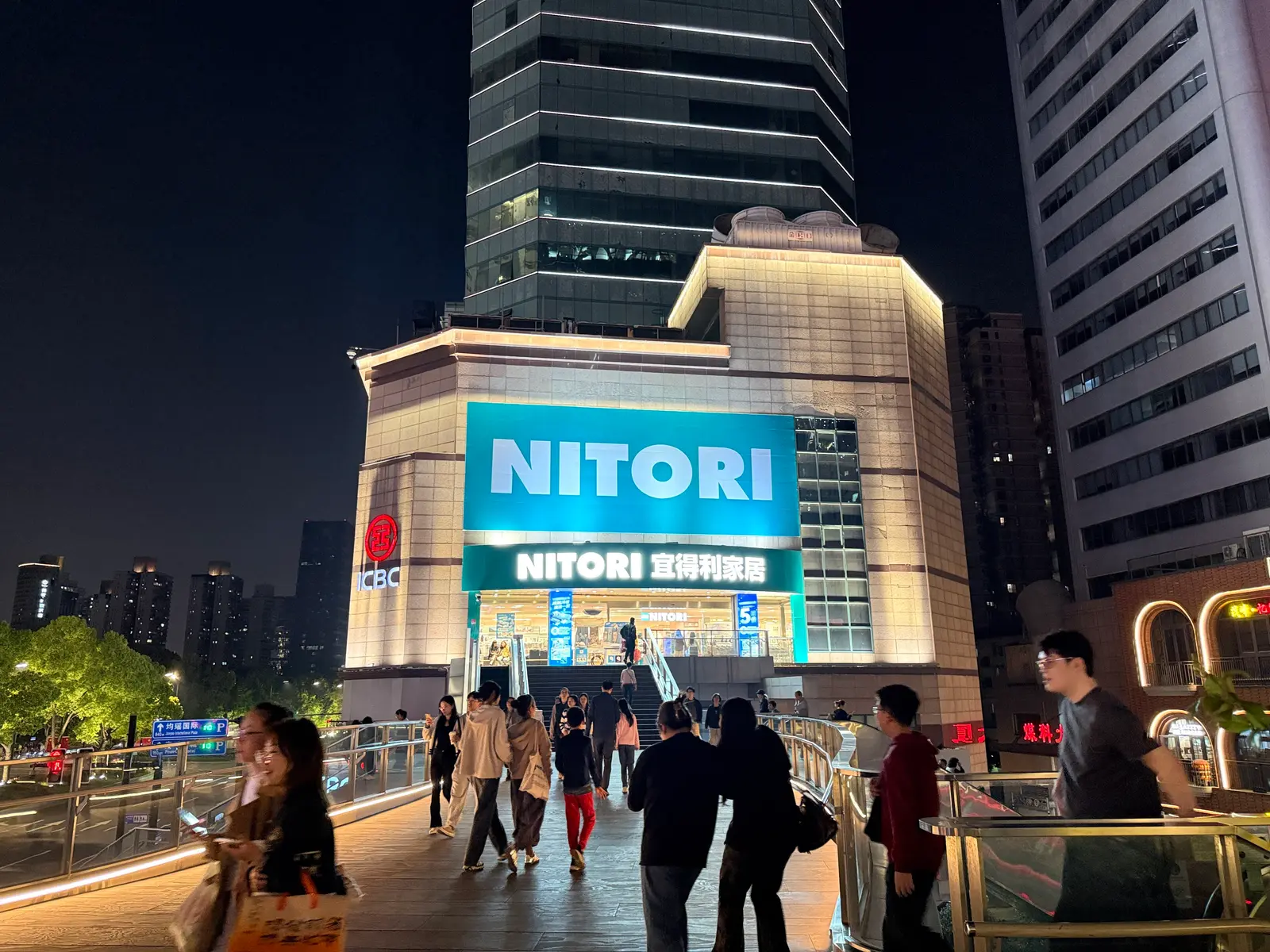

Shopping district
Xujiahui Shopping District
徐家汇商圈Xújiāhuì Shāngquān
A retail district around Xujiahui metro station, where 1990s malls stand on land once held by a Jesuit mission and its estates.
People in this story
- Xu Guangqi徐光启
Sources
- 1.Xuhui District Gazetteer (first series), biography of Xu Guangqi (徐汇区志 · 人物 · 徐光启(1562~1633)), 上海市徐汇区志编纂委员会, Shanghai Local Chronicles Office, 1997 — final paragraphgazetteer
- 2.Xuhui District Gazetteer, chronicle of events (district archives site) (徐汇区志 · 大事记), 上海市徐汇区志编纂委员会, 徐汇区档案局(馆), 1997 — 1641 entry; 1962 entriesgazetteer
- 3.Xuhui District: Xu Guangqi and Guangqi Park (海派之源,中西使者——徐光启和光启公园), 徐汇区绿化和市容管理局, 上海市徐汇区人民政府, 2021 — burial and name sentence; 1903 sentence; 1933 sentence; 1957 sentence; 2003 and 2005 sentenceswebsite
- 4.Xuhui District Gazetteer (first series), protected sites, Xu Guangqi's tomb (徐汇区志 · 第一节 文物保护单位 · 一、徐光启墓), 上海市徐汇区志编纂委员会, Shanghai Local Chronicles Office, 1997 — 一、徐光启墓, para. 3; 一、徐光启墓, paras. 3–4; 一、徐光启墓, para. 4; 一、徐光启墓, para. 1gazetteer
- 5.Tomb of Xu Guangqi (Meet in Shanghai, Shanghai Municipal Administration of Culture and Tourism) (Tomb of Xu Guangqi), Meet in Shanghai, 2025 — descriptionwebsite
- 6.Shanghai Civil Affairs Bureau place-name series: Xuhui District (地名文化漫谈|徐汇区:因明末著名科学家徐光启得名), 上海市民政局, 上海市民政局网站, 2023 — 徐家汇 name paragraph; Jesuits paragraph; 1947 sentencewebsite
- 7.Shanghai Religion Gazetteer, Catholicism, the Society of Jesus (上海宗教志 · 第四编天主教 · 第二章团体 · 第一节 耶稣会), 《上海宗教志》编纂委员会, Shanghai Local Chronicles Office, 2001 — 二、耶稣会士重返上海gazetteer
- 8.Elisa Giunipero, Xu Guangqi's rediscovery in the contemporary period (Xu Guangqi's rediscovery in the contemporary period), Elisa Giunipero, Bulletin of Portuguese–Japanese Studies (BPJS), II, 2, 2016 — p. 44article
- 9.The Paper: the Xu Guangqi stories kept in Guangqi Park (文史|关于徐光启的故事,全都藏在这座公园内), 澎湃新闻, 2021 — 1981 paragraph; 文革 paragraph; 1978 paragrapharticle
- 10.Xuhui District Gazetteer (first series), parks, Guangqi Park (徐汇区志 · 第二节 公园 · 九、光启公园), 上海市徐汇区志编纂委员会, Shanghai Local Chronicles Office, 1997 — 九、光启公园gazetteer
- 11.Guangqi Park reopens after renovation (Xuhui District official account) (光启公园焕新开放(上海徐汇官方账号)), 徐汇绿化市容;姚丽敏, 上海徐汇(网易号转载), 2026 — opening, route and 开放时间 sectionsarticle
- 12.Shanghai Religion Gazetteer, Catholicism, Open Churches (with table of other open churches) (上海宗教志 · 第四编天主教 · 第一节 开放教堂(附:其他开放教堂一览表)), Shanghai Local Chronicles Office — 一、徐家汇天主堂gazetteer