Stories
From Harbin to Hongkou: Shanghai's Russian Jews, 1902–1967
How Russian Jews reached Shanghai by way of Manchuria, built Ohel Moshe and a synagogue in the French Concession, and left after 1945.
Loading map…
The building that is now the Shanghai Jewish Refugees Museum, Ohel Moshe, was not built by refugees at all. Russian Jews put it up in 1927, more than a decade before the refugees from Hitler arrived. Their congregation had started in rented rooms on Seward Road, and by 1941 it had outgrown Hongkou and built a far bigger synagogue across town in the French Concession.
Most of these families came to Shanghai the long way round, overland through Manchuria and Harbin, and many of them had no valid passport. They opened shops, ran newspapers, built their own welfare system and formed a Jewish company in the city’s volunteer militia. After the war they left in waves, and their last council wound itself up in 1967.
They arrived after the Baghdadi merchants and before the Central European refugees, and that timing mattered. In 1943, when the Japanese ordered recent stateless refugees into a district of Hongkou, most Russian Jews were left outside the order. For the other two communities, see Baghdad to the Bund and The Designated Area.
The first families
The story begins with persecution in the Russian Empire. After Alexander II was assassinated in 1881, the tsarist government launched a wave of anti-Jewish measures and expulsions, and another followed in 1894. At the same time Russia was pushing settlers into north-east China, and many Jews went with them. Some kept moving down the coast to Tianjin, Qingdao and Shanghai. By 1902 there were 25 Russian Jewish households in Shanghai, a little over 100 people: the start of the city’s Ashkenazi community.
At first they had no synagogue of their own and prayed with the Sephardim at Shearith Israel (舍里特·以色列会堂, Shèlǐtè Yǐsèliè Huìtáng), in rented rooms on Seward Road (熙华德路, Xīhuádé Lù; now Changzhi Road). In 1907 they rented rooms of their own on the same street and called them Ohel Moshe (摩西会堂, Móxī Huìtáng), the “Tent of Moses”. The name is usually said to honour Moses Greenberg, the first Russian Jew to settle in Shanghai.
Arriving in waves
Each new wave followed a crisis further north. Up to a thousand came in the 1920s, many of them travelling with the White Russians who fled the October Revolution. After the Japanese seized Manchuria in 1931 and pushed Russians out of the north-east, more came south, and by the 1930s the community numbered over 4,000.
That was small for a city of millions, but it was several times the size of the Sephardi community of around 700. And the traffic ran both ways: when fighting in China closed businesses in 1927, many Jewish artisans and traders went back north to Harbin.
Family memories, recorded decades later in an oral history project, show what the journey looked like. Boris Katz was born in Russia in 1923. In January 1931 his family took the train out of Moscow across Siberia, spent a month in Vladivostok and six months in Harbin, and reached Shanghai in September 1931, just before the Japanese invasion of Manchuria. Yosef Tekoah’s family travelled with two uncles’ families, also by way of Harbin, and built up an international trading business in Shanghai. George Leonof, born in Manchuria in 1915, arrived at the age of seven.
People without a country
Most of these families had left a country that no longer existed. The Russian Empire was gone, and émigrés who would not accept the Soviet government had no state to protect them. On 23 September 1920 a presidential mandate in Beijing withdrew recognition from the Russian diplomats and consuls still working in China. Law-abiding Russians and their property were promised protection, but from then on a Russian in Shanghai had no consul to speak for him.
The contrast with the Sephardim was sharp. Many of them held British nationality and had a consul to turn to. A Russian Jew with old tsarist papers, or none at all, had nobody. The question came back after 1945, when the Soviet consulate began offering citizenship and each family had to decide whether to take it.
Statelessness also explains 1943. The Japanese order of that year was aimed at “stateless refugees”, but the term was defined to cover only recent arrivals, which left most Russian Jews outside it.
Making a living
The Russian Jews were much poorer than the Sephardim. Some worked for foreign firms, and some were lawyers, doctors or musicians, but most ran small or middling businesses. Some drove buses; others went from street to street selling blankets.
Their first neighbourhood was in Hongkou, north of Suzhou Creek. Jewish shops appeared first around Tilanqiao (提篮桥, Tílánqiáo), and on Ward Road (华德路, Huádé Lù; now Changyang Road) there was a Jewish settlement known as the Blue Village (蓝村, Lán Cūn). The relief society, the shelter and the youth sports grounds were all close by.
The next generation moved into the professions and into the French Concession’s schools:
- Rena Krasno, born in Shanghai in 1923, went to the French Municipal College. Her father edited Nasha Zhizn (“Our Life”), a newspaper printed in three languages, and her mother ran the Peter Pan children’s shop.
- George Leonof went to the Shanghai Public School and became a reporter for the China Press.
- Yosef Tekoah took a law degree at the Université l’Aurore. He later became Israel’s chief delegate to the United Nations, from 1968 to 1975.
Ohel Moshe and Rabbi Ashkenazi
By the mid-1920s the rented rooms on Seward Road were too small. The community found its leader in Meir Ashkenazi, a Chabad rabbi born in Chernihiv in 1891, who became chief rabbi of Shanghai in 1926 and held the post until 1949.
In 1927 Ashkenazi raised the money for a new Ohel Moshe at 62 Ward Road, which people simply called the Ward Road synagogue. The prayer hall downstairs held about 300 people, and there was a ritual bath. Upstairs were the rabbi’s rooms and, later, the community office. A Zionist youth group had its headquarters here, and the Central European refugees later prayed here too. The bronze plaque by the door still records that Russian Jews built it in 1927, the Jewish year 5688.
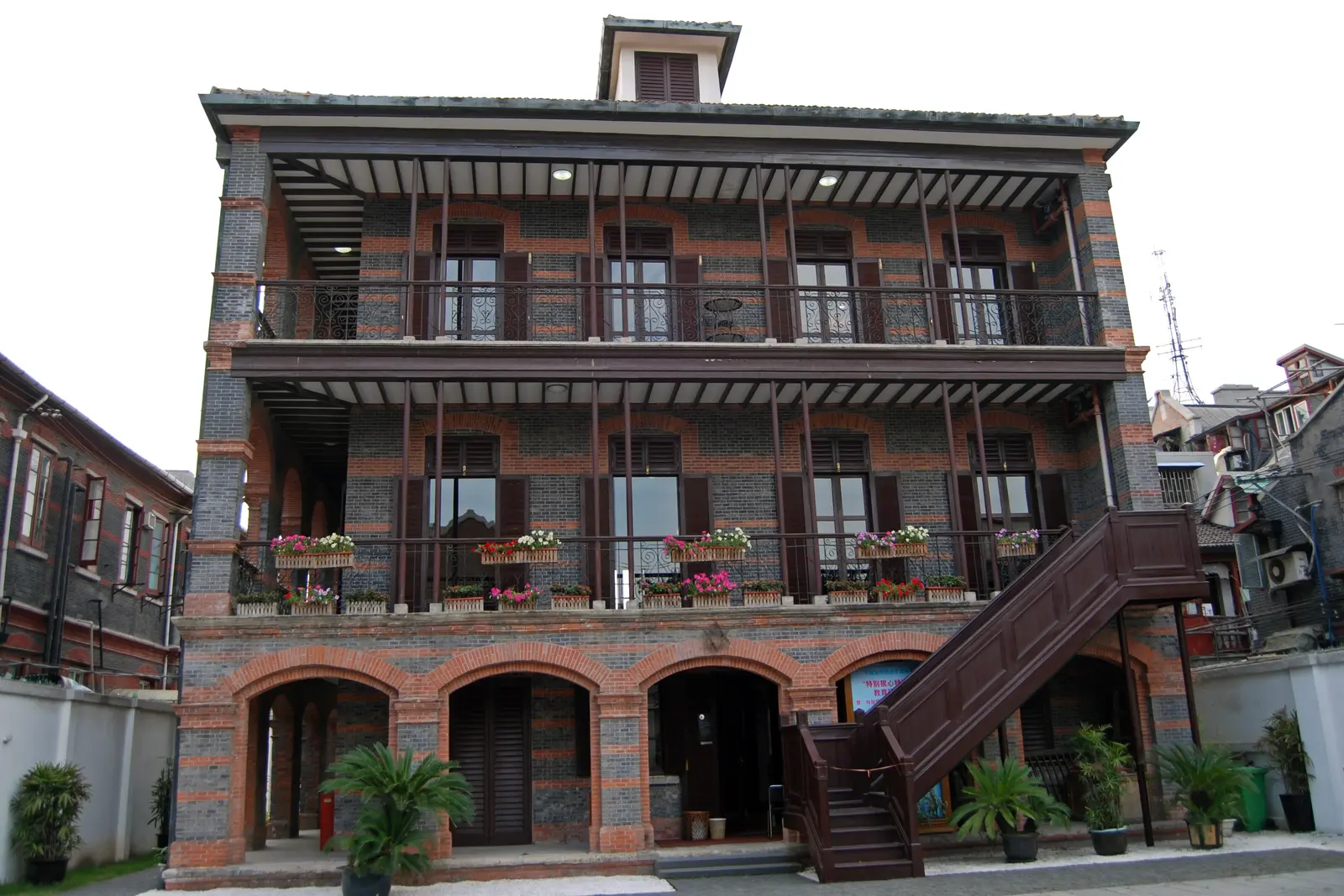
Ohel Moshe, the synagogue Russian Jews built in 1927 at 62 Ward Road (now Changyang Road), in 2011. It is now part of the Shanghai Jewish Refugees Museum.
Photo: HBarrison, CC BY-SA 2.0, via Wikimedia Commons (resized) · CC BY-SA 2.0
Looking after their own
The community built its welfare system before it had any formal government. In 1916 it set up a relief society and old people’s home (上海救济会和养老院), which served 300 free meals a day to poor Jews. In 1922 a burial society opened the Baikal Road cemetery (倍开尔路, Bèikāi’ěr Lù; now Huimin Road), which eventually held 1,692 graves.
A governing body came ten years later. The Shanghai Ashkenazi Jewish Communal Association (上海犹太宗教公会, Shànghǎi Yóutài Zōngjiào Gōnghuì) was founded on 2 November 1932, with Rabbi Ashkenazi as chairman. It handled almost everything: worship, schools, relief, jobs, registering births, marriages and deaths, and dealing with the authorities. It soon outgrew the older Sephardi association in activity and influence. From 1940 an education aid society paid school fees for children whose parents could not afford a Jewish school, and sent able students on to St John’s University and the Université l’Aurore.
By 1941, with thousands of penniless refugees now in the city, the work had grown much larger:
- The relief society and the Jewish Women’s Benevolent Society ran a Hebrew Shelter House at 812 Route Lafayette (辣斐德路, Làfěidé Lù; now Fuxing Middle Road), in the French Concession.
- The Municipal Council gave the community a free plot on Point Road (定海路, now Dinghai Road) for a cemetery for Jewish indigents, run at the community’s own expense.
Zionists and the Jewish Company
Zionism was strong among the Russian Jews. The Kadimah organisation (卡迪玛, Kǎdímǎ), also called the Shanghai Zionist Association, was founded in 1916, and a Revisionist group followed with a branch of Betar, its youth movement.
Betar members helped create one of the more unusual units in the city. After the fighting with Japan in 1932, former Jewish Scouts and Betar members proposed a Jewish unit of the Shanghai Volunteer Corps, the Settlement’s part-time militia. The first platoon went on duty on 22 September 1932, and from July 1933 H Company was entirely Jewish. At its peak it had about 120 men, most of them of Russian origin. It served until the Japanese disbanded the Volunteer Corps in early 1942.
A bigger synagogue across town
By the 1930s the community had outgrown Ohel Moshe as well, and Rabbi Ashkenazi started a new building fund. The New Synagogue (拉都会堂, Lādū Huìtáng) opened in 1941 at 102 Rue Tenant de la Tour (拉都路, Lādū Lù; now Xiangyang South Road). It held 1,000 worshippers, more than three times as many as Ohel Moshe, and the communal association moved its office there.
The site shows how far the community’s centre had moved from Tilanqiao. By then the shelter house was on Route Lafayette, and a year later the hospital moved to Route Pichon, both in the French Concession.
The new building did not stay theirs for long. On 8 December 1941, the day the Pacific War reached Shanghai, Japanese forces occupied it. They handed it back in August 1945.
The Jewish Hospital and the Jewish Club
The hospital. It began in 1934 as a polyclinic on Rue Bourgeat (蒲石路, now Changle Road), paid for by Elly Kadoorie. In 1942 the Russian Jewish community took it over, moved it to Route Pichon (毕勋路, Bìxūn Lù; now Fenyang Road) and enlarged it into the Shanghai Jewish Hospital (犹太医院, Yóutài Yīyuàn), with 60 beds and an operating theatre. Its grey building, designed in 1931 by the Russian architect Livin Goldenstaedt, is now Building No. 10 of the Eye and ENT Hospital of Fudan University.
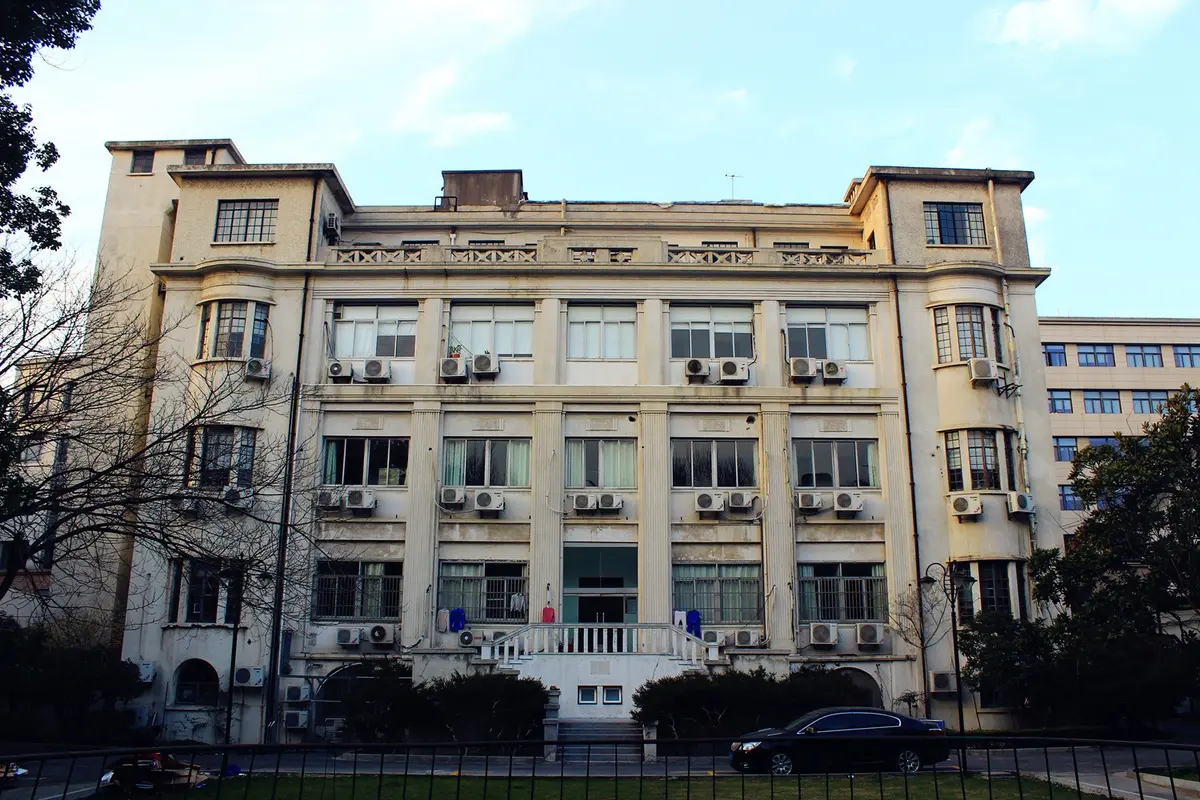
The former Jewish Hospital, now Building No. 10 of the Eye and ENT Hospital on Fenyang Road, in 2015.
Photo: Legolas1024 · CC BY-SA 4.0
The club. The Jewish Club (犹太总会, Yóutài Zǒnghuì) was a Russian Jewish club, and it could never stay put. It was founded in July 1932 on Rue Lafayette, moved to Route Pichon, then to Moulmein Road, and in the autumn of 1941 bought the former house of Ye Yiquan (叶贻铨) at 722 Bubbling Well Road, now 722 Nanjing West Road. The Japanese gendarmerie took that house in April 1942, and the club moved again, to the Masonic Hall on Avenue Road. In 1947 it settled on Route Pichon, on ground that is now part of the Shanghai Conservatory of Music. That is why some accounts place it on Nanjing West Road and others on Fenyang Road: it used both, among at least five addresses. It closed at the end of 1955.
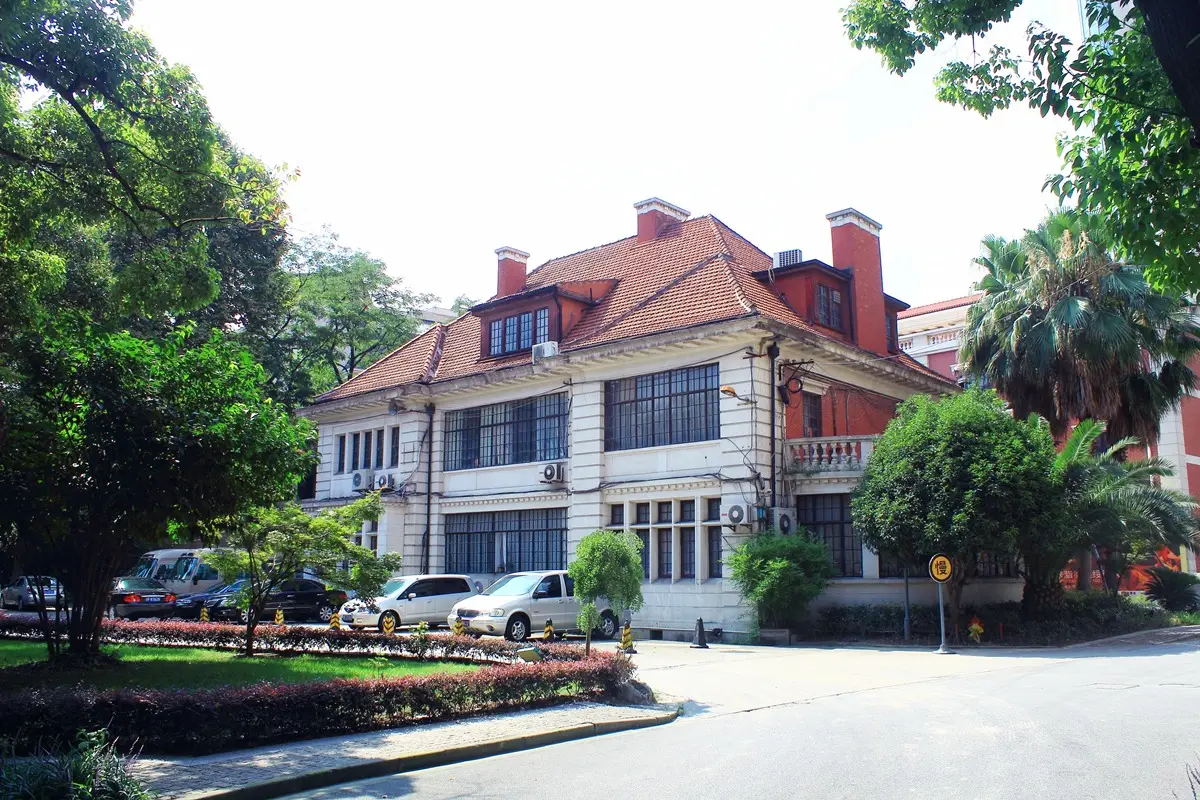
The Jewish Club's home from 1947 on Fenyang Road, now part of the Shanghai Conservatory of Music, in 2014.
Photo: Legolas1024 · CC BY-SA 4.0
The war years
Between 1938 and 1941 thousands of Central European refugees arrived, and the Russian Jews suddenly found themselves the old, established community. When the newcomers asked to hold services in their own German rite, Rabbi Ashkenazi agreed, provided they kept to Orthodox tradition. The Talmud Torah school reopened in December 1939 with 35 pupils and had 300 by 1944. Russian Jews also helped settle nearly 1,000 Polish Jews.
Relations with the White Russians could turn violent. On 23 July 1941 someone drew a mark on the pavement of Zhoushan Road (舟山路, Zhōushān Lù). Refugees rubbed it out, White Russians from the French Concession beat them, and the fight that followed injured about 50 people. It was the worst anti-Jewish incident in Hongkou.
The proclamation of 18 February 1943 ordered “stateless refugees” to move their homes and businesses into an area of Hongkou by 18 May. The definition covered stateless people who had arrived after 1 January 1937, from Germany, the former Austria, Czechoslovakia, Hungary, the former Poland, Latvia and Estonia. Most Russian Jews had been in Shanghai long before 1937, so they did not have to move, even though many were just as stateless.
The result was uneven. About 4,000 refugees living or working south of Suzhou Creek had to sell up quickly and move into the designated area, among them the Polish Jews whom the Russian Jews had helped to settle. Russian Jews who already lived in Hongkou simply stayed where they were.
Soviet passports or Israeli visas?
At the end of the war the Russian Jews had more reason than the refugees to stay. They had steady jobs and a comfortable life, and most wanted to remain. The Soviet Union came out of the war with new prestige, and its consulate urged Russian émigrés to take Soviet citizenship; about 60 per cent of them did. When relations between the Nationalist government and Moscow soured in 1947, many of the new Soviet citizens, Jews among them, left for the USSR.
Many others would not go to the Soviet Union, and the founding of Israel in May 1948 gave them another way out. Israel’s consul in Shanghai, Moshe Yuval, issued 7,000 visas, and about 4,000 people left for Israel in 1948 and 1949. George Leonof, by then working for the Soviet news agency TASS, went to Israel in 1951. Boris Katz had already left for Berkeley in 1947.
The Sephardim were leaving at the same time. The Sassoon group pulled out on a large scale in 1948, and other Jewish firms followed. By the end of that year the Jewish Club, the Jewish School, the hospital and the old people’s home had nobody left to fund them.
The last years
In October 1949 there were still more than 7,000 Jews in Shanghai, most of them Russian Jews. The remaining community was brought under one body, the Council of the Jewish Community (上海犹太联合委员会, Shànghǎi Yóutài Liánhé Wěiyuánhuì), formed in 1949 under R. D. Abraham and based at the synagogue on Rue Tenant de la Tour. It looked after worship, medical care, burials and property, and from 1951 it also arranged emigration for Jews across China.
Then the community emptied:
| Year | Jews in Shanghai |
|---|---|
| October 1949 | more than 7,000 |
| 1953 | 440 |
| 1956 | 124 |
| 1958 | 84 |
| 1976 | fewer than 10 |
In 1956 the Council was still running a small version of the old welfare system. The Shelter House had about 14 residents and served free meals to about 23 people a day, against 300 a day in the relief society’s early years. Eleven people still lived in the Seward Road Camp, a wartime hostel on property lent free by E. D. Sassoon & Co. Matzot were still baked locally for Passover and given to anyone in need, and the Council looked after four Jewish cemeteries. Its chairman wrote in 1958 that the Chinese people and government had been “both generous and kind to the Jewish residents”.
Ohel Moshe closed in 1956, and the last united prayer hall in 1965. In 1967 the Council dissolved itself, with fewer than ten Jews left in the city.
What to look for
Ohel Moshe, 62 Changyang Road (长阳路62号), Hongkou. The 1927 synagogue is now the Shanghai Jewish Refugees Museum. The building was altered while it served as an office, and only the arched doorway and the decorated stair panels survive unchanged, so look for both, and for the bronze plaque by the door dated 1927 and 5688. Changyang Road was Ward Road, so the Blue Village stood somewhere along this street. Check the museum’s own page for opening hours.
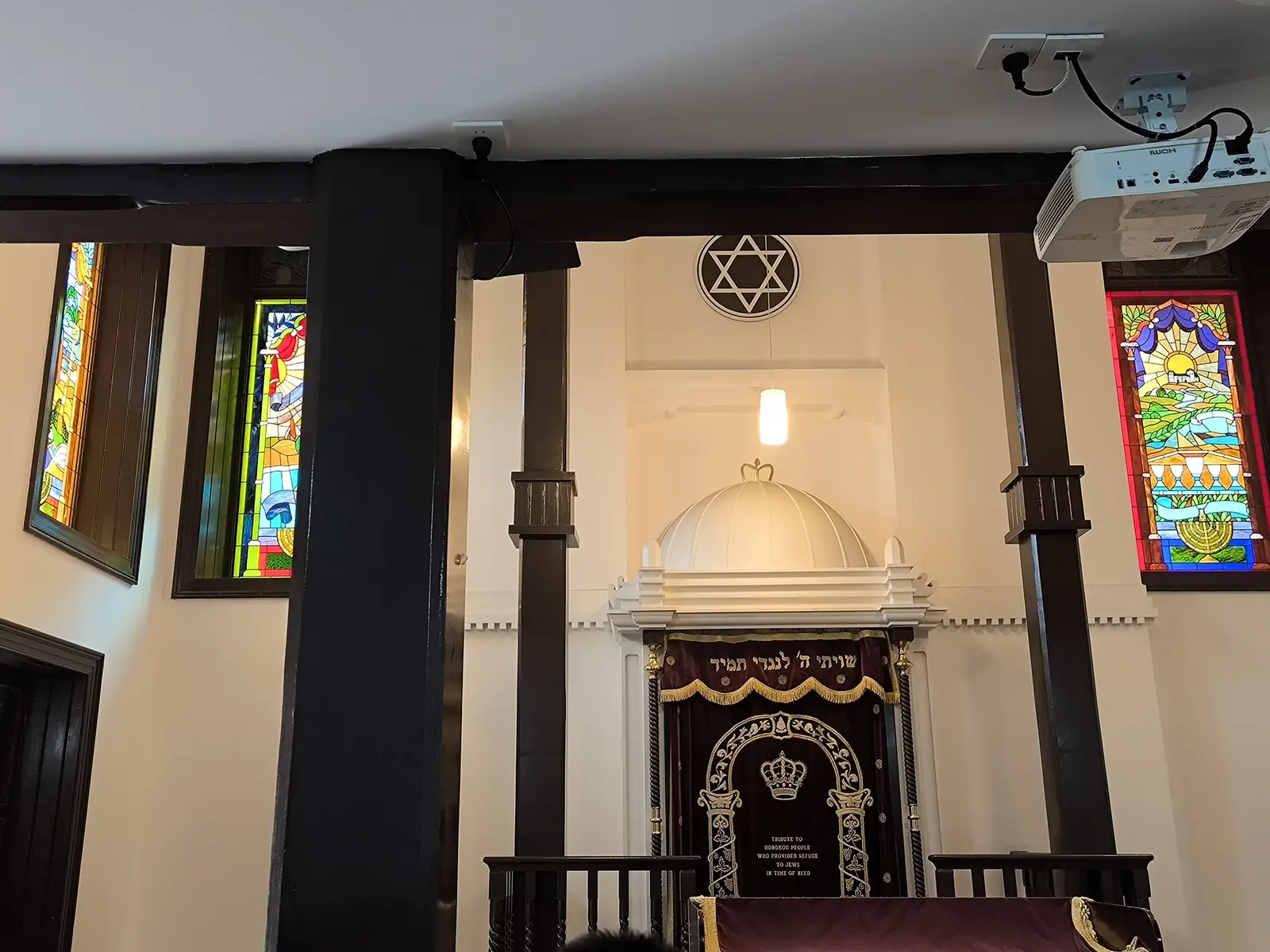
The prayer hall of Ohel Moshe as shown in the museum, October 2026.
Photo: 源義信, CC BY 4.0, via Wikimedia Commons (resized) · CC BY 4.0
Changzhi Road (长治路). South-west of the museum, this was Seward Road, where the first Ohel Moshe and Shearith Israel rented rooms. Nothing is marked.
Zhoushan Road (舟山路) and Huimin Road (惠民路). Zhoushan Road, close to the museum, was the scene of the 1941 fight. Huimin Road was Baikal Road; the Baikal Road cemetery is now a children’s park, with no graves left to see.
Xiangyang South Road (襄阳南路), former French Concession. The New Synagogue stood at what was 102 Rue Tenant de la Tour. It was demolished in the 1990s.
Fenyang Road (汾阳路). The former Jewish Hospital is Building No. 10 of the Eye and ENT Hospital at 83 Fenyang Road; it is a working hospital, so look from outside. Further along, the Shanghai Conservatory of Music at 20 Fenyang Road is where the Jewish Club settled in 1947.
722 Nanjing West Road (南京西路722号). The former Ye Yiquan house, the club’s home from October 1941 until the Japanese took it in 1942, is now an office building.
For comparison. To see what the Sephardim built, go to Ohel Rachel on Shaanxi North Road, the largest synagogue in Shanghai.
Places mentioned
Tap a name in the text, or “map” in this list, to see where it is; names with their own page link to it.
- 01Ohel Moshe Synagogue (now the Shanghai Jewish Refugees Museum)摩西会堂(今上海犹太难民纪念馆)map
- 02Seward Road (now Changzhi Road), first synagogues熙华德路(今长治路)The Sephardi Shearith Israel synagogue (1900) and the first Ohel Moshe (1907) were both in rented rooms on Seward Road; no house numbers are given. Approximate position.approximate position
- 03The "Blue Village" on Ward Road华德路“蓝村”The Hongkou gazetteer names a Jewish settlement called the Blue Village on Ward Road (now Changyang Road) without an address. Approximate position.approximate position
- 04Zhoushan Road (Chusan Road)舟山路Market street in the Tilanqiao district; scene of the fight of July 1941. Approximate position.approximate position
- 05Baikal Road Jewish Cemetery (site)倍开尔路犹太公墓旧址(今惠民路)Opened 1922 on Baikal Road (now Huimin Road); the Religion Gazetteer says the site is now a children's park on Huimin Road. The exact plot has not been located. Approximate position.approximate position
- 06Point Road cemetery for Jewish indigents (site)定海路犹太贫民公墓旧址Cadastral Lot 6087, Point Road (now Dinghai Road), allotted by the Council in March 1941. Approximate position: only the road is known.approximate position
- 07New Synagogue, Rue Tenant de la Tour (site)拉都会堂旧址(拉都路102号,今襄阳南路)102 Rue Tenant de la Tour, now Xiangyang South Road; demolished in the 1990s. The map position may not mark the exact plot.
- 08Hebrew Shelter House, Route Lafayette辣斐德路犹太收容所812 Route Lafayette (now Fuxing Middle Road) in the 1941 Desk Hong List. Approximate position: only the street is certain.approximate position
- 09Shanghai Jewish Hospital (now part of the Eye and ENT Hospital of Fudan University)犹太医院旧址(今复旦大学附属眼耳鼻喉科医院)On Route Pichon, now Fenyang Road; the 1931 building is Building No. 10 of the hospital.上海市徐汇区汾阳路83号
- 10Jewish Club, Route Pichon (now the Shanghai Conservatory of Music)犹太总会(毕勋路,今上海音乐学院)New York Social Diary says the club settled here in 1947. Approximate position.上海市徐汇区汾阳路20号approximate position
- 11Jewish Club, 722 Nanjing West Road (former Ye Yiquan house)犹太总会(南京西路722号,原叶贻铨住宅)The club bought this house in autumn 1941 and moved in that October (Shanghai Municipal Police files). Approximate position.上海市静安区南京西路722号approximate position
- 12Ohel Rachel Synagogue拉结会堂map
Places in this story
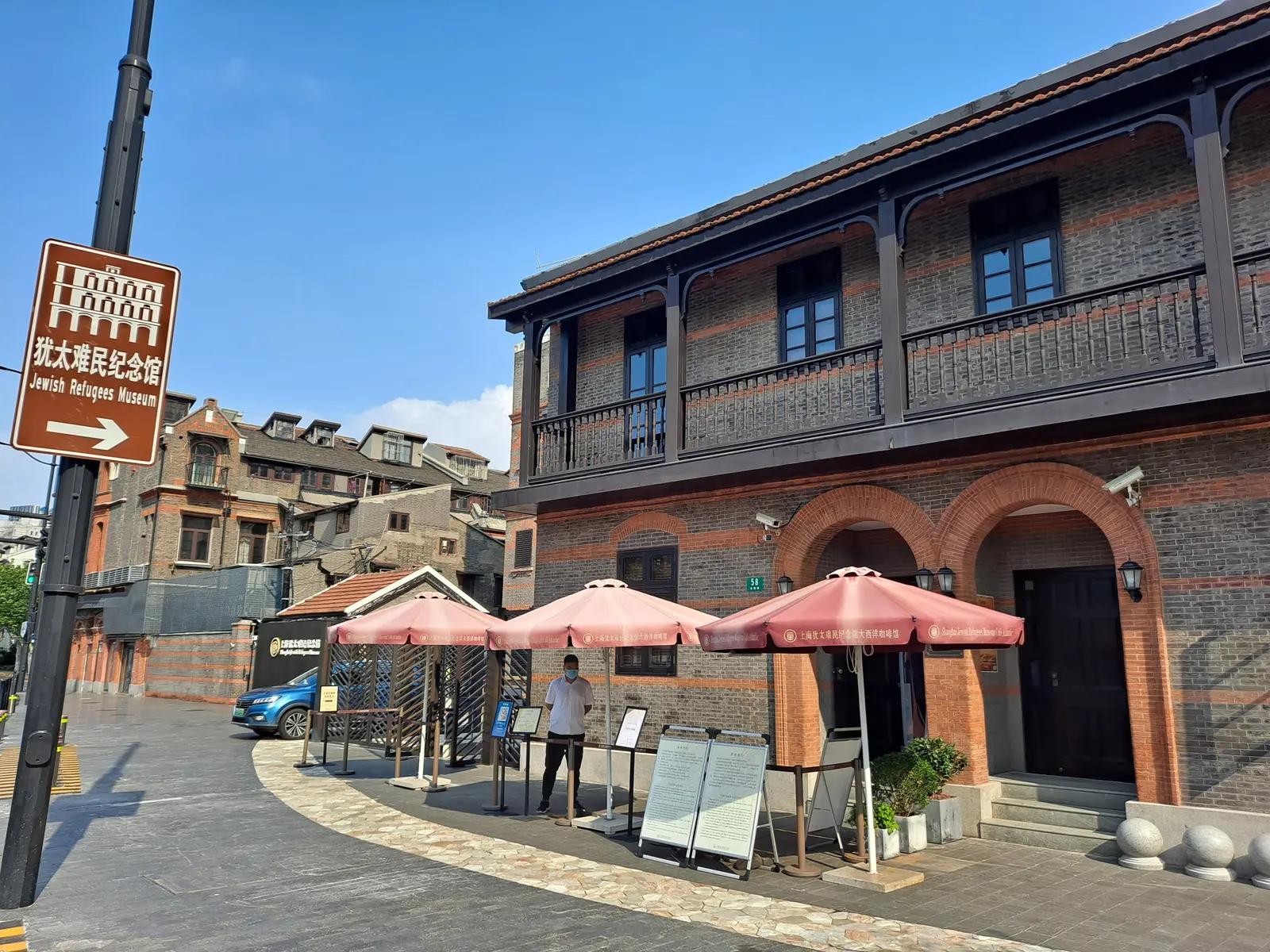

Museum· 1927
Shanghai Jewish Refugees Museum
上海犹太难民纪念馆Shànghǎi Yóutài Nànmín Jìniànguǎn
A 1927 synagogue in Hongkou restored as a museum on the Jewish refugees who lived in Shanghai in the 1930s and 1940s; closed Mondays, ticketed.
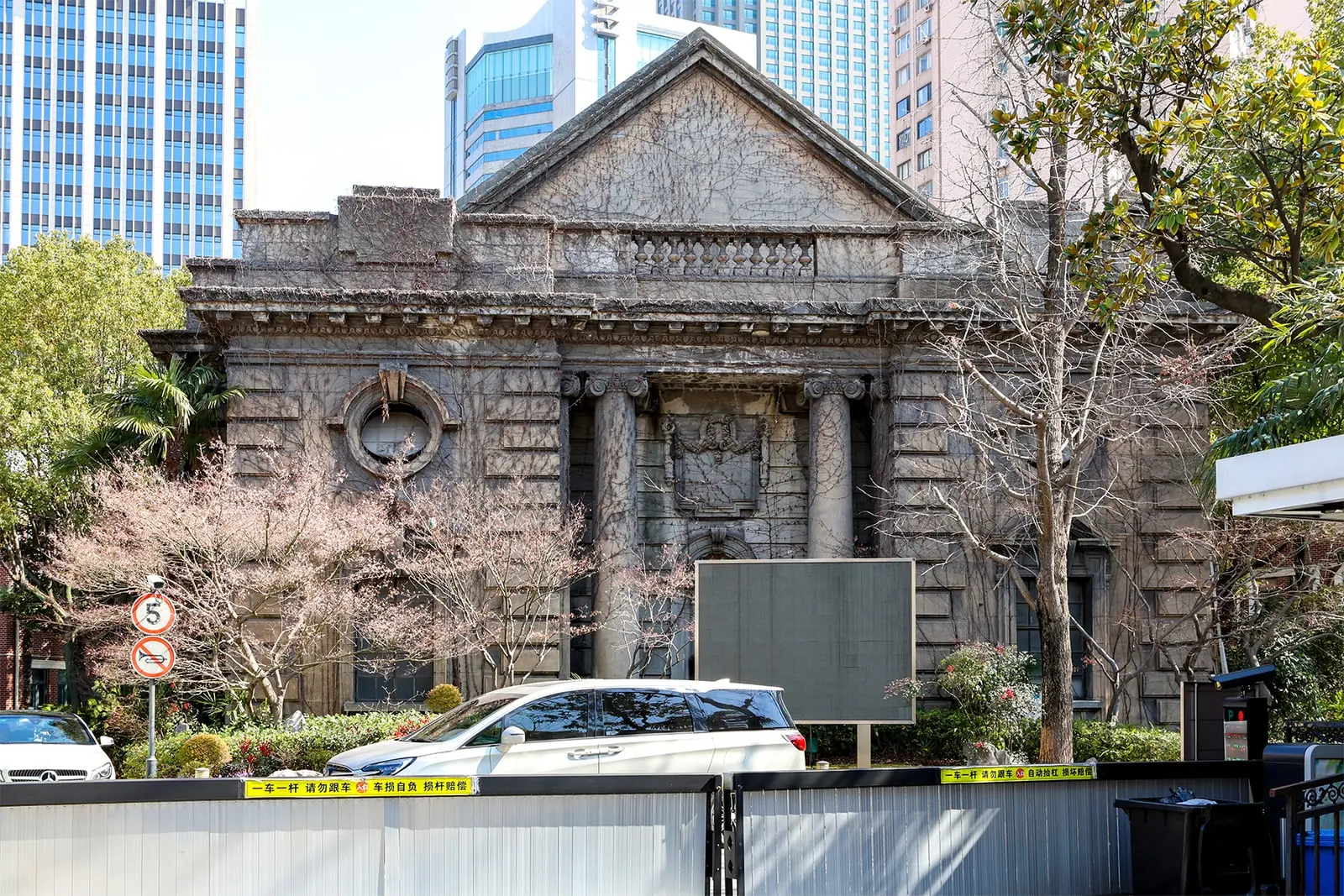

Site· 1920
Ohel Rachel Synagogue
拉结会堂Lājié Huìtáng
Built in 1920 by the Sassoon family, Shanghai's first purpose-built synagogue seated 700. It sits in a compound and is rarely open to visitors.
People in this story
- Sir Elly Kadoorie艾利·嘉道理
Sources
- 1.Shanghai Religion Gazetteer, Judaism chapter (overview; communities, synagogues, organisations, education, religious life, departure) (上海宗教志·第三章犹太教), 上海市地方志办公室(上海方志数据库) — 第一节 社区·二、俄罗斯犹太人社区; 第二节 场所·三、摩西会堂; 第二节 场所·二、舍里特·以色列会堂; 第一节 社区·一;第三节 团体·一、上海犹太协会; 第三节 团体·二、上海犹太宗教公会; 第三节 团体·一、二; 第二节 场所·六、拉都会堂; 第六节 犹太人离沪·三、俄罗斯犹太人离沪; 第六节 犹太人离沪·二、赛法迪姆犹太人离沪; 第三节 团体·二;四、上海犹太联合委员会; 第二节 场所·四;第三节 团体·一; 第二节 场所·七、百老汇会堂;第四节 教育·三、塔木德经文学校gazetteer
- 2.Hongkou District Gazetteer, Jews chapter (changes; relations; former sites) (虹口区志·第三编租界·外侨·第三章犹太人), 上海市地方志办公室(上海方志数据库) — 第一节 变迁; 第三节 旧址、遗迹·一、摩西会堂; 第二节 交往gazetteer
- 3.Shanghai Jews Must Emigrate Because of Unrest (JTA Daily Bulletin, 1 May 1927) (Shanghai Jews Must Emigrate Because of Unrest), Jewish Telegraphic Agency, 1927 — JTA Daily Bulletin, 1 May 1927article
- 4.Boris Katz interview, catalogue record and scope note, Bates College Shanghai Jewish Oral History Collection (Katz, Boris (Shanghai Jewish Community Oral History Collection)), Steve Hochstadt (interviewer), Bates College, SCARAB, 1989 — scope and content notearchive
- 5.George Leonof interview, catalogue record and scope note, Bates College Shanghai Jewish Oral History Collection (Leonof, George (Shanghai Jewish Community Oral History Collection)), Steve Hochstadt (interviewer), Bates College, SCARAB, 1989 — scope and content notearchive
- 6.Yosef Tekoah interview, catalogue record and scope note, Bates College Shanghai Jewish Oral History Collection (Tekoah (Tukaczynski), Yosef (Shanghai Jewish Community Oral History Collection)), Steve Hochstadt (interviewer), Bates College, SCARAB, 1989 — scope and content notearchive
- 7.Rena Krasno interview, catalogue record and scope note, Bates College Shanghai Jewish Oral History Collection (Krasno, Rena (Shanghai Jewish Community Oral History Collection)), Steve Hochstadt (interviewer), Bates College, SCARAB, 1994 — scope and content notearchive
- 8.FRUS 1920 vol. I, doc. 807: Chinese presidential mandate of 23 September 1920 withdrawing recognition of Russian diplomatic and consular officers (Papers Relating to the Foreign Relations of the United States, 1920, Volume I, Document 807: The Minister in China (Crane) to the Secretary of State, 24 September 1920), Charles R. Crane, US Department of State, Office of the Historian, 1920 — FRUS 1920 vol. I, doc. 807archive
- 9.Meir Ashkenazi (rabbi), English Wikipedia (Meir Ashkenazi (rabbi)), Wikipedia — lead and 'Biography'wikipedia
- 10.1941 Shanghai Desk Hong List, July edition, scan on the Internet Archive (1941 Shanghai Desk Hong List, July edition), Internet Archive (item 1941-shanghai-desk-hong-list-july-edition), 1941 — Clubs and associations (Kadimah; Hebrew Relief Society); Who's Who index (Ashkenazi, Rabbi M.); street directory, Ward Roadarchive
- 11.'Hagedud Ha-Sini' – the Jewish Company of the Shanghai Volunteer Corps, 1932–42 (Jewish Historical Studies 41, 2007, pp. 183–208) ('Hagedud Ha-Sini' – the Jewish Company of the Shanghai Volunteer Corps, 1932–42), Martin Sugarman, Jewish Historical Society of England, 2007 — pp. 183–208, section 'Hagedud Ha-Sini 1932–42'article
- 12.Shanghai Municipal Gazette 1941 (fuel and power rationing report; advertisement rates) (The Municipal Gazette, vol. 34 (1941)), Shanghai Municipal Council, Shanghai Municipal Council (digitised on the Internet Archive), 1941 — Shanghai Volunteer Corps notifications, 1941; Gazette of 28 March 1941, p. 69, 'Cemetery for Jewish Indigents'archive
- 13.Program for the dedication of a new Ashkenazic synagogue in Shanghai, 24 November 1940 (USHMM Photo Archives no. 23603, courtesy of Mary Catalina, Siegmund Sobel collection) (Program for the dedication of a new Ashkenazic synagogue in Shanghai), United States Holocaust Memorial Museum, 1940 — photo archives no. 23603archive
- 14.A lasting legacy of when Shanghai gave refuge to the Jews (Shanghai Daily, 1 January 2021; read via vLex) (A lasting legacy of when Shanghai gave refuge to the Jews), Shanghai Daily, 2021 — paras. on the Jewish Hospitalarticle
- 15.Extracts from the Council of the Jewish Community, Shanghai, report for 1956 (July 1955–June 1957), transcribed by the Hong Kong Heritage Project on its blog A Borrowed Place (2017); read via a PDF copy of the post (Council of the Jewish Community of Shanghai, 1956), Council of the Jewish Community, Shanghai; extracts by Hong Kong Heritage Project (HK_Heritage), A Borrowed Place (hongkongrefuge.wordpress.com), Hong Kong Heritage Project, 1957 — 'Reading and Recreation Room'; introduction; 'Personnel'; 'Communal Association'; 'Synagogue'; 'Matzoth'; 'Cemeteries'; 'Shelter House and Free Meals'; 'Seward Road Camp'archive
- 16."Back on Straw" (Studia Historica Gedanensia 5, 2014) ("Back on Straw": The Experience of Shanghai Jewish Refugees in Bremen after Escaping German National Socialism, Enduring a Japanese "Designated Area", and Fleeing Chinese Communism), Kevin Ostoyich, Studia Historica Gedanensia (University of Gdańsk), 2014 — p. 114article
- 17.Shanghai's Jews over a century and a half (ed. Pan Guang), chapter on the stateless refugees' designated area, as transcribed in a Douban reader's annotation (一个半世纪以来的上海犹太人), 潘光 主编, 社会科学文献出版社, 2002 — chapter 无国籍难民隔离区 (as transcribed)book
- 18.Kestenbaum & Company, Auction 60 (14 November 2013), lot 92, description of the Council's annual reports (Lot 92: (China) Council of the Jewish Community Shanghai. Report and Statement of Accounts, 1952–1960), Kestenbaum & Company, 2013 — lot 92 descriptionwebsite
- 19.Shanghai Social Diary: Shanghai Conservatory of Music, in the Former Shanghai Jewish Club (Shanghai Social Diary: Shanghai Conservatory of Music, in the Former Shanghai Jewish Club), New York Social Diary — paras. 1–2article
- 20.Shanghai Jewish Club (722 Nanjing West Road), Chinese Wikipedia (上海犹太总会), Wikipedia — lead and history sectionwikipedia
- 21.Museum introduction, Shanghai Jewish Refugees Museum (official site) (展馆介绍 (Museum introduction), 上海犹太难民纪念馆), 上海犹太难民纪念馆 — https://www.shhkjrm.com/fw/zgjs.htmwebsite
- 22.English Wikipedia (article given in each fact's locator) (English Wikipedia), Wikimedia Foundation — https://en.wikipedia.org/wiki/Ohel_Moshe_Synagoguewikipedia
- 23.Shanghai Municipal Police file on the Shanghai Jewish Club, 1933–1943 (reports of 1933, 1942 and 1943; NARA RG 263, M1750; scan on Internet Archive item smpa-files-1384) (Re Shanghai Jewish Club Premises, 1623 Avenue Road - Shanghai Municipal Police File), Shanghai Municipal Police, Special Branch, US National Archives (RG 263, M1750), via Internet Archive, 1943 — SMP reports of 1933 and 1942–43archive